






By Zoey SUN
From April 17 to 19, the Hong Kong Sevens returned for a three-day run at Kai Tak Sports Park. It was only the tournament's second year at this new landmark venue—but this edition carried extra weight. The Sevens turned 50.
What began in 1976 as a one-day invitational on a modest pitch at the Hong Kong Football Club has grown into one of the most iconic events in global rugby sevens. This year, 30 international teams contested 72 matches. More than 130,000 tickets were sold in advance, three-day passes were completely sold out, and total attendance reached 113,000 over the weekend. The 50,000-seat Kai Tak Stadium—ranked third globally in ticket sales and fifth in revenue among major venues in 2025, both highest in Asia—was once again filled with cheers from around the world and the clink of beer cups.
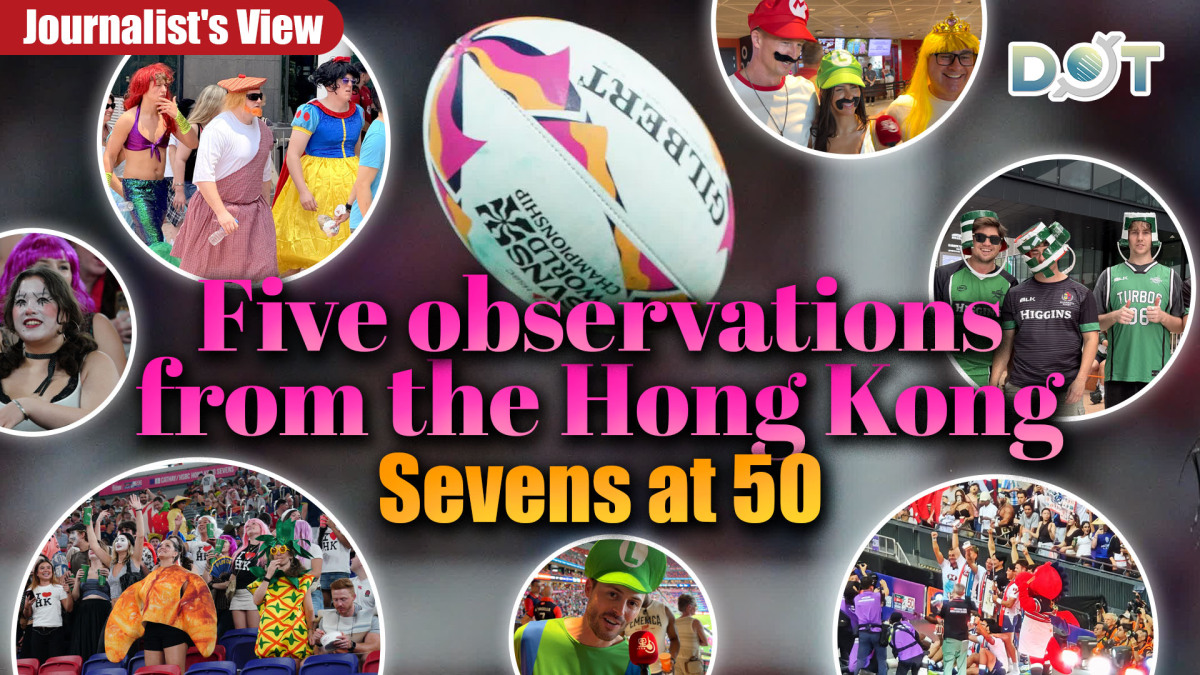
After half a century, the Sevens has long outgrown sport itself. It has become a prism reflecting Hong Kong's character. Here are five observations from the ground.
Observation 1: The "mega-event economy" goes far beyond ticket sales
"More than 130,000 tickets sold in advance" was already a headline before kickoff. But the Sevens' economic impact stretches well beyond the box office.
In recent years, the HKSAR government has pushed to develop a "mega-event economy," and the Sevens is perhaps its best case study. During the tournament, the Kai Tak retail complex launched themed promotions, while restaurants rolled out special menus and discounts—second drinks at half price, spending-based offers—visible everywhere.
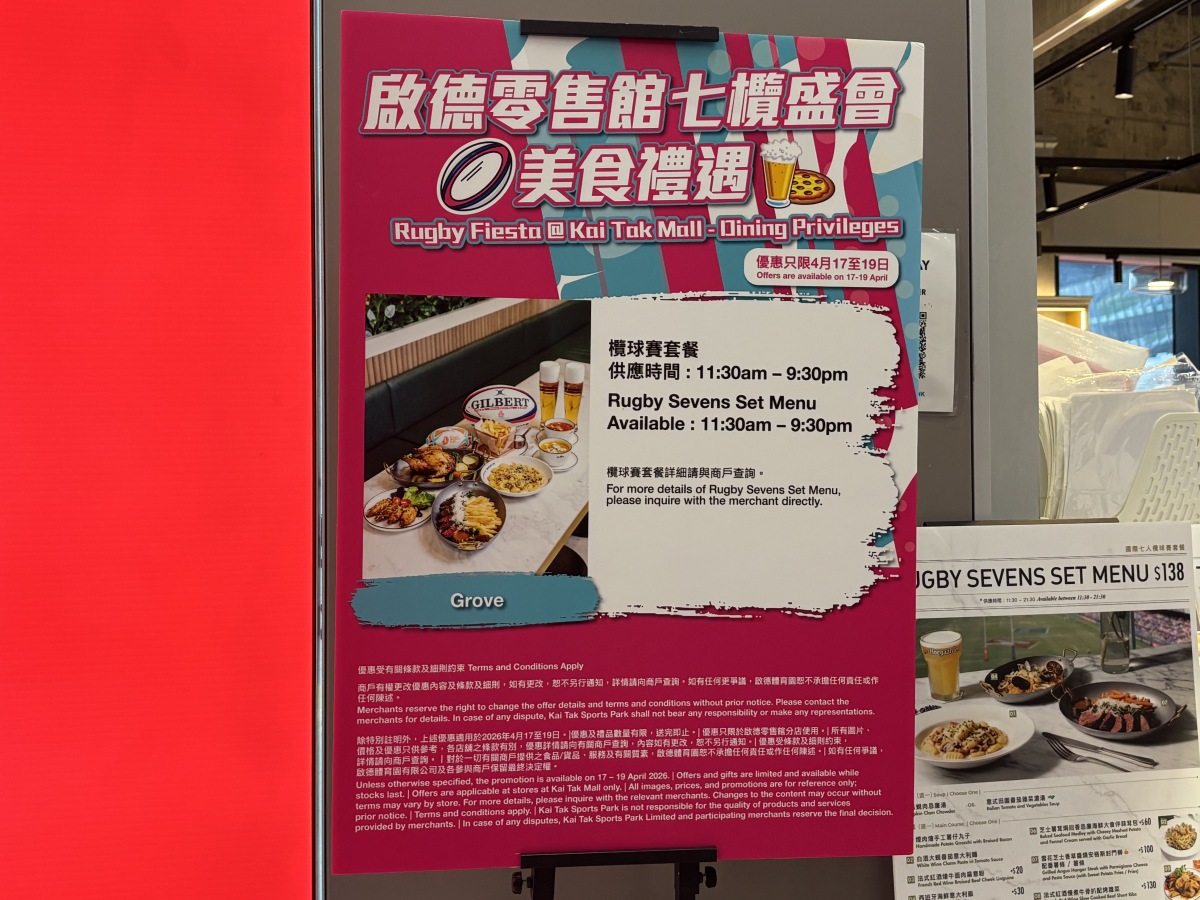
With matches lasting just 14 minutes and scheduled tightly, many fans opted to eat inside the stadium rather than risk missing their teams, despite higher prices. Convenience trumped cost.
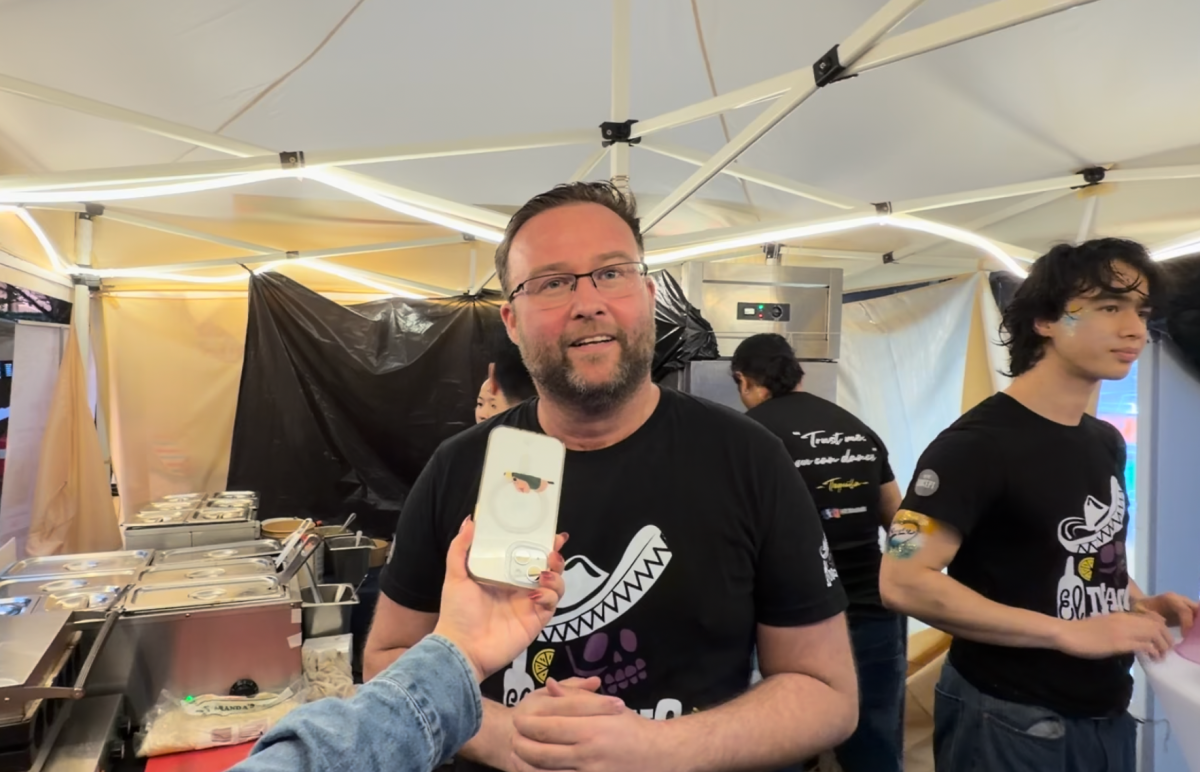
At a food stall in the stadium's dining zone, I met Christopher, a vendor who had created a special menu for the event: a "Macho Burrito" with chili beef, slow-cooked chicken wraps prepared over 48 hours, nachos with guacamole or beef, and four varieties of margaritas. His customers ranged from locals to tourists staying in nearby hotels. "Events like this are great for Hong Kong's economy," he said. "I hope we see more of them."
Outside the stadium, the ripple effects were just as clear. The chairman of the Hong Kong Bar and Club Association estimated that if just a quarter of the 50,000 spectators—around 12,000 people—headed to bars after the matches, spending an average of HK$500 each, a single night could generate HK$6 million in revenue. Businesses in Kai Tak, Kowloon, Lan Kwai Fong, and Causeway Bay all reported increased traffic.
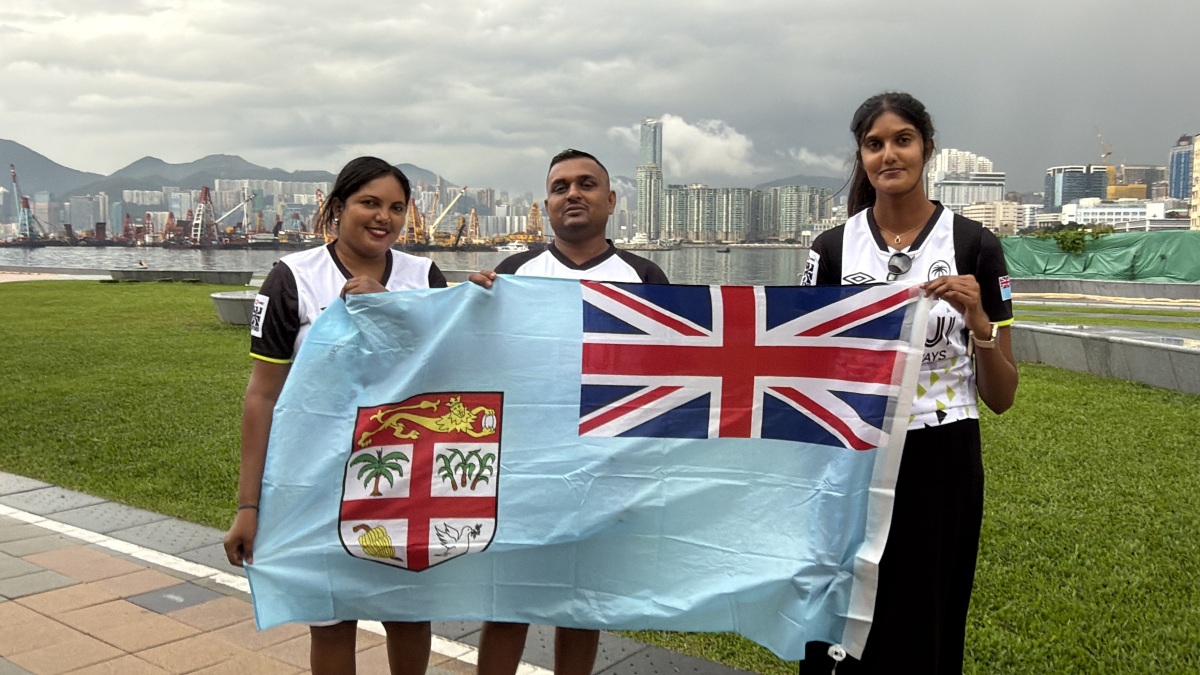
Speaking with more than 20 overseas visitors, I found that 13 had purchased three-day passes; those who hadn't mostly cited sellouts. Ashimita, who flew in from Fiji with her family of three, stayed four nights in Hong Kong to support her team. Ryan, from the UK, who came to watch the Sevens with two friends, also held a full three-day pass and spent the entire tournament in the city. At around 6:30 p.m., as crowds dispersed, Ashimita asked me where to find the souvenir shop—and where she could experience Hong Kong's night markets. Her ticket, clearly, was more than just entry to a stadium.
Another emerging trend: the "ticket-stub economy." Nearby restaurants began offering discounts to customers who showed their match tickets, linking stadium excitement to neighborhood spending.
Observation 2: Technology takes the stage—China's "smart manufacturing" on display
The most unexpected "performers" at the 50th anniversary opening ceremony were ten humanoid robots.
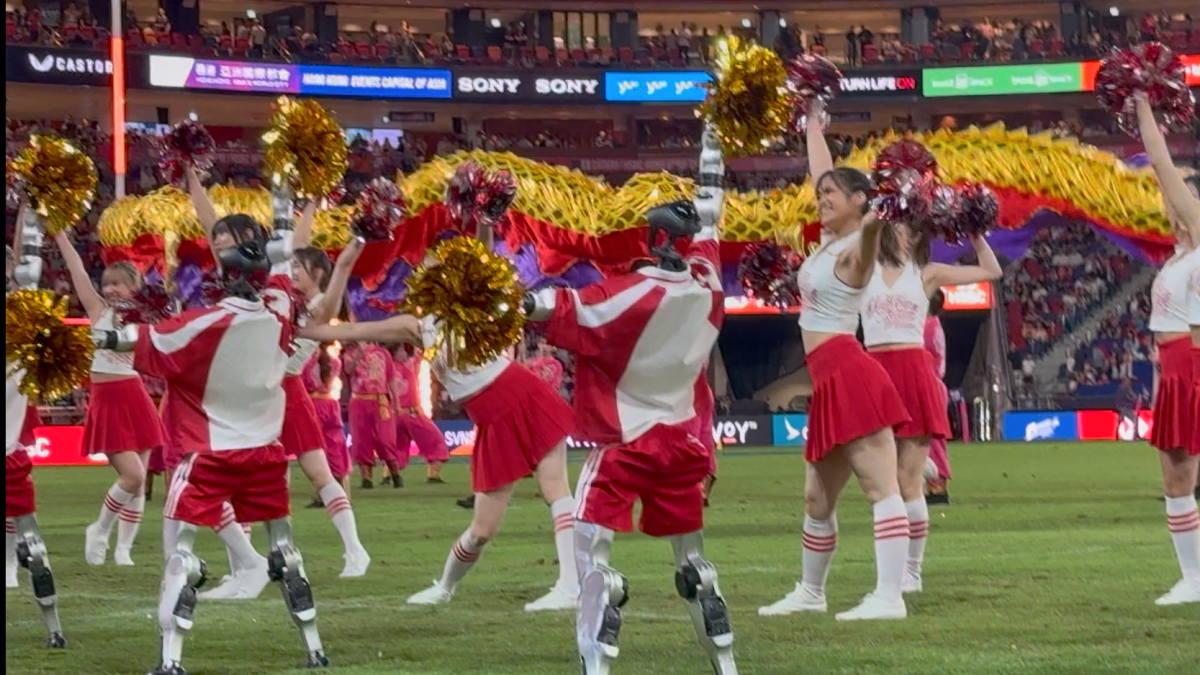
Sharing the field with a traditional dragon dance, the robots moved in sync with human cheerleaders, opening the tournament with precision choreography. A subsequent laser projection showcased participating nations, rugby legends, and a striking image of twin dragons soaring over Hong Kong—symbolizing the tournament's 50-year journey.
Produced by mainland firm Unitree Robotics and previously featured on China's Spring Festival Gala, the robots brought a technological edge to the spectacle, offering global audiences a glimpse of China's advances in robotics.
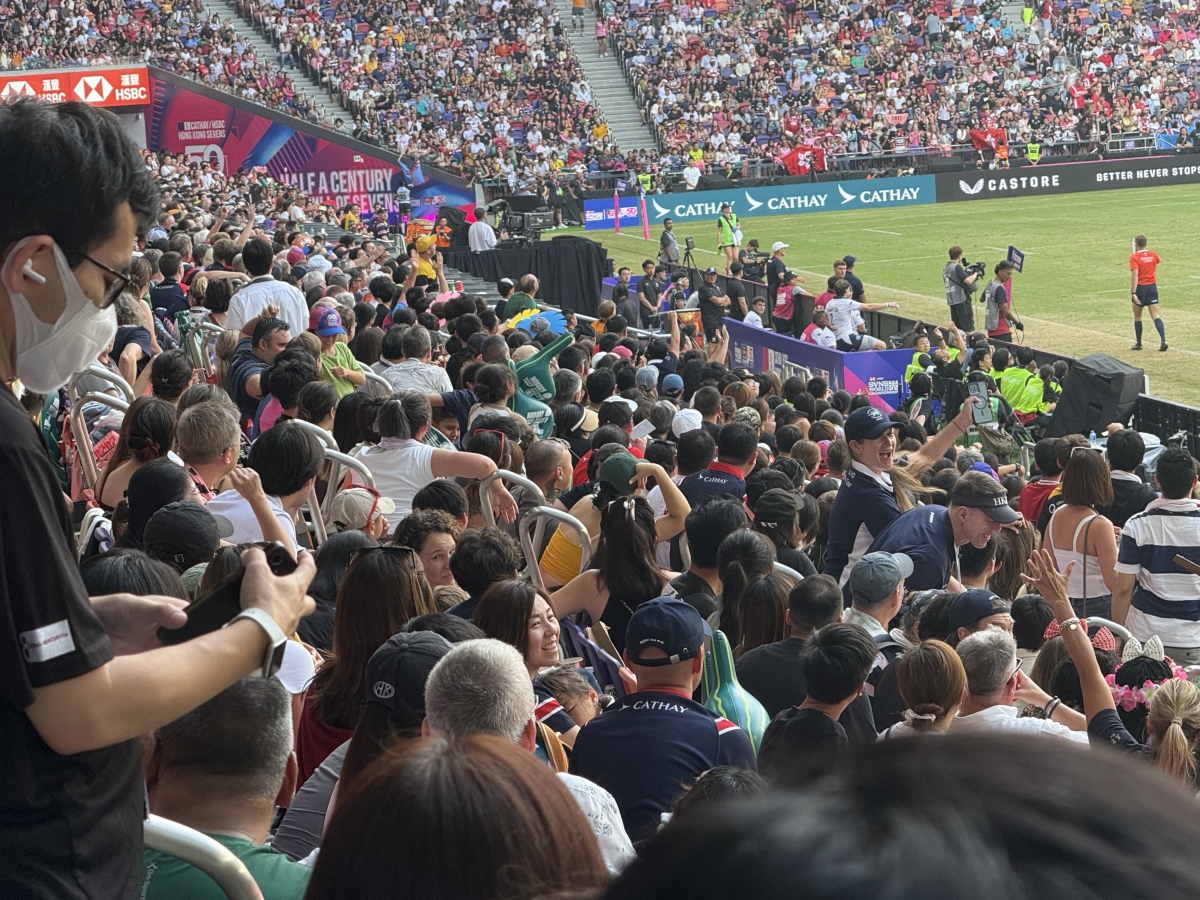
Technology was also at work behind the scenes. Despite outdoor temperatures of 27–28°C and packed stands, the stadium remained comfortable. According to Kai Tak management, an integrated data platform monitored temperature, carbon dioxide levels, crowd flow, and energy use in real time, adjusting air conditioning, ventilation, and lighting accordingly.
Sustainability efforts were equally notable. A large-scale microbial system operated throughout the event, processing around 600 kilograms of waste daily, converting it into roughly 100 kilograms of compost, while turning about 85% of solid waste into water vapor.
From robot performances to smart venue management, the Sevens has become a platform for Hong Kong to showcase innovation.
Observation 3: The South Stand at the Sevens—Hong Kong's most distinctive cultural symbol
If one image defines the Hong Kong Sevens, it is the South Stand.
Known for its carnival atmosphere, the Sevens is as much a party as a sporting event—and beer is part of its DNA. Fans arrive early to secure prime spots, ready to celebrate.
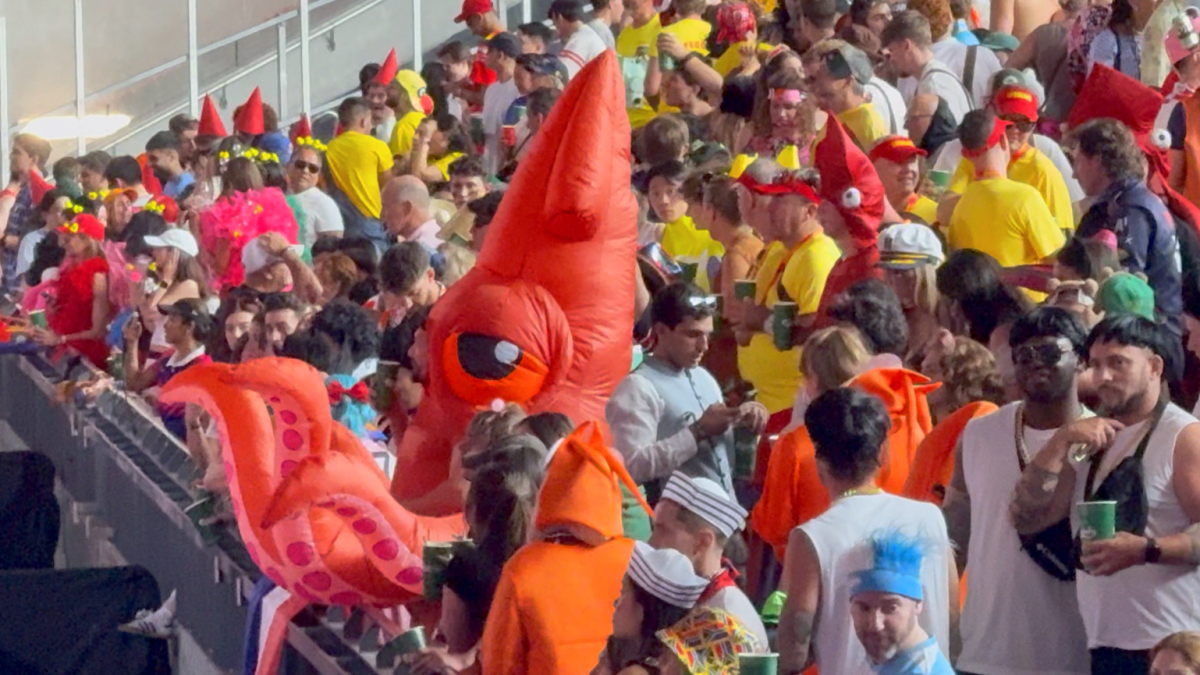
But this is no ordinary crowd. The South Stand is a moving costume party. Elaborate headgear, anime characters, superheroes—one fan in an inflatable octopus suit, another dressed as Mario weaving through the crowd, others in full beer-themed outfits.
Why dress up? The answers varied: some wanted to escape everyday identities; others simply wanted to make people laugh and enhance the atmosphere. But everyone agreed—the Sevens is a party.
Some call it a "springtime Halloween," an apt description. Here, status doesn't matter. If you dress up, join in, and cheer loudly, you belong. A group of fans from New Zealand told me they changed costumes every day: "It keeps things fresh."
Over five decades, the Sevens has evolved into a unique cultural symbol. The South Stand's exuberance is both collective release and a genuine expression of joy.
Observation 4: "We come from different backgrounds, but we're all here for the Sevens"
One group of fans I met, from different countries, summed it up: "We come from different backgrounds, but we're all here for the Sevens."
That spirit is embedded in the tournament's design. There is no fixed seating; fans move freely, mingle, and make new friends. With short matches, quick turnovers, music, video, and alcohol, the event feels like a continuous festival. When play pauses, the crowd dances.
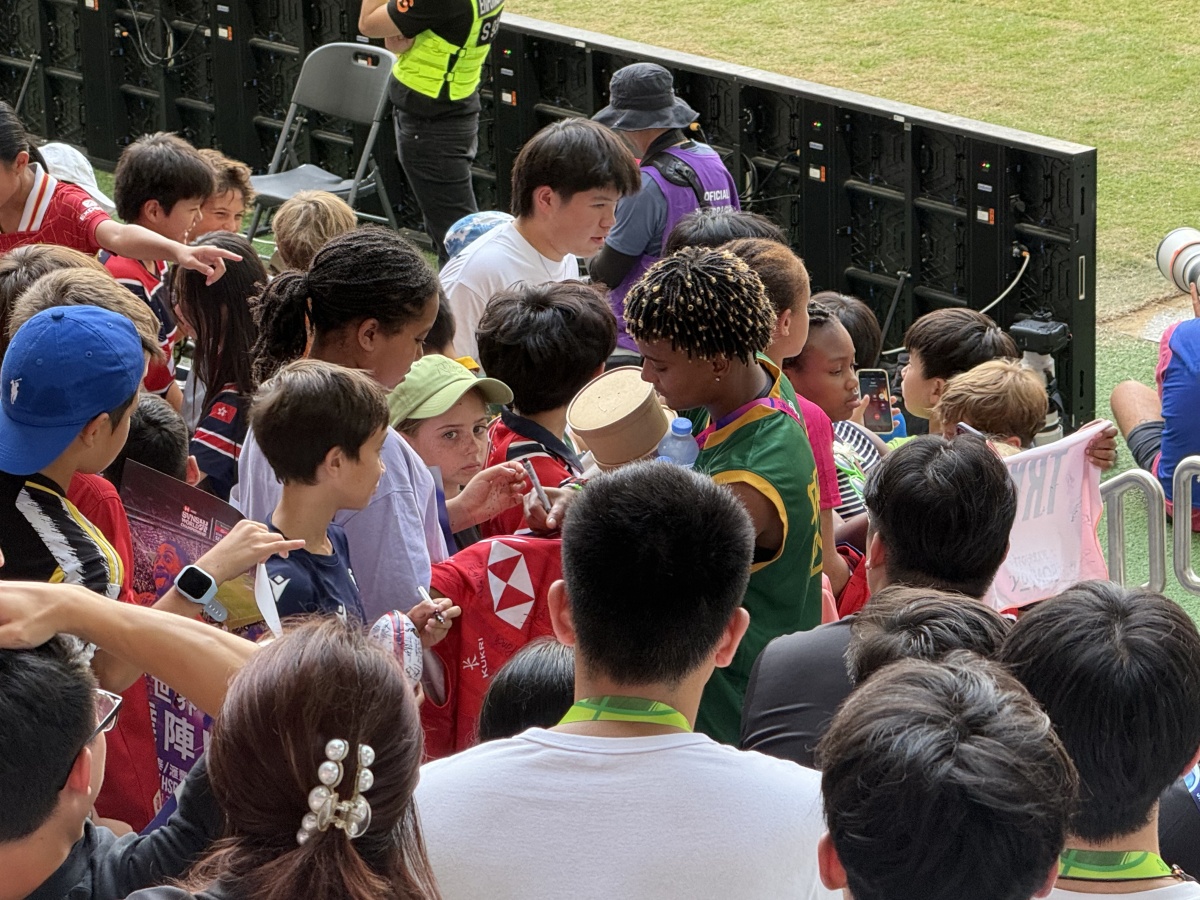
Unlike the Olympics, allegiances are fluid. Flags are waved, faces painted, but aside from the host Hong Kong, China team, few matches see unified crowd support. Fans cheer for good rugby, regardless of nationality. In the stands, laughter and shared drinks blur national lines.
At a higher level, the Sevens also reflects Hong Kong's international role. During the event, Chief Executive John Lee met business leaders from around the world, including a Kyrgyz bank CEO and a regional managing director from Edrington. All spoke highly of the Sevens and expressed confidence in Hong Kong's future. Lee emphasized the city's role as a "super-connector."
As All Blacks legend Dan Carter once put it: "When you think of sevens rugby, you think of Hong Kong Sevens."
Observation 5: Never give up—the city's spirit
At its core, the Sevens is about sporting spirit.
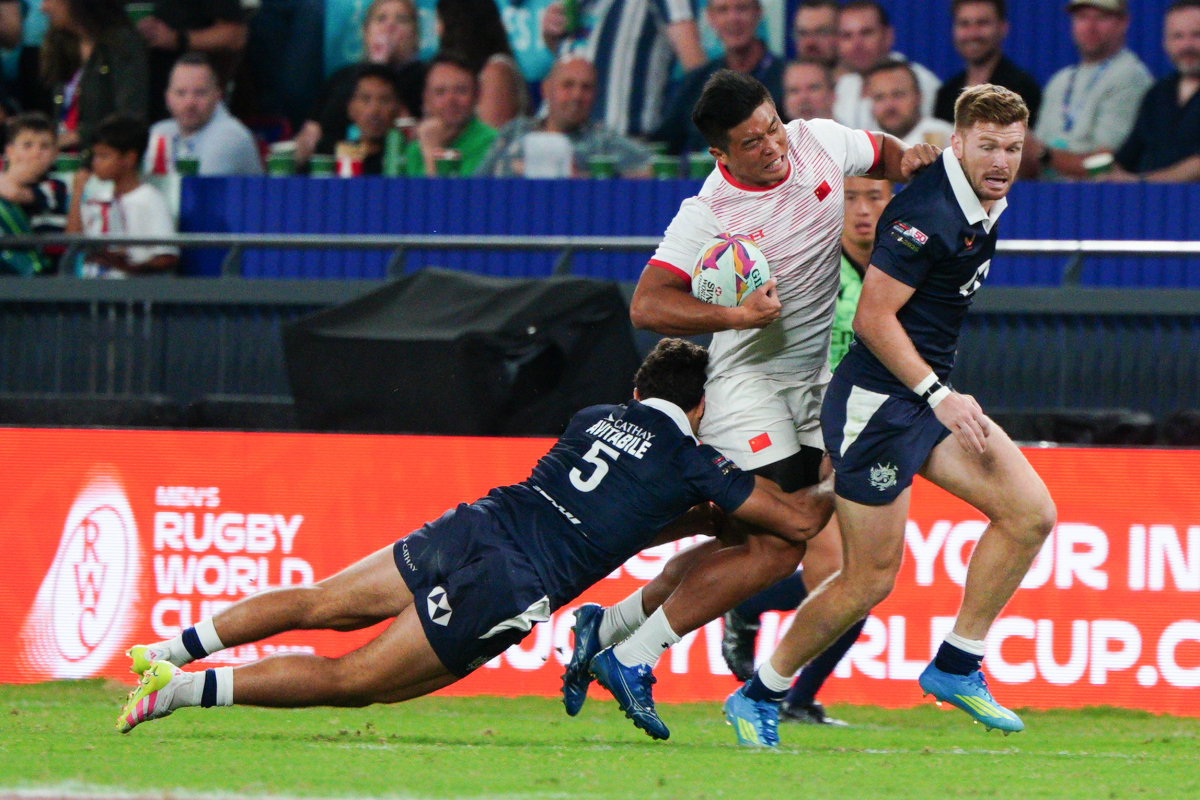
In the men's Melrose Claymores final, Hong Kong, China faced Japan in a thrilling match, winning 19–15 to secure a third consecutive title. The stadium erupted. John Lee later wrote that the sport's pace and intensity—constant transitions between attack and defense—reflect Hong Kong's own resilience and adaptability.
Perhaps the most poignant perspective came from someone who witnessed the beginning. Peter Duncan, coach of the Hong Kong team in 1976, attended the 50th anniversary. "If you were sitting in the stadium in 1976 and you'd ask me where is this going to go, you couldn't have envisaged anything such as this," he said.
"The players make the tournament, and the spectators make the tournament," he added. While facilities have transformed, the essence remains unchanged: great athletes and passionate fans.
To him, the Sevens is more than sport—it is a calling card for Hong Kong. A symbol that if the city can create something like this, there is little it cannot achieve.
From a humble pitch in 1976 to the dazzling stage of Kai Tak in 2026, the Hong Kong Sevens is not just the story of a sport, but of a city. A story of persistence, energy, and global connection.
As the final whistle blew and the lights dimmed, what remained was more than three days of celebration. It was a reaffirmation: that Hong Kong still has the power to bring the world together—and that its creativity and vitality continue to thrive.
Related News:
Rugby Sevens | New Zealand retains Women's crown, South Africa dominates Men's final




Comment