






US President Donald Trump's policies have provoked anger at home and abroad. On March 28, anti‑Trump demonstrations under the banner "No Kings" were held across the United States and in multiple countries worldwide to protest US attacks on Iran, tough immigration enforcement, and to voice strong opposition to Trump personally. Organizers said there were more than 3,300 events across all 50 US states, with at least 8 million participants—more than the comparable rallies held in June and October last year.
On March 28, the third nationwide "No Kings" demonstration took place in all 50 states. The organizing coalition, which includes the American Civil Liberties Union (ACLU), said demonstrations topped 3,000 across the country, spanning major cities, suburbs and rural areas from the East to the West Coast and reaching as far as Kotzebue above the Arctic Circle in Alaska. Similar protests were held the same day in 16 other countries, including the United Kingdom, France, Spain and Mexico.
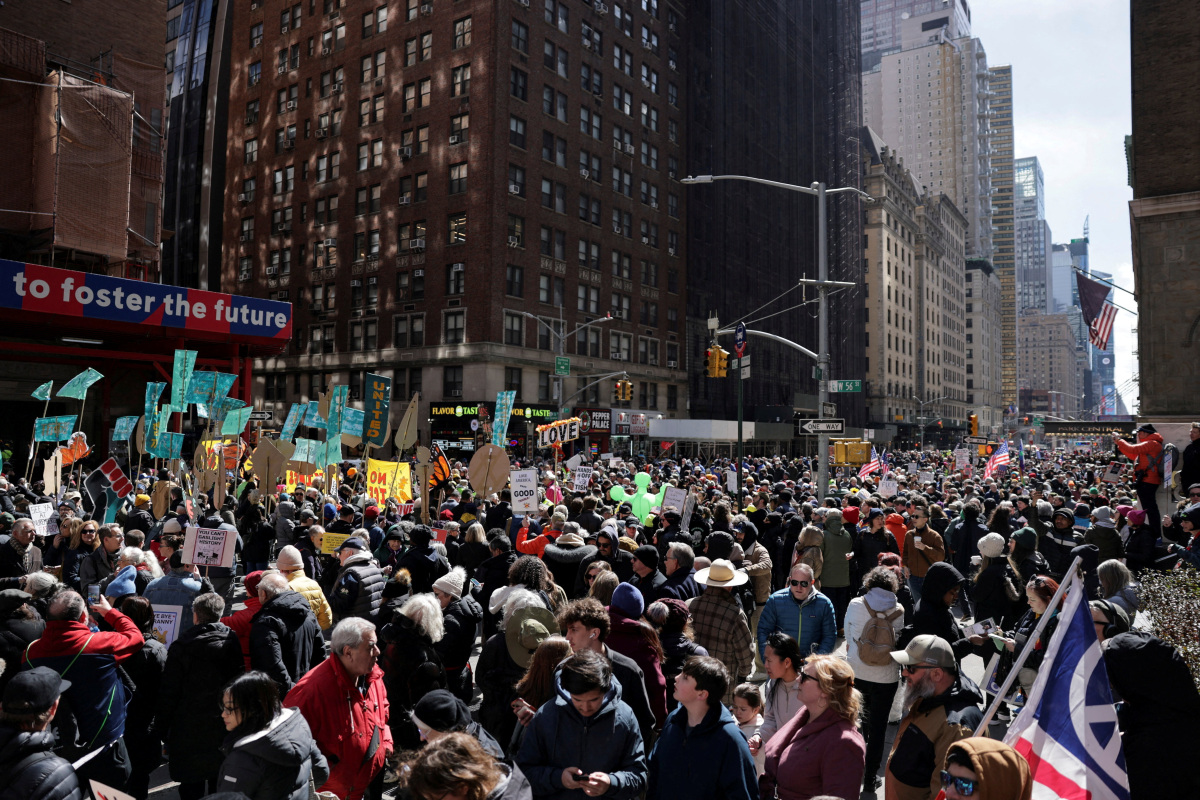
Anti‑war and anti‑immigration policies take center stage
This marks another large‑scale round of "No Kings" demonstrations at home and abroad within a year. On June 14 last year—Trump's 79th birthday—roughly 5 million Americans took part in the first round of "No Kings" protests. In October last year, the movement resurfaced with about 7 million people demonstrating against Trump's immigration enforcement actions in cities governed by Democrats.
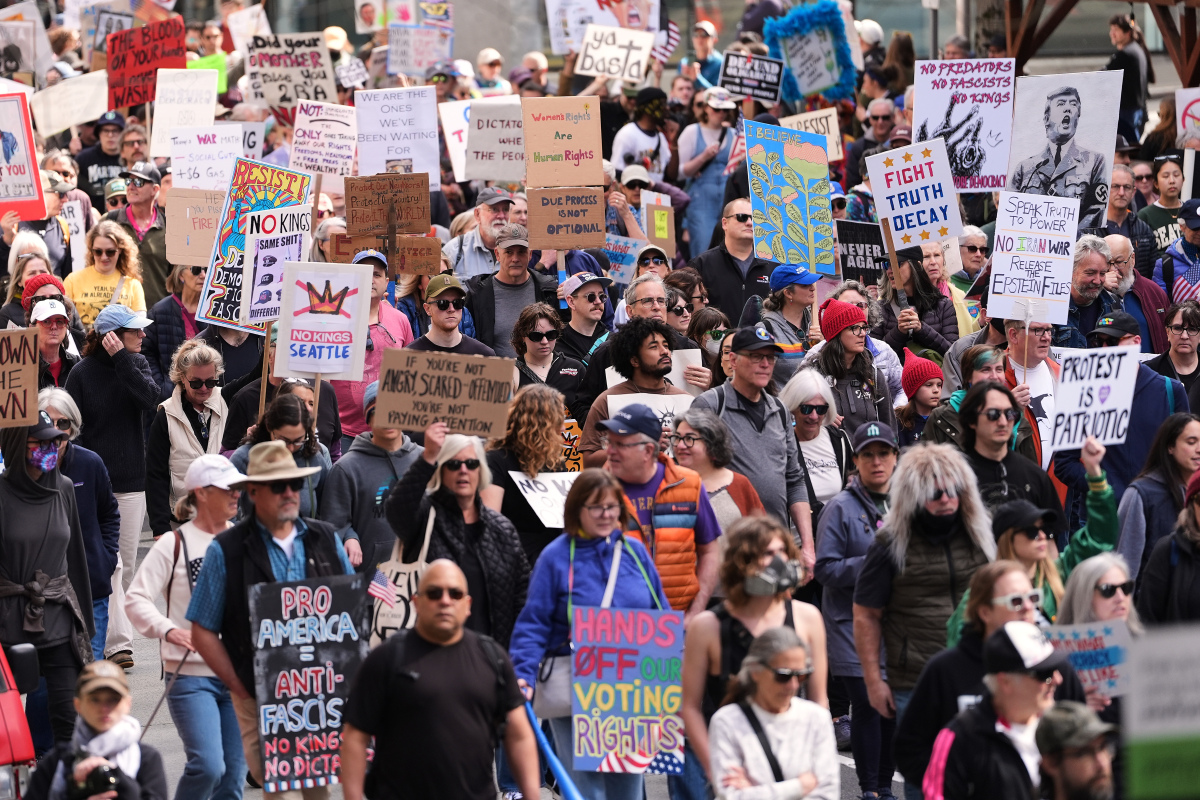
Organizers said the current demonstrations are principally opposed to Trump's policies and to war. The US conflict with Iran has now lasted more than four weeks, disrupting shipping through the Strait of Hormuz and sending global oil prices soaring, which has directly increased living costs for Americans and heightened public anger. The war has also resulted in US military casualties, and Trump's decision to go to war without Congress has been labeled "illegal."
Trump's poll ratings hit new lows
Trump's approval ratings have continued to fall recently, reaching record lows for his second term as the November midterm elections approach. Reuters/Ipsos polling data show that as of March 23, Trump's approval stood at 36%, down from 45% when he returned to the White House last year. Polls also indicate that public confidence in Trump's handling of the economy has dropped from 43% at the start of last year to 29% now, as gasoline prices have been driven up to an average of nearly US$4 per gallon amid Middle East hostilities.
Related News:
Airstrike on press car in southern Lebanon kills three journalists




Comment