






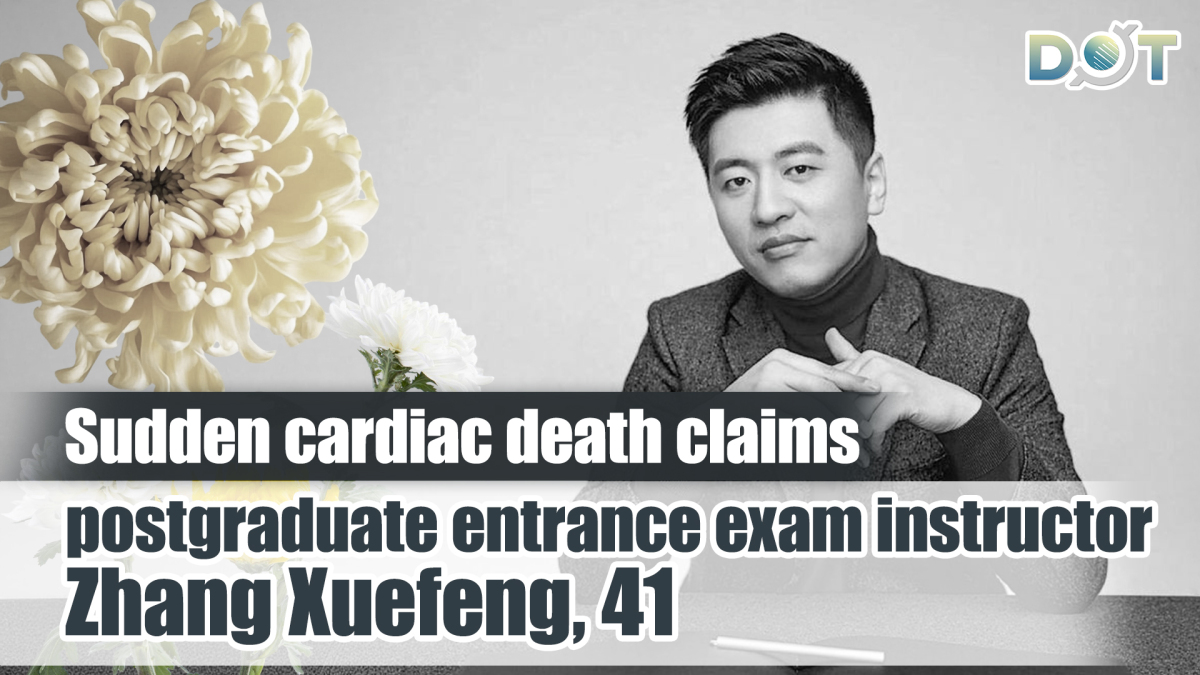
Tuesday night (March 24), Suzhou Feng Xue Wei Lai Education Technology Co., Ltd. issued an obituary stating that the Chinese mainland's well‑known postgraduate entrance exam instructor Zhang Xuefeng died after emergency treatment failed following a sudden illness. Reportedly, on Tuesday, at 12:26 pm, Zhang felt unwell after running at the company and was rushed to the hospital. Despite all resuscitation efforts, he sadly passed away at 3:50 pm at the age of 41. The hospital diagnosed the cause of death as sudden cardiac death (SCD).
What is sudden cardiac death? What are the early symptoms? Who is at high risk? How can sudden cardiac death be prevented?
What is sudden SCD?
SCD refers to an unexpected death occurring within one hour of the onset of cardiac symptoms when there is no obvious non‑cardiac fatal cause. According to the National Center for Cardiovascular Diseases, some 550,000 people in China die from sudden cardiac death each year—an average of 1,500 deaths per day from cardiac arrest. The main high‑incidence age range is 30–63 years, and 43% of sudden deaths occur in people aged 40 or younger.
What are the early warning signs?
Sudden death is mainly divided into cardiac and non‑cardiac types. SCD is caused by primary heart disease and accounts for more than 80% of all sudden deaths. Between 25% and 50% of patients have no obvious symptoms before sudden death; others may show warning symptoms such as chest tightness, chest pain, palpitations, shortness of breath, dizziness, heavy sweating, unexplained nausea and vomiting, and atypical angina symptoms—for example, abdominal pain, toothache, or pain in the left shoulder.
It is worth noting that sudden death in younger people can be more severe than in the elderly. Older people often have chronic conditions such as hypertension and heart disease, and have gone through vascular aging, which can produce a certain degree of ischemic preconditioning; young people usually lack this process, and their disease can develop abruptly—once myocardial ischemia occurs, it may be more severe and the mortality rate higher.
Who is at high risk?
SCD does not only occur in people with known heart disease; many patients have no obvious symptoms before death, and it is therefore called a "hidden killer." Cases in those under 35 are often due to undiagnosed congenital heart disease, while cases in people over 35 are mostly caused by the sudden onset of cardiovascular disease, with arrhythmias and myocardial infarction being the two main culprits of cardiac sudden death.
Research also shows that sudden cardiac death is more common in men than in women, and there has been a trend toward younger victims in recent years. The China epidemiological survey of sudden cardiac death indicates that the proportion of cases aged 18–35 rose from 12% in 2015 to 28% in 2024.
Unhealthy lifestyle habits also increase the risk. The most prominent risky behavior leading to sudden death is chronic sleep deprivation. Ideal sleep time is generally 6.5–8 hours; studies show a U‑shaped relationship between sleep duration and mortality — both too little and too much sleep raise the risk of death. Strenuous exercise can also elevate the risk of sudden death because extreme sympathetic activation during intense exercise increases myocardial contractility, heart rate, and blood pressure to meet physiological needs; this can trigger electrical instability in the heart, leading to fatal arrhythmias such as ventricular fibrillation and resulting in sudden death.
Preventing sudden cardiac death—habits to avoid
Because SCD can occur rapidly, everyday lifestyle adjustments and screening can help reduce risk. The following unhealthy habits should be avoided:
Binge eating and drinking: Overeating increases cardiac workload; high‑fat meals raise blood lipids and promote plaque formation, leading to myocardial infarction. Excessive alcohol raises heart rate and blood pressure and can trigger arrhythmias. A light, balanced diet is recommended; patients with coronary heart disease and older adults should avoid alcohol.
Excessive stress: Long‑term high stress at work or in life keeps the nervous system in an excited state, increasing cardiac burden. Balance work and rest, take timely breaks, and learn to release stress and relax.
Long baths: Bathing causes peripheral vasodilation; bathrooms are relatively enclosed and may have lower oxygen levels. Prolonged bathing can lead to cerebral and cardiac ischemia. Avoid bathing immediately after a large meal or on an empty stomach, pay attention to water temperature and duration, and elderly people should have assistance when bathing.
Strenuous exercise: Intense exercise causes sudden rises in blood pressure and heart rate and can produce myocardial hypoxia, increasing the risk of triggering myocardial infarction in those with underlying cardiovascular disease. Elderly people and those with heart conditions should avoid vigorous exercise and instead do moderate aerobic activity. If chest tightness or shortness of breath occurs during exercise, stop immediately and rest.
Extreme emotions: Intense grief, fear, excitement, or anger cause large releases of stress hormones that impair cardiac pumping function and can induce chest tightness, shortness of breath, or shock. Maintain emotional balance and avoid extreme mood swings.
Prolonged sitting: Long periods of inactivity slow blood flow and may lead to thrombosis and myocardial infarction. If sitting for long periods, get up and move every 30 minutes and exercise your limbs.
Getting up too abruptly: Jumping up suddenly when the alarm rings can sharply accelerate breathing and heartbeat and increase blood flow, placing excessive burden on the heart and triggering arrhythmias. When rising, stretch, move arms and legs first, and get up slowly.
Snoring during sleep: Snoring may indicate obstructive sleep apnea, during which the brain and heart can be intermittently hypoxic, easily inducing myocardial ischemia or infarction. People who snore frequently or wake gasping at night should see a doctor.
Extreme temperatures: Cold causes vasoconstriction, raising blood pressure and causing vascular spasm, which can trigger angina or myocardial infarction. During cold waves or heat warnings, elderly people and those with hypertension should reduce outdoor activity.
Straining during bowel movements: Excessive straining raises intra‑abdominal pressure and blood pressure, increasing cardiac load. Eat more fiber; if constipation persists, consider laxatives such as glycerin suppositories or lactulose.
In addition, routine medical examinations can help prevent cardiovascular disease, including blood tests, electrocardiogram (ECG), echocardiography, exercise ECG (treadmill test), long‑term Holter monitoring, cardiac CT, cardiac MRI, and genetic testing. Some patients may require invasive investigations such as cardiac catheterization, electrophysiological studies, or myocardial biopsy.
Related News:
Summer soon? City to swelter near 28°C tomorrow, six days of showers possible from Saturday
Could super El Niño erupt? Summer could become 'hottest ever'—What it means for HK




Comment