






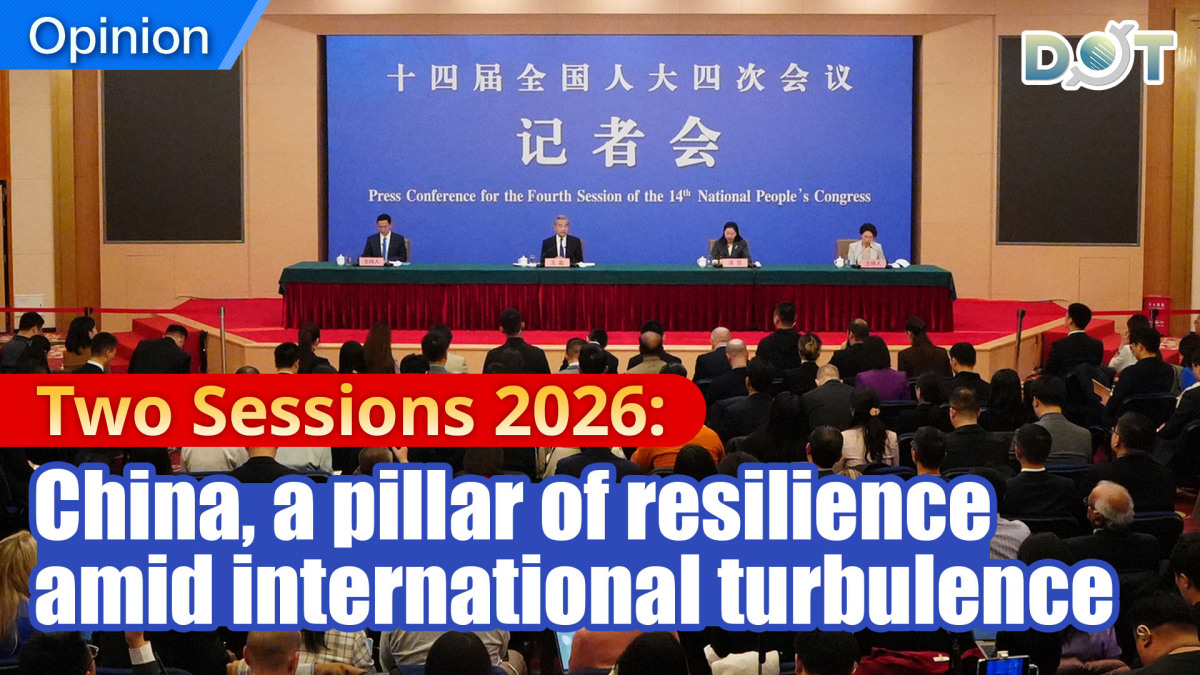
Today (March 8), Chinese Foreign Minister Wang Yi, also a member of the Political Bureau of the Communist Party of China Central Committee, held a press conference on the sidelines of the fourth session of the 14th NPC.
The diplomatic practice of heads of state serves as the cornerstone of China's foreign policy. By engaging in such high-level interactions, China contributes vital stability and predictability to a volatile global environment, acting as a pillar of resilience amid international turbulence, said Wang.
China and Russia maintain a relationship grounded in deep political trust, resilient against any outside interference or coercion. Both nations consistently adhere to strategic autonomy, honor one another's essential interests, and avoid pressing their own priorities or viewpoints onto the other.
Wang further emphasized that China and the United States must engage in comprehensive planning for high-level engagements. This involves creating a favorable atmosphere, bridging gaps, and eliminating unnecessary obstacles.
To ensure the continued stability and positive trajectory of China-Europe relations, Europe must maintain an accurate and fair understanding of China. The minister observed that over the past year, China has witnessed a positive shift in its ties with various European nations.
In a similar vein, he underscored the need for Global South countries to enhance mutual coordination and dialogue. They need to collectively defend their legitimate rights and broaden their capacity for independent development, especially given the challenges posed by resurgent hegemonism and power politics.
China is dedicated to advancing the vision of an Asia-Pacific community. This commitment will be exemplified through concrete initiatives as it prepares to host this year's Asia-Pacific Economic Cooperation (APEC) leaders' meeting in Shenzhen, Guangdong province, thereby translating a shared vision into practical achievements.
Additionally, China has extended an invitation to more nations to join and support the Global Governance Initiative. This collective effort aims to rejuvenate, protect, and fortify the United Nations system, ensuring it remains robust and effective.
Wang stressed that China's vision of building a community with a shared future for humanity is intended to show that humanity's true enemies are not each other, but war, poverty, hunger, and injustice. He noted that the truth and value of the vision of building a community with a shared future for humanity are sinking in with people around the world.
At a time of global uncertainty, Wang's press conference delivered a clear and confident message: China sees itself as a stabilizing force. From reaffirming deep trust with Russia to calling for fewer obstacles with the US, and from rallying the Global South to hosting APEC in Shenzhen, the remarks reflected a foreign policy rooted in strategic autonomy and multilateral engagement. The framing of a "shared future for humanity" as a fight against war, poverty, and injustice also offered a compelling counter-narrative to great-power competition.
Related News:
Opinion | Two Sessions 2026: Resilience for today, vibrancy for tomorrow
Opinion | Two Sessions 2026: Ambitious goals for people's livelihood




Comment