






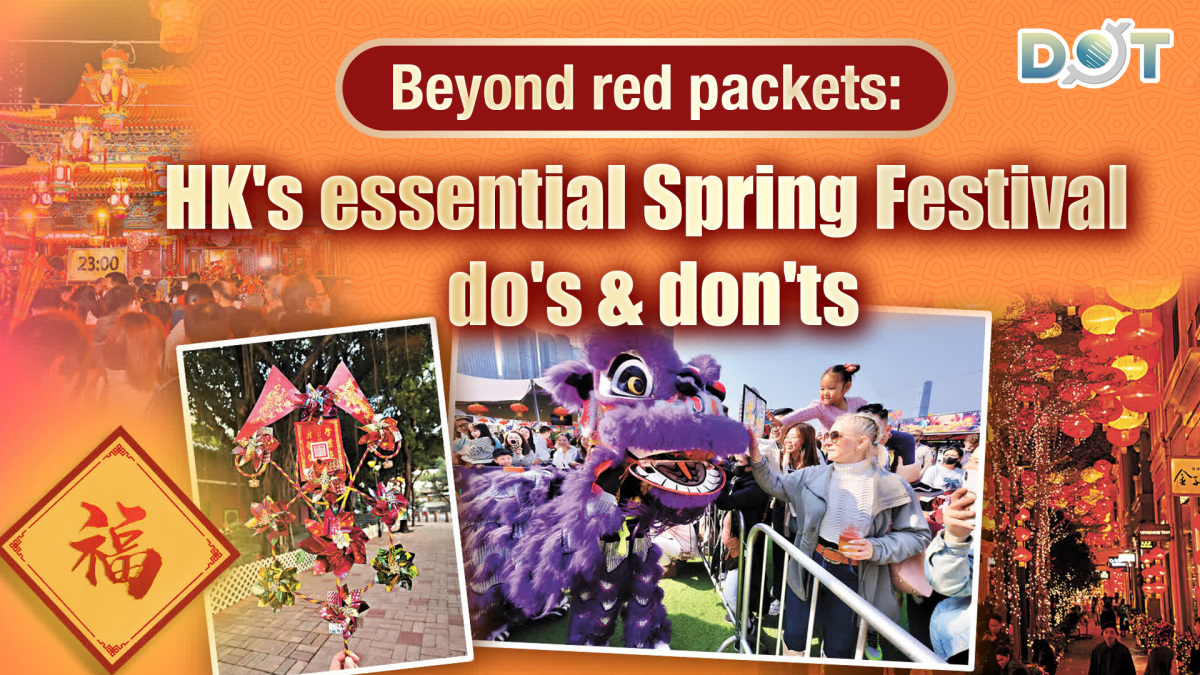
The Spring Festival is one of Hong Kong's most spectacular festivals of the year. The city's Spring Festival customs are rich and varied, blending traditional and modern elements. These traditions not only enhance the festive atmosphere but also help preserve a rich cultural heritage. This article compiles Hong Kong's traditional Spring Festival customs and taboos, wishing everyone a prosperous Year of the Horse!
Out with the Old, In with the New
A traditional Spring Festival custom is the "28th day of the 12th lunar month spring cleaning." Families will thoroughly clean their homes before the Spring Festival, clearing out old items and bringing in new ones. This symbolizes bidding farewell to the old and welcoming the new, sweeping the misfortunes of the past year out of the house to make way for a year filled with blessings and wealth. However, remember that this big clean must be completed before Chinese New Year's Eve, and it's crucial to sweep "inwards", not outwards, as sweeping during the Spring Festival period is believed to sweep away good luck.
Posting Spring Festival Couplets (Fai Chun): Avoid Crookedness
Before the Spring Festival, especially on Chinese New Year's Eve, people replace their decorative banners (Fai Chun) with new ones. These red banners, bearing auspicious phrases, are posted on doors or in the year's lucky directions as prayers for a peaceful and smooth year ahead. When posting Fai Chun, one must choose lucky words and ensure they are posted neatly, avoiding any crookedness.
The Reunion Dinner: Abundance and Prosperity
On Chinese New Year's Eve, families gather for a lavish reunion dinner featuring dishes with symbolic meanings. Many Hong Kong people enjoy Poon Choi (a communal feast served in a large basin). In this meal, fish represents surplus (year-on-year abundance), dumplings symbolize wealth, and ingredients like Hairlike Seaweed and dried oysters carry wishes for prosperity and good fortune, hoping for a profitable year ahead.
Giving Lai See: Wishes for Health
During the Spring Festival, people visit relatives and friends to exchange greetings. A key custom during these visits is receiving red packets. During the first days of the new year, one says auspicious phrases to elders, bosses, or married friends to receive a red packet (Lai See). Traditionally, elders give "Ya Sui Qian" (money to suppress evil spirits) to children, who place it under their pillows to ward off evil and wish for a healthy new year. When visiting, one should dress appropriately, typically in red or other vibrant colors symbolizing luck and joy. When giving Lai See, one should also be mindful of the amount, choosing lucky numbers like "8" (prosperity) and "6" (smoothness), while avoiding the number "4" as it sounds like the word for "death".
Taboo 1: Breaking Things: An Omen of Financial Loss
Damaging furniture or breaking things is a major Spring Festival taboo, as it is seen as an omen of financial loss. If something is accidentally broken, it should be wrapped in red paper immediately while saying the auspicious phrase "Sui Sui Ping An" (which sounds like "peace every year"). Another saying is "Lok Dei Hoi Fa, Fu Gwai Wing Wa". One should also buy a replacement for the broken item, like a new bowl, before the Lantern Festival.
Taboo 2: Bathing or Washing Hair - Washing Away Good Fortune
Bathing, washing hair, and doing laundry are traditionally avoided during the Spring Festival. This is because the word for "wash" shares a sound with the word for "death", and "hair" sounds like "prosperity" in Chinese. Traditionally, people complete all washing on Chinese New Year's Eve and refrain entirely on Chinese New Year's Day itself, resuming only in the early hours of the second day, to prevent washing away good omens and wealth.
Taboo 3: Sweeping or Taking Out Trash - Sweeping Away Wealth
Tradition holds that every household is filled with blessings and wealth. Sweeping the floor, mopping, or taking out the trash on Chinese New Year's Day is believed to sweep away this luck and fortune. As a rule, even outside of Spring Festival, one should always sweep inwards from the doorway.
Taboo 4: Napping - Hindering Career Prospects
Taking a nap on Chinese New Year's Day symbolizes that one will become lazy and sluggish throughout the year, potentially hindering career luck. Therefore, after waking up on Chinese New Year's Day, one should avoid going back to sleep.
Related News:
Right or left? Guide to hanging Spring Festival couplets without confusion




Comment