






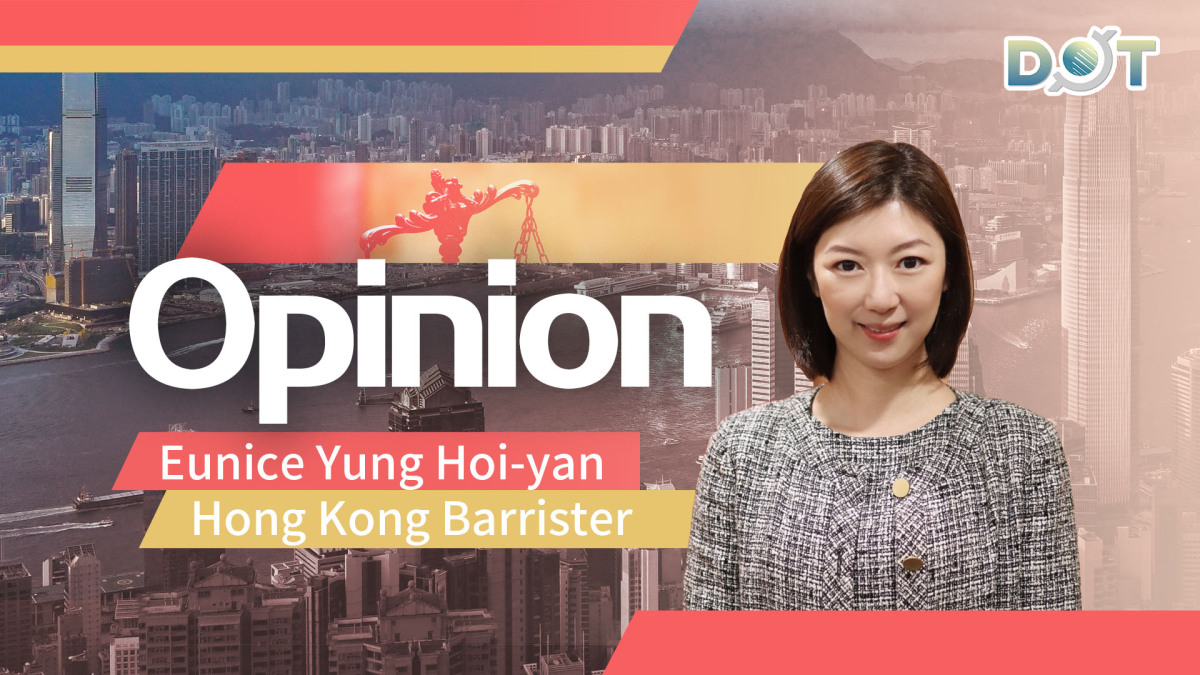
By Eunice Yung
The sentencing decision delivered by Hong Kong's High Court in the case of Jimmy Lai Chee-ying stands as a defining moment for both the city's legal system and its enduring commitment to the rule of law. In a judgment of significant detail, the court set out the full factual and legal basis for the sentence, and—crucially—directly addressed the many claims and controversies that had surrounded this high-profile background.
Contrary to the narrative advanced by Lai and his supporters—that the case was fundamentally a matter of press freedom—the court made plain that the conviction arose from orchestrated, persistent, and highly organized actions that posed a genuine threat to Hong Kong's security, social stability, and constitutional order. These were not isolated missteps or spontaneous acts, but, as the court explained, part of a "long-term, highly organized campaign orchestrated by Lai himself". He was unequivocally identified as the "mastermind and the driving force behind these conspiracies," a key aggravating factor meriting a heavier sentence.
Lai was convicted on two principal counts: conspiracy to collude with foreign forces to endanger national security and conspiracy to print, publish, sell, offer for sale, distribute, display, and/or reproduce seditious publications. The judgment highlighted that, over an extended period, Mr. Lai repeatedly leveraged his leadership of Apple Daily and its affiliated companies to incite and encourage foreign actors to impose sanctions on Hong Kong and mainland officials and to disseminate messages that, in the view of the court, sowed social division, undermined public order, and urged actions hostile to the region's stability. The imposition of sanctions on Hong Kong and mainland officials—sanctions still not lifted—was cited as concrete evidence of real-world harm caused by these activities. The court stressed, "Such adverse measures have not been removed even up to today. Although it was not the case that the conspiracies were the only cause of the [sanctions], it is wholly unrealistic to say that the defendants' activities were not a contributing cause."
Premeditation and persistence were central findings. As the judgment stated, "the conspiracies were clearly premeditated" and "persistent ones, resulting in many acts rather than a single incident." Even after the implementation of the National Security Law, the effort continued, with the advocacy for sanctions becoming "more implicit and subtle, but the change was only in form rather than in substance."
The court provided a strong rebuttal to assertions that Lai was prosecuted for his beliefs or for legitimate journalistic work. It emphasized that "the NSL does not have retrospective effect and that the defendants are not to be punished for their pre-NSL acts or activities, nor for their political thoughts. They were convicted because they had agreed to do and intended to carry out what was not permissible under NSL 29." While freedom of expression remains protected under the Basic Law, the judgment affirmed that it "is not absolute—especially when it is deployed as a shield for activities that seriously undermine national security."
In addressing the common claim of "journalistic immunity", the court stated unequivocally that journalistic material is not automatically exempt from law enforcement access in national security investigations, as "the public interest and the effective investigation of criminal conspiracies must come first." Furthermore, the court carefully chronicled and considered all legal maneuvers by the defense—ranging from challenges to evidence gathering, to jurisdictional issues, to procedural fairness—and concluded that every argument was heard and decided upon "after fair process and full argument, in accordance with the highest standards of Hong Kong's legal tradition."
Significantly, the judgment underscored the judiciary's independence and integrity, dismissing any suggestion that foreign pressure, external narratives, or protests could influence proceedings. The judges made clear that judicial reasoning and procedural fairness applied throughout—at every level of the court system—offered a direct and principled rebuttal to any claim that Hong Kong is no longer governed by law: "a more lenient sentence would risk not only failing to deter similar attempts to undermine social stability but also shaking public confidence in justice and risking the international reputation of Hong Kong as a lawful and orderly society."
The process of sentencing reflected a careful balancing act. Mitigating considerations—including Lai's age, health, and conditions of incarceration—were weighed, but the court held that "in cases where the community's security, order, and well-being are so directly threatened, personal factors seldom outweigh the need for an adequate sentence." For Lai, a starting point of fifteen years' imprisonment was chosen for each principal national security offense, increased by three years as he was "the mastermind," then mitigated by one year for age, health, and conditions. Lighter sentences for certain co-defendants—based on responsibility and cooperation—demonstrated the court's rigorous attention to proportionality and individualized justice.
The recurring theme throughout the judgment is the need for deterrence, both specific and general. The judges warned that leniency would "risk encouraging similar acts, weakening faith in the justice system, and undermining the very foundation of Hong Kong's prosperity." The sentencing logic emphasized that public interest "must come first, especially where there is clear evidence that individual actions are calculated to invite foreign intervention and hinder the city's lawful governance."
Far from silencing dissent or infringing on rights, the High Court's sentencing decision stands as a reaffirmation of Hong Kong's core legal values and societal priorities. The clarity, logic, and candor evident throughout the court's written reasons should dispel any claim that the process was biased, opaque, or motivated by anything other than the prudent application of established legal principles. The result affirms that constitutional order, social stability, and the rule of law are not abstract aspirations in Hong Kong, but living values articulated and protected by the courts even when subject to scrutiny and public debate.
The sentence handed down is thus both appropriate and rooted in law, reflecting the gravity and persistence of the offending and the careful, fair deliberation of the court. It is anchored in the facts of the case, the letter and spirit of the law, and the community's pressing need to safeguard national security and social stability—on which all rights ultimately depend. Through this open and meticulous process, Hong Kong's judiciary has produced an outcome that should reassure all who rely on the city's courts for impartiality and justice. Ultimately, the judgment stands as a vivid confirmation that the rule of law in Hong Kong exists not only to protect individual freedoms, but to guarantee the security and flourishing of society as a whole, acting as a safeguard for the present and a beacon for the future—demonstrating that here, justice is served calmly, fairly, and above all, in the public interest.
Related News:
Opinion | The case of Lai Chee-ying: A judicial reaffirmation of security and law
Opinion | Heavy penalty for Jimmy Lai's conviction under NSL fully deserved and justifiable




Comment