






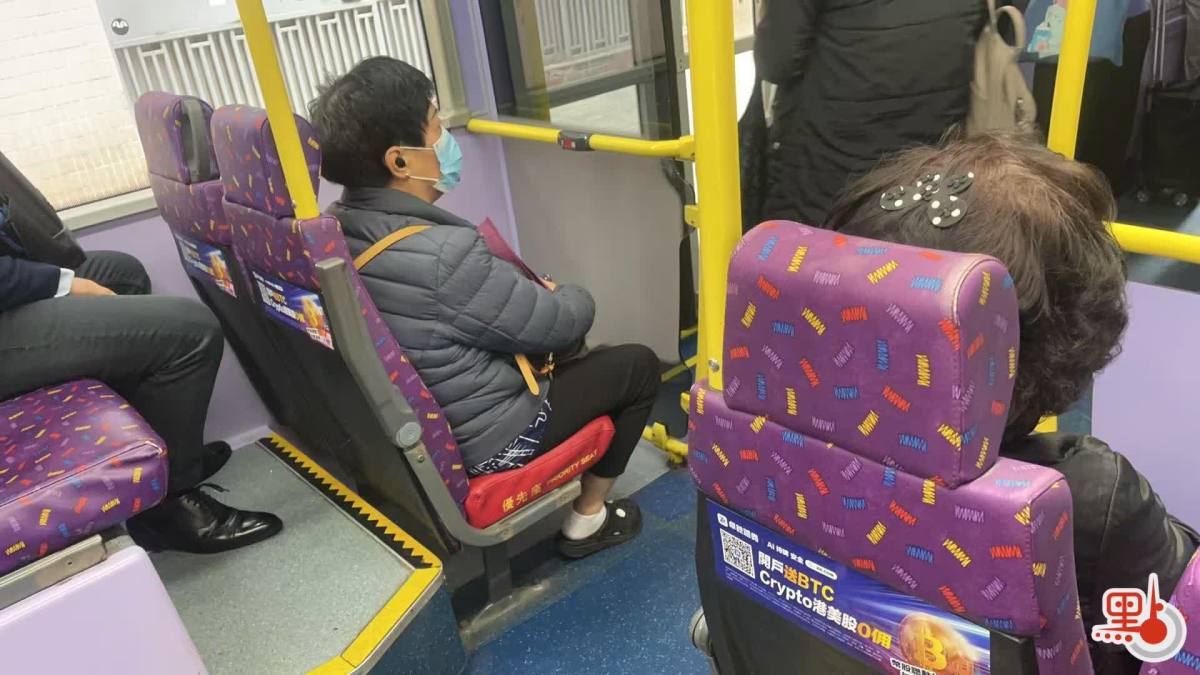
Hong Kong's Transport Department is urging passengers to prioritize seats equipped with seat belts following the implementation of new safety regulations that took effect on January 25.
Under the updated law, passengers on buses are now required to wear seat belts where they are available. In a public notice, the department emphasized that adult passengers traveling with children should first fasten their seat belts and then hold children who cannot sit properly on their laps. Children who can sit securely on their own should also use seat belts.
Citing research by the World Health Organization (WHO), the department noted that having children use regular seat belts is still significantly safer than not using any form of restraint. In the event of an accident, seat belts provide critical protection for passengers.
The Transport Department encourages passengers to report any faulty or damaged seat belts to the bus driver. Passengers are encouraged to choose other available seats with working seat belts whenever possible for their safety.
Bus riders are still free to stand on the lower deck or select their seats. However, if the chosen seat is equipped with a seat belt, wearing it is now mandatory. Passengers can unbuckle their seat belts and prepare to disembark by pressing the stop bell when approaching their destination.
To support the rollout of the new rules, the Transport Department announced that it will focus on enhanced public education and promotional efforts in the initial phase. The goal is to help passengers develop a habit of wearing seat belts and to promote a culture of safe travel. The department highlighted that seat belts can significantly improve survival chances in serious traffic collisions, reducing the risk of driver and passenger fatalities by approximately 40% and serious injuries by 70%, respectively.
Regarding enforcement, the department stated that law enforcement officers will adopt a balanced approach based on compassion, reason, and legal principles. Officers will carry out professional assessments and act fairly based on actual situations. The law already includes provisions for reasonable excuses—for example, if a passenger is unable to wear a seat belt due to specific circumstances, they may explain the situation to the officers, who will take it into account during enforcement.
The penalties for non-compliance are consistent with those applied to other vehicle categories, with a maximum fine of HK$5,000.
Related News:
New bus seatbelt rules raise tourist concerns: Industry calls for balance




Comment