






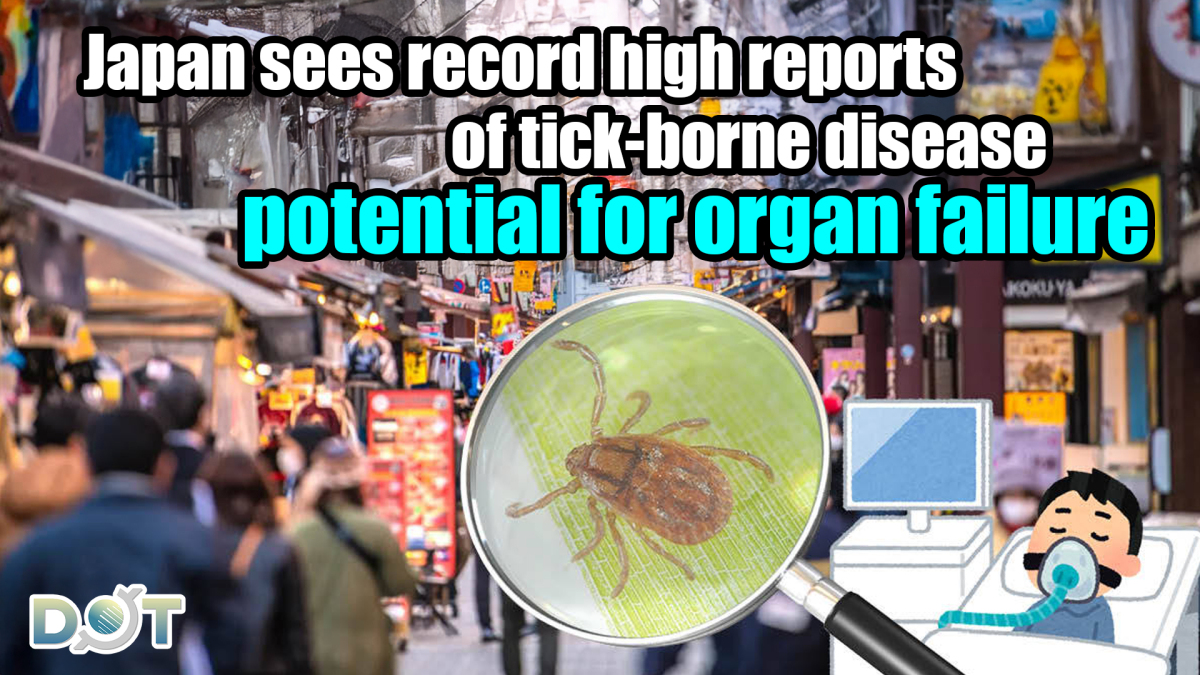
In 2025, Japan recorded 191 cases of Severe Fever with Thrombocytopenia Syndrome (SFTS) caused by tick bites, marking a historical high. While cases were previously concentrated in western Japan, the infected area has now expanded eastward, with multiple regions, including the Kanto area, reporting confirmed cases for the first time.
According to statistics from the Japan Institute of Health Crisis Management, the number of reported SFTS patients in 2025 reached 191, exceeding the previous record set in 2023 by more than 50 cases, making it the highest annual figure to date. Confirmed cases were distributed across 32 prefectures nationwide, with western Japan remaining the most affected area.
Reports from various prefectures show that Kochi Prefecture had the highest number of cases at 15, followed by Shizuoka and Oita Prefectures with 13 cases each, Nagasaki Prefecture with 12 cases, Saga and Kumamoto Prefectures with 11 cases each, and Hyogo Prefecture with 10 cases, indicating that the outbreak remains predominantly concentrated in western Japan. Notably, Hokkaido, Ibaraki, Tochigi, and Kanagawa Prefectures recently confirmed their first infection cases, demonstrating that the disease is gradually spreading to eastern Japan, including the Kanto region.
SFTS is primarily transmitted through bites from infected ticks and can lead to severe thrombocytopenia, uncontrolled bleeding, coma, and even death. Experts note that confirmed cases typically begin to rise from March each year and advise the public to wear long sleeves and use insect repellent when engaging in outdoor activities in grassy areas to reduce the risk of infection.
Related News:
Japan confirms season's 1st bird flu outbreak in greater Tokyo area




Comment