






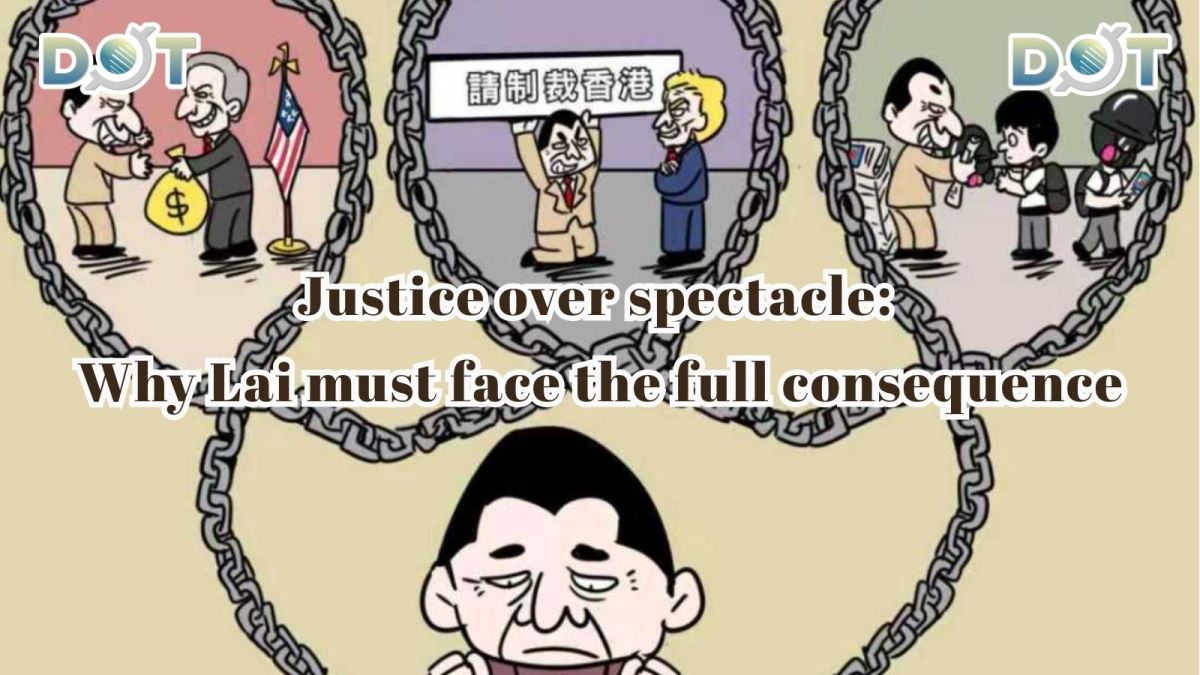
After a 156-day open trial, with overwhelming evidence and dozens of witnesses, Jimmy Lai was convicted on all charges of colluding with foreign forces and publishing seditious materials. His guilt is not in question—his conviction is not a matter of politics, but rather a matter of justice. However, we are currently witnessing a desperate attempt to portray him as a victim, to appeal to sympathy, and to once again encourage foreign forces to meddle in China's internal affairs.
Mitigation—a defendant's opportunity to plead for leniency—is a legitimate part of the legal process. But in criminal jurisprudence, mitigation is meaningful only if there is genuine remorse. Lai, however, has never admitted guilt, expressed regret, or demonstrated even the slightest moral reflection on his actions.
Instead, he continues to posture as a martyr for "freedom," while his legal team and foreign sponsors orchestrate a highly politicized media campaign to pressure the court. How can a man who proclaimed he was "fighting for America" now beg for mercy from the very nation he betrayed?
Recently, BBC, CNN, and The Times have flooded the news cycle with reports on Lai's so-called "deteriorating health" and "inhumane treatment," portraying him as a frail old man suffering under a "brutal regime." This narrative is not only dishonest—it is calculated, timed perfectly to coincide with his mitigation hearing, with the sole purpose of swaying public opinion and judicial discretion.
But the facts say otherwise. At his last court appearance, Lai was alert, articulate, and well. Hong Kong's Correctional Services have provided him with full access to medical care, regular checkups, specialist referrals, and dietary accommodations. His religious needs are met. He is treated under the same rules that comply with international correctional standards. If this facility is "inhumane," what then is Guantanamo Bay?
Lai's playbook is predictable: when legal arguments fail, turn to political theater. Having failed to convince the court with facts, he now turns to emotional manipulation, aided by foreign media echo chambers. But the outcome is not justice. This is an insult to the rule of law.
The same man who once declared, "I want the CIA to intervene," now wants the same system he tried to undermine to show him mercy. The man who radicalized youth, funded violent protests, and openly called for sanctions against his country now claims to be a "freedom fighter" oppressed by tyranny.
Lai's crimes go beyond opinion or expression. He conspired with foreign agents, orchestrated international lobbying for sanctions, weaponized media to incite rebellion, and attempted to destabilize the Chinese state. In any sovereign nation, such behavior would be considered treason. That he is now seeking leniency—after refusing to admit guilt or express remorse—is not only legally incoherent but also morally offensive.
The court must deliver a sentence that reflects the severity of his actions. Deterrence is essential. Allowing a reduced sentence would send the wrong message: that a well-timed PR campaign can forgive betrayal of one's country.
Throughout the trial, Western powers have tried to interfere: threatening sanctions, launching smear campaigns, and vilifying Hong Kong's judiciary. But the courts remained independent, transparent, and unshaken. Justice prevailed—not under duress, but by evidence.
Now, as Lai's camp attempts to manipulate the mitigation phase, their desperation is showing. This is not mitigation based on law—it is mitigation by media warfare.
Lai's defenders argue for mercy based on his age, his background, or his "contributions." But what contributions? His legacy is one of division, delusion, and destruction. He poisoned the minds of youth, sowed chaos, and acted as a mouthpiece for foreign interests. There is no merit, no honor, and no justification for leniency in the face of such calculated betrayal.
Let the punishment fit the crime. Let justice speak louder than propaganda. Lai's sentence should serve as a clear warning to those who attempt to collaborate with foreign forces under the guise of "freedom."
Related News:
Deepline | Lai's conviction: A victory for justice, a blow to foreign interference




Comment