






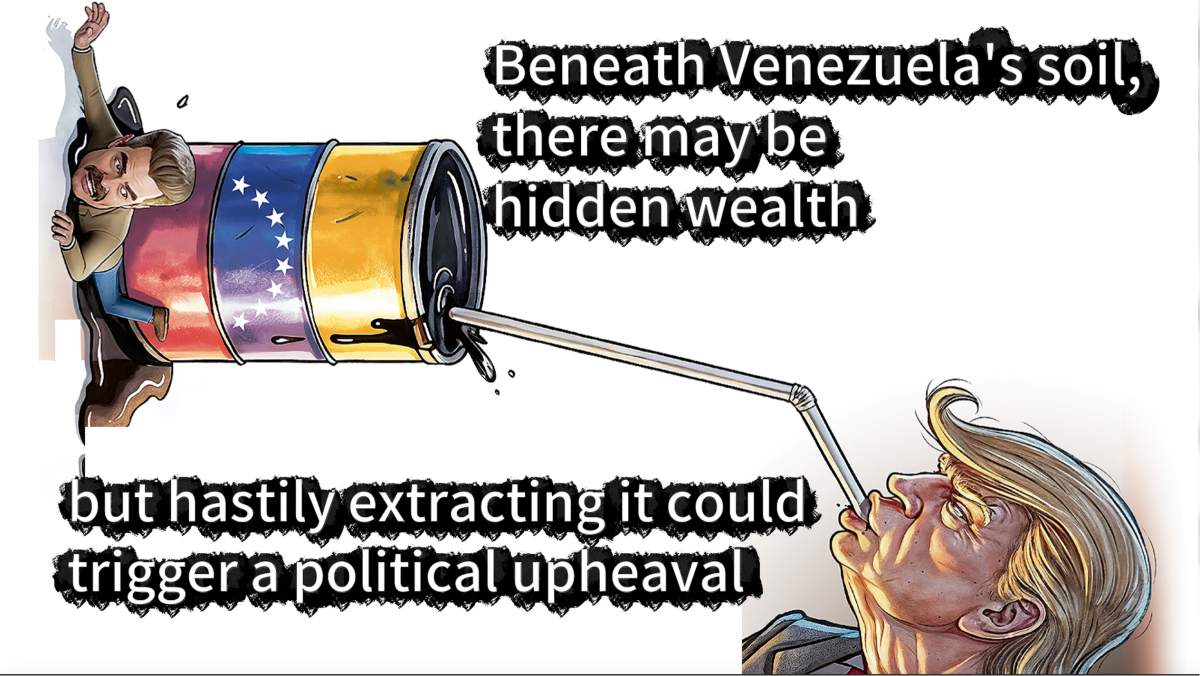
U.S. President Donald Trump's ambitions to tap into Venezuela's vast oil reserves may face more complications than expected, according to multiple Western analysts and media reports. Despite aggressive rhetoric and a show of military force, both geopolitical and technical barriers stand in the way of turning Venezuela's oil into a quick strategic win for the United States.
Heavy Oil, Heavy Problems
Venezuela holds over 303.2 billion barrels of proven crude oil reserves—the largest in the world—accounting for about 17% of global supply. Its reserves are more than five times those of the United States. However, the majority of Venezuela's oil is extra-heavy crude, with high viscosity, sulfur, and carbon content. The result makes extraction and refining more energy-intensive and environmentally damaging.
Industry experts warn that any foreign investment would face multiple challenges, including outdated and damaged infrastructure, limited security guarantees, political instability, and the substantial capital required to revive production.
According to Rystad Energy, Venezuela would need $110 billion in exploration and production investments just to restore output to its levels from 15 years ago—twice the total amount U.S. oil companies plan to invest globally in 2024.
Oil Market Headwinds
Meanwhile, global oil demand is stagnating. The International Energy Agency and other institutions project a supply glut in the coming years due to surging output from the U.S. and Brazil, while demand remains weak. Analysts expect prices to fall to $50 per barrel or lower, making large-scale investment in Venezuela economically risky.
Analysts also warn that forcibly increasing Venezuelan oil production could trigger backlash from OPEC, potentially destabilizing global energy markets. Rystad's head of geopolitical analysis, Dr. Jorge León, cautioned that forced regime change rarely stabilizes oil supply quickly. Libya and Iraq offer clear and sobering lessons.
Military Maneuvers Raise Eyebrows
On January 5, U.S. media reported a sudden surge in military air traffic toward Europe, raising speculation about potential operations targeting the Iranian-linked oil tanker Bella 1, which was reportedly headed to Venezuela.
Flight tracking data showed at least 12 U.S. C-17 cargo planes landing at RAF Fairford and RAF Lakenheath in the U.K. within 48 hours. Two AC-130 gunships and multiple KC-135 refueling aircraft were also active over the North Atlantic. The U.S. European Command has declined to comment on the mission's purpose.
The Bella 1, originally en route from Iran to Venezuela, changed course after a U.S. interception attempt last December. To avoid seizure, the crew painted a Russian flag on the vessel and re-registered it under a new name, "Marinara," in Russia's official ship registry. Russia has formally demanded the U.S. halt any further interception attempts.
Underground Wealth: More Than Just Oil
Venezuela is not only rich in oil. It also boasts:
- 57.1 trillion cubic feet of natural gas (largest in Latin America, 8th globally)
- Over 8,000 tons of gold (largest in Latin America)
- 13.3 billion tons of proven bauxite reserves (3rd globally)
- Abundant deposits of coal, iron ore, copper, nickel, lithium, and cobalt, essential for green energy transitions
However, due to U.S. sanctions and internal mismanagement, production of all key commodities has declined significantly over the past decade.
Strategic Motives Behind Trump's Oil Push
Analysts note that Venezuelan heavy crude is highly compatible with the existing U.S. refining infrastructure, particularly along the Gulf Coast. U.S. refineries, particularly those in Texas and Louisiana, were originally built to process heavy crude oil from Venezuela, not the light crude oil produced domestically.
Despite being a major oil producer, the U.S. still imports significant volumes of heavy crude to meet domestic needs. Before sanctions in 2019, Venezuela was the largest supplier of heavy oil to the U.S. Post-sanctions, the U.S. has turned to Canada, but tensions have recently escalated after Trump controversially suggested annexing Canada as the "51st state."
Controlling Venezuela's heavy oil reserves would therefore allow the U.S. to diversify its supply and reduce dependence on Canadian imports.
Venezuela's vast resources, once considered a blessing, are increasingly becoming the focal point of geopolitical conflict. As military movements intensify and rhetoric escalates, experts caution that a hasty push to control Venezuela's oil could backfire—economically, diplomatically, and environmentally.
"Beneath Venezuela's soil, there may be hidden wealth—but hastily extracting it could trigger a political upheaval."
Related News:
Deepline | A mirror to the west: Double standards in Jimmy Lai's trial




Comment