






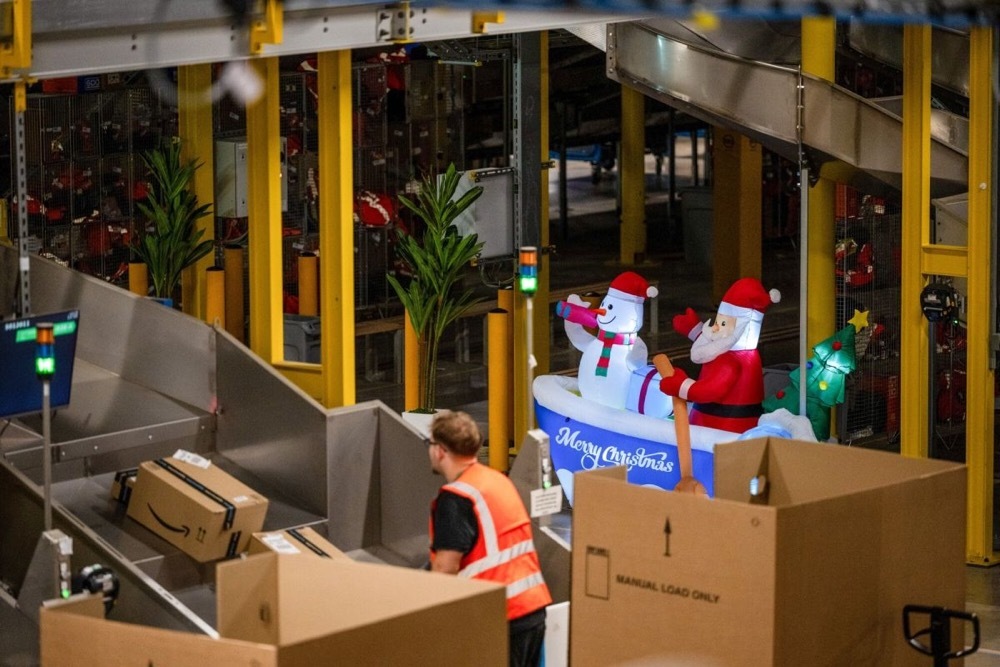
Despite the holiday season traditionally being a crucial period for boosting retail sales, the UK economy remains under significant pressure. Economic stagnation, soaring inflation, and ongoing political uncertainty have left businesses and consumers alike struggling, reducing the festive sales impact to levels not seen since the 2008 financial crisis, according to British media reports.
The Christmas season typically accounts for around 30% of annual retail sales in the UK, with major department stores like John Lewis seeing as much as 50% of their total sales during this period. The introduction of the American retail phenomenon "Black Friday" in the 2010s has reshaped consumer spending patterns, creating two peak shopping periods during the winter months. However, retail experts argue that this shift has not resulted in increased overall spending.
Richard Lim, CEO of the consultancy firm Retail Economics, explained that this is merely a change in consumer behavior, not an increase in consumer spending.
"Black Friday" has become the busiest day for online shopping in the UK. Data from Adobe Analytics revealed that online spending during the four-day Black Friday weekend in 2025 reached £3.8 billion, marking a 4.6% year-on-year increase.
Despite the temporary boost from "Black Friday", the UK's retail sector continues to face challenges. Data from UK's Office for National Statistics showed that November retail sales fell short of expectations, decreasing by 0.1% compared to October. British media noted that, after four consecutive years of sluggish sales, the economic magic of Christmas appears more elusive than ever.
Related News:
1-minute News | Christmas atmosphere in full swing: Must-see and photo-worthy Christmas lights




Comment