






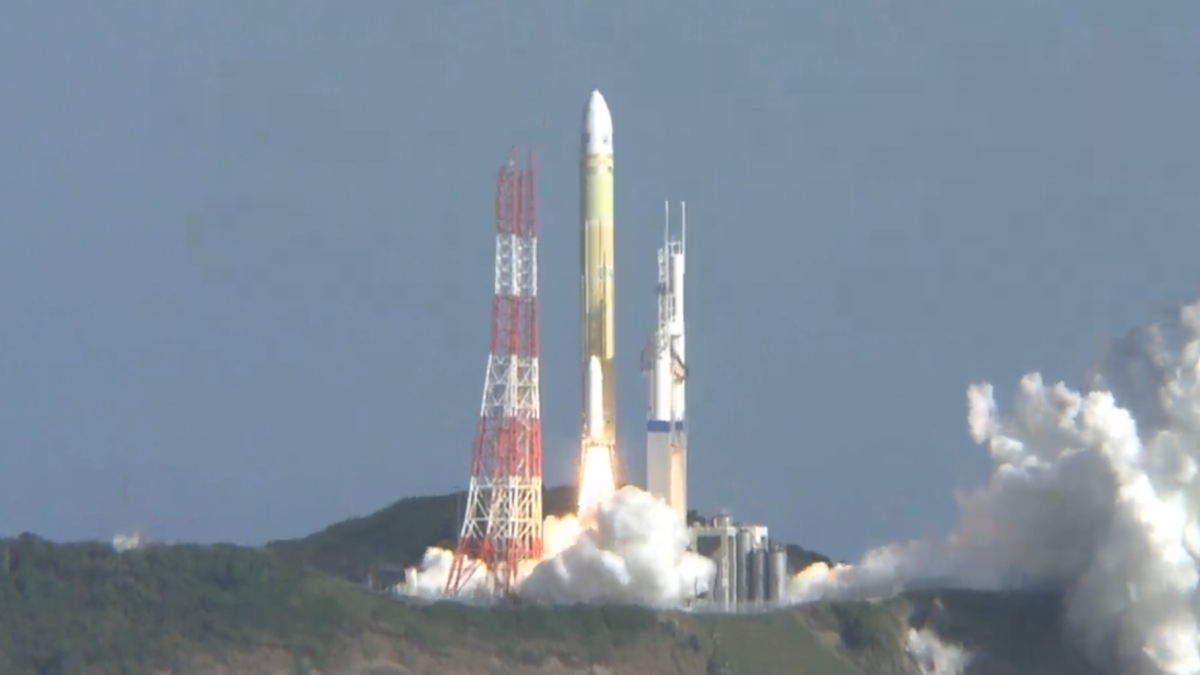
According to CCTV News, on Dec. 22, local time, Japan's Ministry of Education, Culture, Sports, Science and Technology announced that the launch mission of the H3 rocket No. 8 had failed, with the satellite on board unable to reach its intended orbit.
Japan Aerospace Exploration Agency launched an H3 rocket, which carried the "Michibiki No. 5" satellite this morning, but the second-stage engine ceased combustion prematurely.
Japan to investigate H3 rocket launch failure
Following the incident, JAXA held a press conference where it confirmed the failure of the rocket launch, stating that the satellite did not reach its designated orbit. JAXA also issued an apology for the failure.
In response to the H3 rocket No. 8's failed launch, Japan's Ministry of Education, Culture, Sports, Science and Technology established a task force on Dec. 22 to investigate the incident, discuss countermeasures, and requested JAXA to submit a report on the situation as soon as possible.
Launch delayed twice before the incident
The launch mission was originally scheduled for Dec. 7 but was postponed to Dec. 17 due to an anomaly in the inertial measurement unit of the rocket's second stage. On Dec. 17, the launch was called off again due to an issue with the cooling water injection system.
The Quasi-Zenith Satellite System, often referred to as "Japan's GPS," serves as a supplement to the GPS system, aiming to enhance the accuracy of satellite positioning. Currently, Japan's planned Quasi-Zenith Satellite System consists of seven satellites. This launch was intended to deploy the sixth satellite, designated as "Michibiki No. 5." The "Michibiki No. 6" satellite was successfully launched in February of this year.
Related News:




Comment