






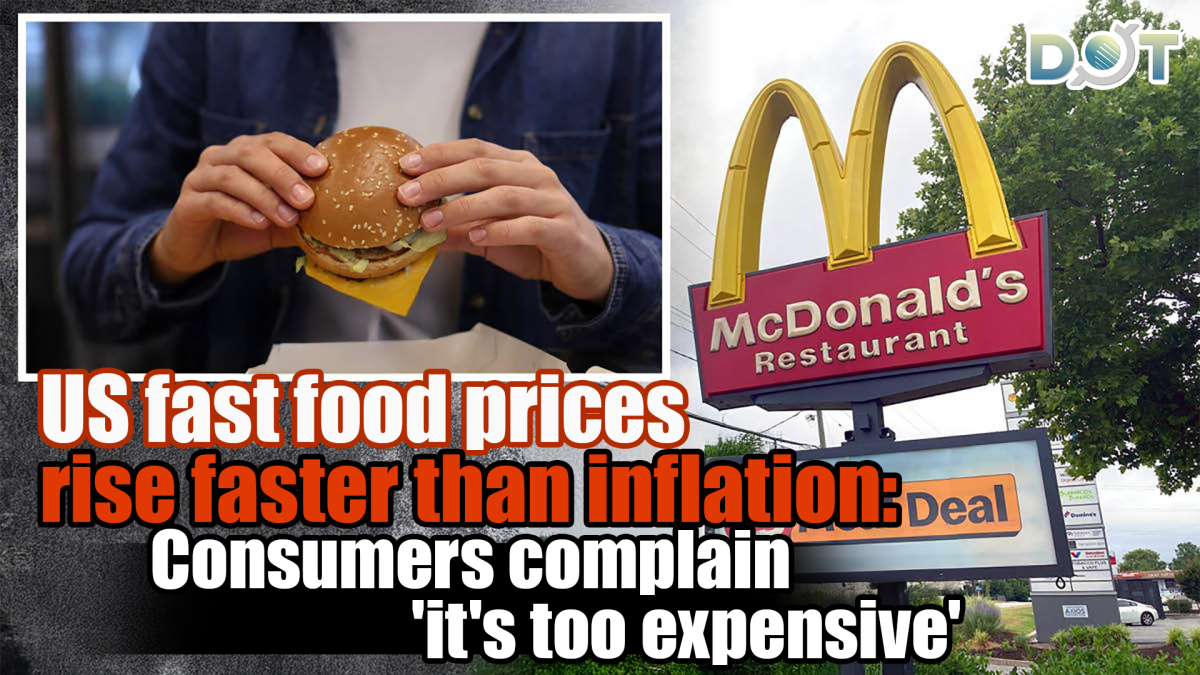
According to various foreign media reports, the prices of fast food in the US have been rising continuously in recent years, even outpacing inflation, leading consumers to lament that "fast food is no longer affordable!"
The reports indicate that fast food has traditionally been favored by low-income individuals due to its "affordability" and "generous portions." However, it is now gradually disappearing from their daily diets, primarily due to the overall increase in essential living expenses. The Joint Center for Housing Studies at Harvard University noted that in 2023, approximately half of the renting households in the US spent over 30% of their income on rent and utilities. Households earning less than US$30,000 (about HK$230,000) per year have a median disposable income of only US$250 after paying rent and utilities, significantly reduced compared to over 20 years ago.
At the same time, fast food prices continue to rise. McDonald's data shows that between 2019 and 2024, the price of a Big Mac increased from US$4.39 to US$5.29, while a 10-piece Chicken McNuggets meal rose from US$7.19 to US$9.19. In light of this situation, many low-income individuals declare they cannot even afford fast food.
According to the Japanese media outlet "Courrier Japan," the number of low-income individuals visiting chain fast food restaurants, including McDonald's, has seen a double-digit decline, while the proportion of middle- and high-income individuals, who are less sensitive to price increases, has increased proportionately. Economists point out that this is a reflection of a "K-shaped economy," where those with strong purchasing power continue to consume, while the disadvantaged are forced to exit the market.
Related News:
Watch This | Trump says US seizes oil tanker off coast of Venezuela


































Comment