






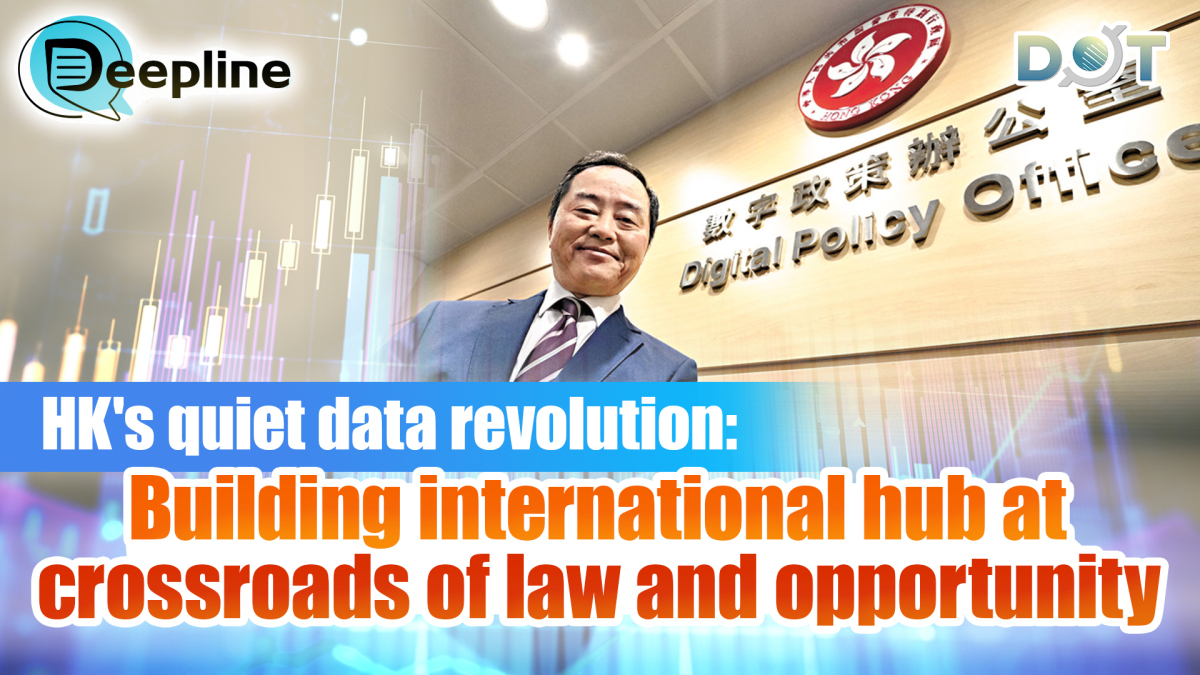
As a super-connector linking China with the world, Hong Kong is accelerating a quiet data revolution and actively advancing its "International Data Hub" strategy. Hong Kong is fully committed to driving innovation in cross-border data flow mechanisms, leveraging its internationally trusted common law system as a core competitive advantage. With the deepening integration of the Greater Bay Area (GBA), the establishment of a data exchange in Hong Kong is anticipated, aimed at creating a crucial platform for pricing data assets in the Asia-Pacific region. Meanwhile, the emergence of new sectors such as the low-altitude economy is injecting boundless business opportunities into this transformation.
However, opportunities coexist with challenges. For Hong Kong to stand out in the regional competition for data hub supremacy, it must accelerate the improvement of its legal safeguards for data security on the network. This is not merely a race in technological infrastructure but also a protracted battle over rule-making and institutional innovation, which will ultimately determine Hong Kong's true trajectory in the digital economy era.
Data serves as the most critical foundational support for Hong Kong's full commitment to developing its digital economy. Those who master data hold the "gold" of the future. Hong Kong's data infrastructure, along with the free flow and concentration of data, constitutes a significant advantage. Hong Kong is not only connected to global data but can also link with data from the mainland. In recent years, Hong Kong has actively sought national policy support to facilitate the flow of mainland data to the city, thereby increasing investor confidence in Hong Kong's data market.
In an interview with Wen Wei Po, Tony Wong, Commissioner for Digital Policy of the Digital Policy Office (DPO), stated that since Hong Kong proposed the innovative concept of "data cross-boundary flow," this measure has become a major factor in attracting global innovation and technology enterprises to establish a presence in the city. Through promoting pilot breakthroughs, the DPO facilitates the cross-boundary transfer of personal data to Hong Kong, attracting more domestic and international enterprises to set up business operations in the city. This serves as "critical fuel" for advancing Hong Kong's data market and innovation and technology development, helping to chart a new path for Hong Kong's economic transformation.
Wong noted that the Innovation, Technology, and Industry Bureau signed the "Memorandum of Cooperation on Facilitating Cross-boundary Data Flow in the Guangdong-Hong Kong-Macao GBA" in 2023, using the GBA as a context to promote the cross-boundary flow of personal information. By the end of that year, a pilot scheme for the "Standard Contract for the Cross-boundary Flow of Personal Information within the Guangdong-Hong Kong-Macao Greater Bay Area (Mainland, Hong Kong)" was launched. Under compliance with the regulations of both regions, this scheme facilitates the cross-boundary transfer of personal data from the mainland to Hong Kong based on commercial principles. Hong Kong's privacy ordinance equally protects personal data.
This measure, promoted by the DPO and the Cyberspace Administration of Guangdong Province, has received support and participation from the Office of the Privacy Commissioner for Personal Data, Hong Kong. Building on the successful experience of the pilot scheme, the facilitation measures were fully regularized in November last year, applicable to all industries without the need for application. After signing the contract, companies simply need to report to the respective regional authorities (i.e., the DPO in Hong Kong and the Cyberspace Administration of Guangdong Province for the nine mainland cities), with completion within ten working days. This greatly simplifies corporate compliance procedures with mainland regulations while ensuring protection under Hong Kong's privacy ordinance.
Extending data cross-boundary flow to cover scientific research
Wong pointed out that, after achieving a free "cross-boundary flow" of data, the convenience gained is significant. For example, after hospitals in both regions sign contracts, patient medical records can be transferred across the boundary to support cross-border healthcare. Banks exchanging customer information will expedite account or loan approvals and shorten due diligence time. To date, the measure has been implemented in the GBA for nearly two years, operating smoothly with over 100 reports processed. This act reflects the nation's confidence in Hong Kong's data security safeguards and helps Hong Kong further integrate into the GBA, promoting the flow of people and enterprises while aiding the integrated development of the digital economy between Hong Kong and the GBA.
The mainland has seen vigorous development in data trading recently, with over ten data exchanges currently established. Mr. Wong indicated that Hong Kong is also exploring this area. "The priority is to ensure the smooth flow of data between the two regions. While there are regulatory requirements for data export from the mainland, many provinces and municipalities hope to cooperate with Hong Kong, and the SAR government warmly welcomes this."
He noted that Hong Kong's free flow of data and its trading as a commercial activity face no major obstacles in themselves. The industry has also explored establishing branches or strengthening cooperation in Hong Kong through discussions with Shanghai and Shenzhen data commerce associations.
Currently, the mainland has established a "whitelist" system for data trading regulations, but important data, such as research and development data, remains restricted for overseas trading. The SAR government aims to promote pilot breakthroughs. For instance, the "Outline for Hong Kong Park of Hetao Shenzhen-Hong Kong Science and Technology Innovation Co-operation Zone" proposes facilitating the cross-boundary flow of scientific research data to the Hong Kong Park to attract enterprises for usage and strengthen cooperation with the mainland.
He stated that exploring the sharing of scientific research data between the mainland and Hong Kong and establishing a secure cross-boundary mechanism is a major direction for the government. Mainland R&D data is beneficial for attracting top international scientific research teams to set up bases in Hong Kong, which will help Hong Kong fulfill its role as an international data hub, achieving a "win-win" outcome.
(With input from Wen Wei Po; English Editor: Darius)
Related News:
Deepline | Beyond defense: Japan's 'Space Operations Command' and its global strike ambitions
Deepline | From assistant to auteur: Nick Cheuk's 13-year screenwriting odyssey




Comment