






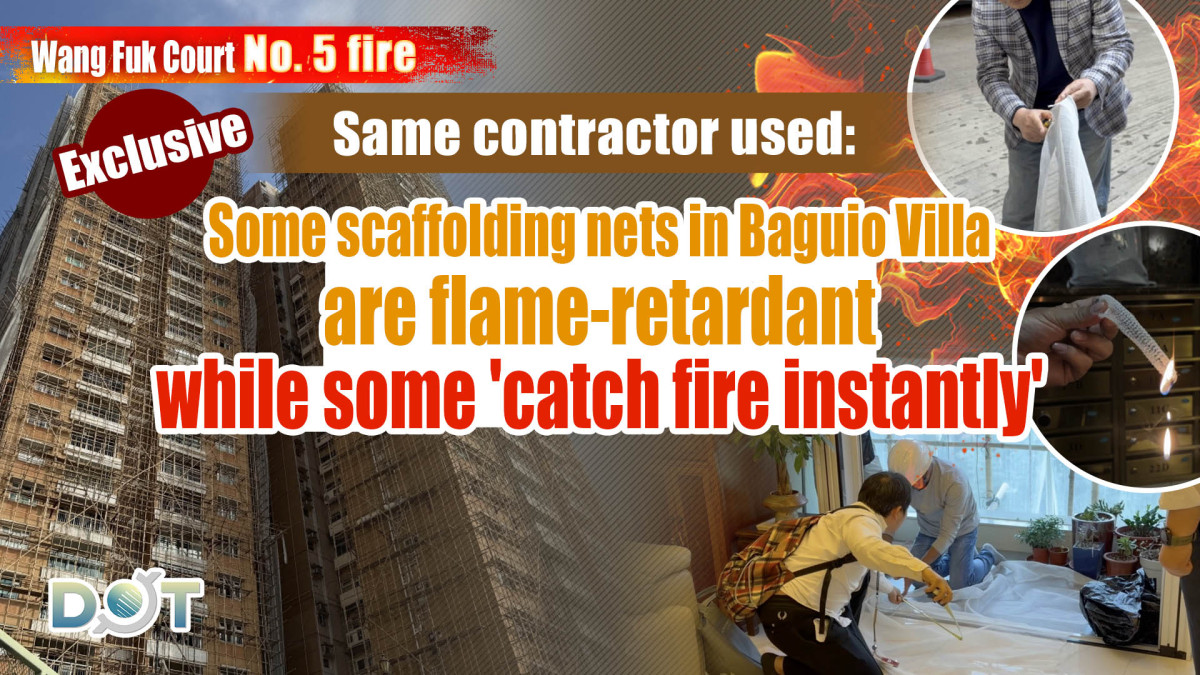
The catastrophic No. 5 alarm fire at Wang Fuk Court in Tai Po, which caused numerous casualties, has sparked public concern over the materials used in building maintenance projects. The flame-retardant properties of scaffolding protection nets—commonly referred to as "scaffolding nets"—are now under widespread scrutiny. Several residential complexes across Hong Kong are currently undergoing external wall repairs under bamboo scaffolding, including Baguio Villa in Pok Fu Lam, Southern District.
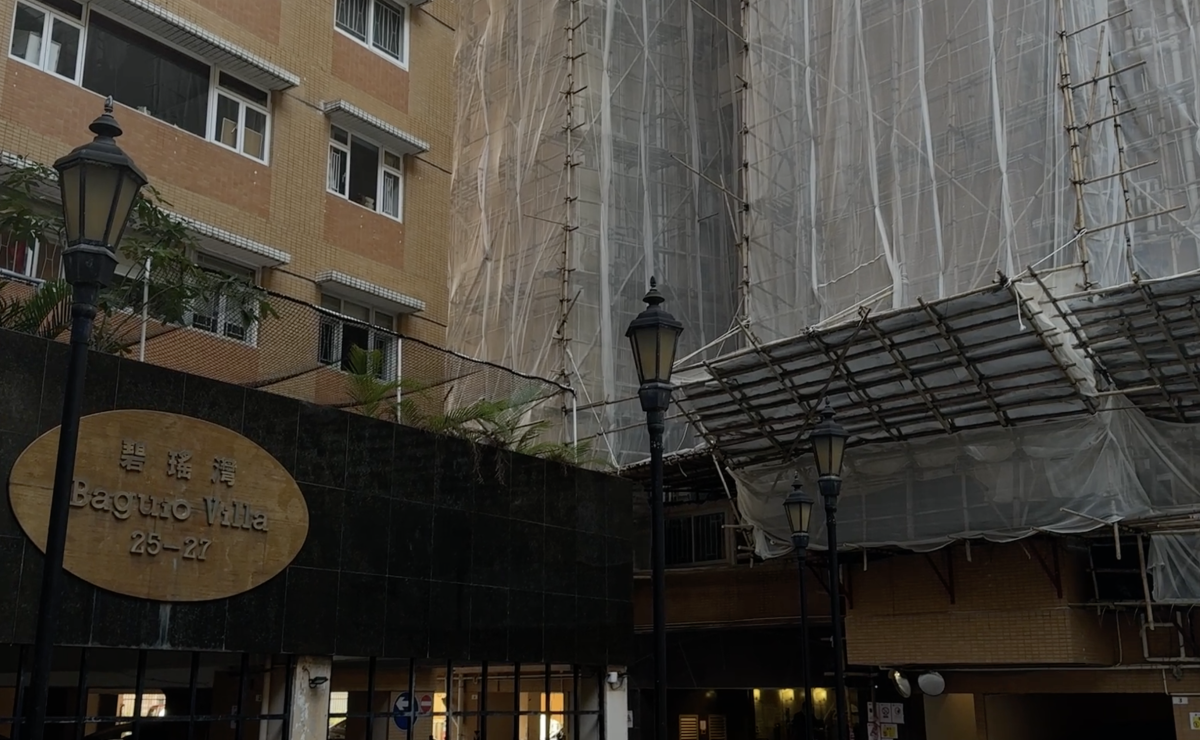
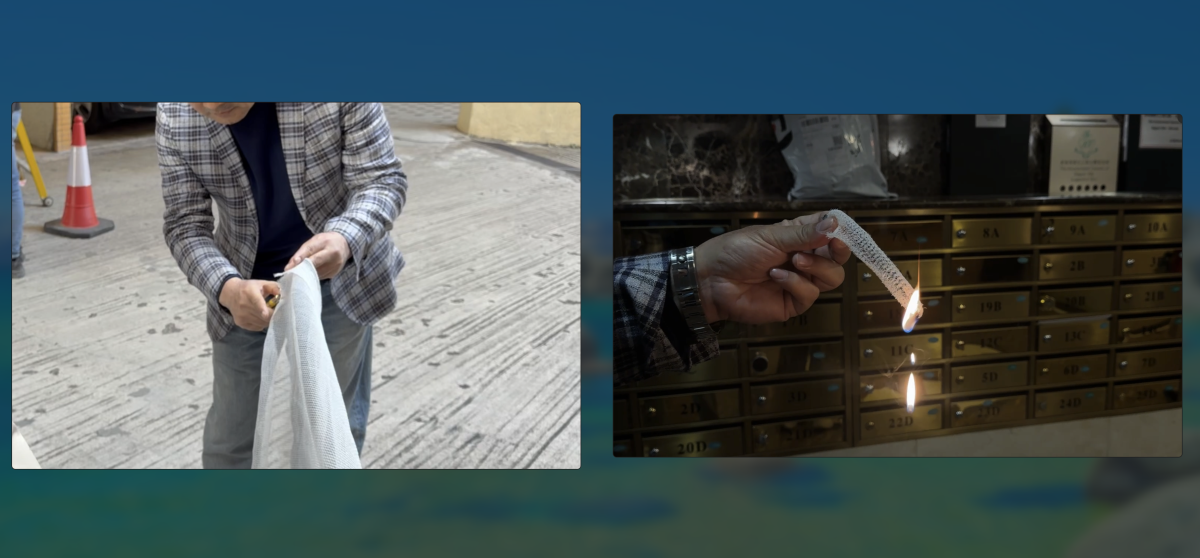
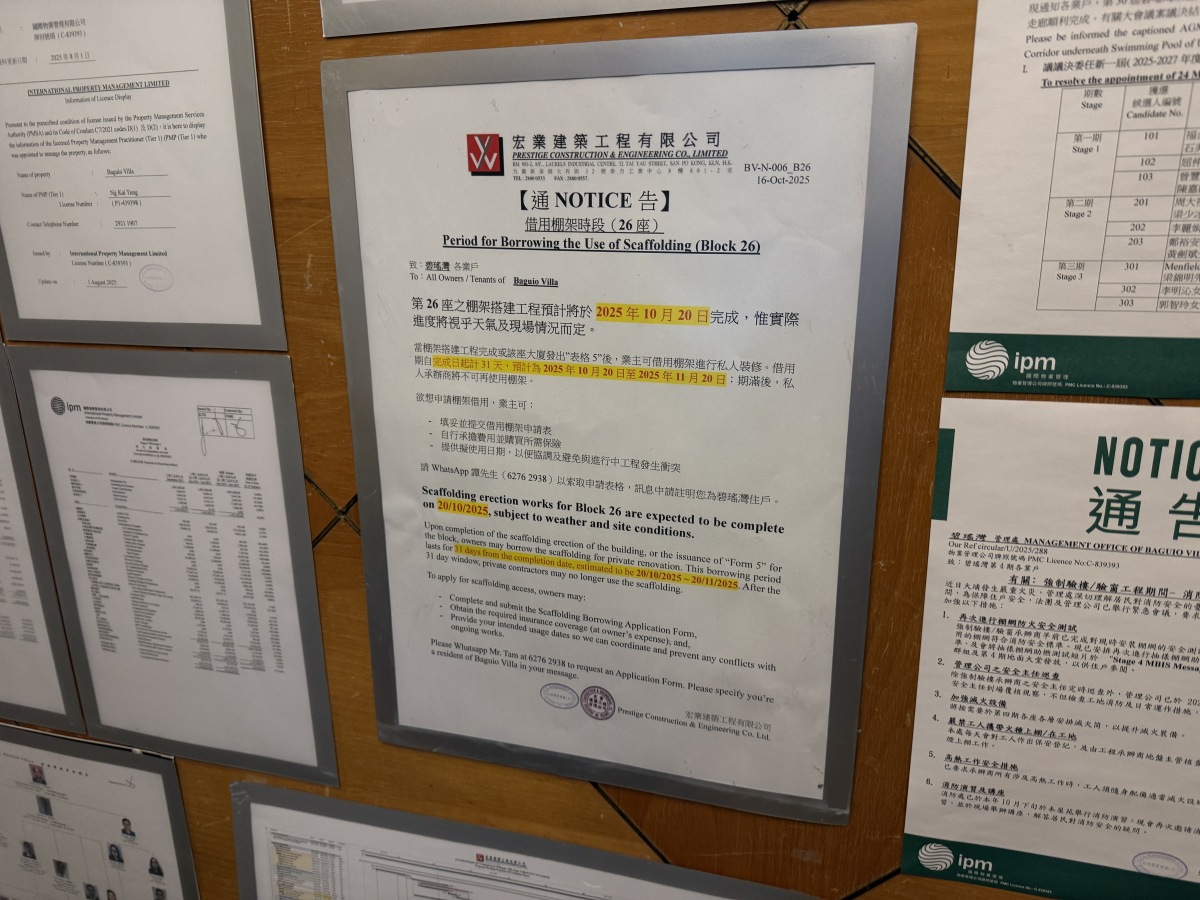
Residents of Baguio Villa recently revealed to DotDotNews that Phase 4 of the development, currently undergoing major renovations, is being handled by the same contractor as Wang Fuk Court—Prestige Construction & Engineering Company. Concerned about whether the scaffolding nets meet safety standards, some residents cut pieces of the netting for a self-conducted fire test and were alarmed to discover that parts of the netting "catch fire instantly." Last Friday (Nov. 28), the Buildings Department (BD) conducted sample tests on the site. Residents also took samples for comparison, finding that while some nets were flame-retardant, others ignited immediately. As of yesterday (Dec. 1), residents reported that the scaffolding nets were being removed, though the official test results on the net samples have yet to be released.
Residents conduct self-tests: Scaffolding nets "catch fire instantly"
The current renovation project at Baguio Villa involves three residential blocks, covering approximately 300 units. DotDotNews reporters observed last Friday that, similar to Wang Fuk Court, these buildings were tightly wrapped in bamboo scaffolding and netting, with the buildings situated in close proximity to each other. Resident Ms. Lam pointed out that some had previously questioned, "Why are the entire buildings wrapped in netting when the project isn't that extensive?" but their concerns went unanswered.
According to Ms. Lau, another resident, the repair work began this past September and is scheduled to continue until March of next year. Initially, residents trusted the Owners' Corporation and did not scrutinize the contractor's background. However, following the fire incident at Wang Fuk Court, which raised concerns over maintenance materials, many residents have grown alarmed.
Ms. Chow, another resident, said she only became aware of the issue after being alerted by others and was shocked to learn that the contractor for their renovation was the same as that of Wang Fuk Court. Many residents expressed frustration over the lack of regular updates from the property management company to residents who are not part of the Owners' Corporation.
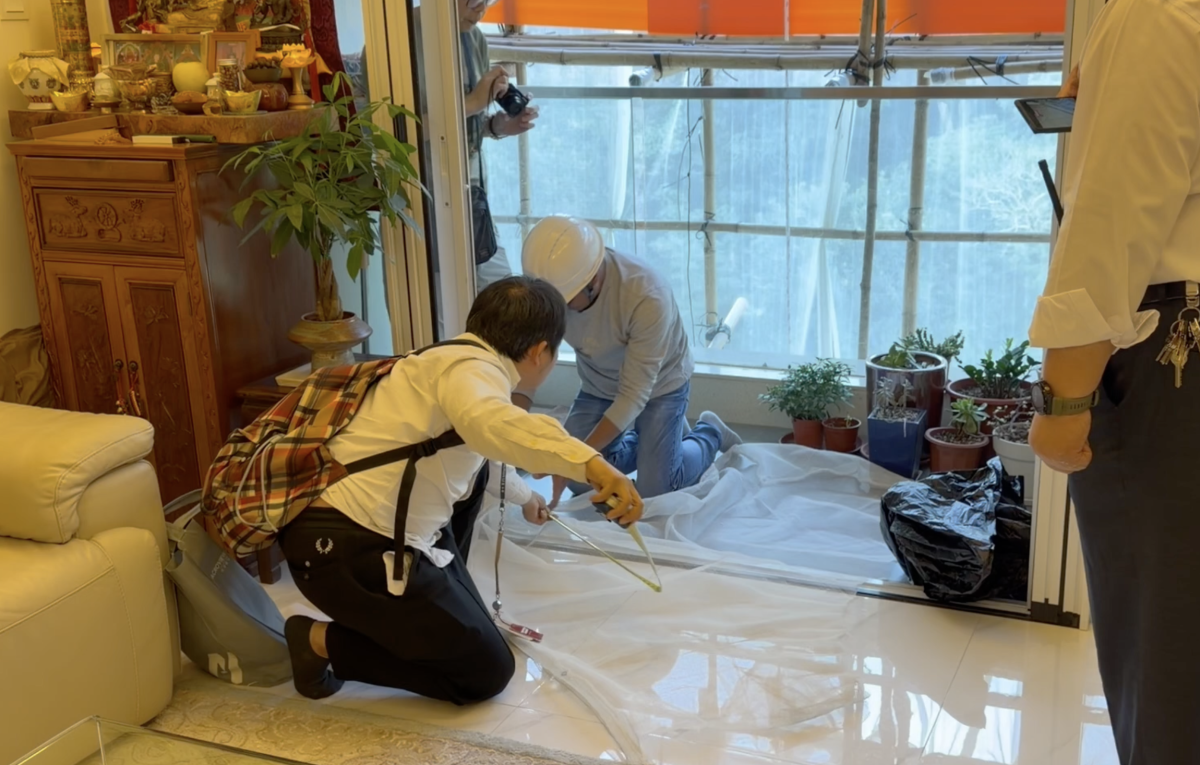
"The same company is using the same materials—it's worrying if they're not up to standard," said several residents. Alarmed by the situation, some residents conducted their own tests by cutting pieces of the scaffolding netting and found that the nets "not only ignite easily but also drip sparks like a candle." Since the fire at Wang Fuk Court, repair work at Baguio Villa has been temporarily halted. Residents have repeatedly urged the management office to remove the scaffolding nets as quickly as possible, but their requests were initially refused. "My daughter has been so scared that she's woken up in the middle of the night several times," said Ms. Lam.
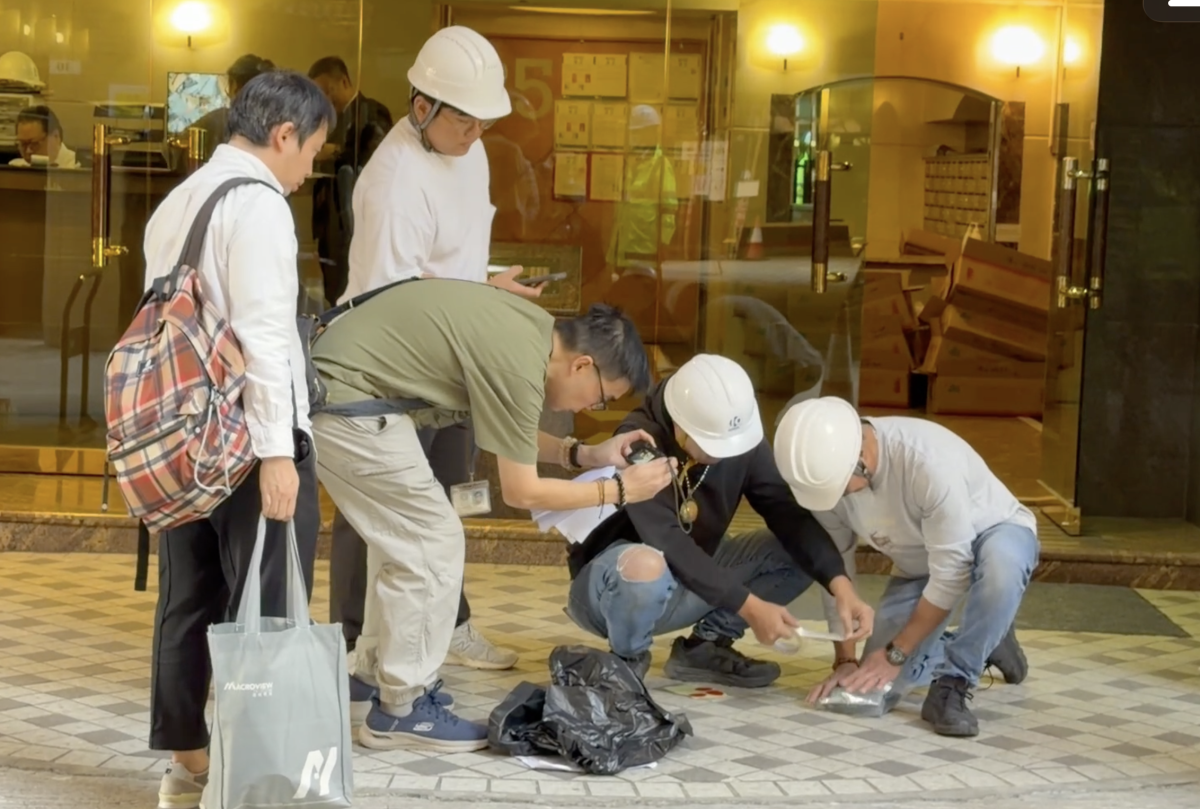
Residents test samples collected by BD: Flame-retardant properties vary by location
During DotDotNews's visit, staff from the BD were seen collecting samples from different locations, including the lower and upper levels of the scaffolding nets. Some residents obtained portions of these samples and conducted their own flame-retardant tests. DotDotNews reporters witnessed the results: one sample did not burn when exposed to fire, while another ignited immediately, burning until completely consumed and occasionally dripping sparks. BD personnel on site stated that residents' self-conducted tests could not serve as definitive proof, as the materials must undergo professional testing to draw conclusions.
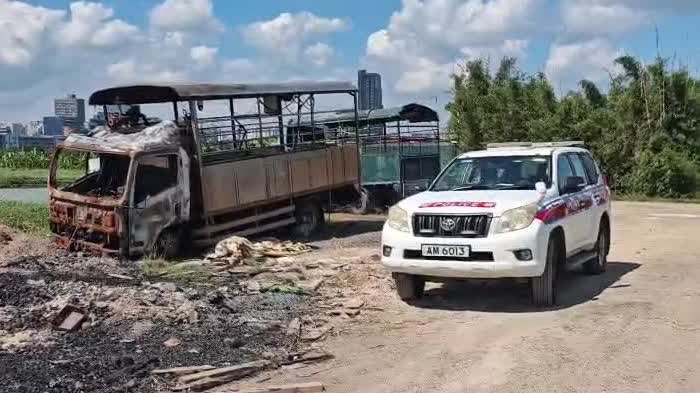
Yesterday afternoon, the Commissioner of the Independent Commission Against Corruption, Woo Ying-ming, told reporters that police had collected 20 samples of scaffolding nets from various locations at the eight buildings of Wang Fuk Court. Among these, seven samples did not meet flame-retardant standards. The perpetrators reportedly installed compliant flame-retardant nets at the base of the scaffolding—where inspections are most likely to occur—to create the false impression that all materials were compliant. Non-compliant nets were then installed in less accessible areas, making it difficult for fire services personnel to obtain samples. This situation closely mirrors the findings at Baguio Villa, where flame-retardant properties varied between samples.
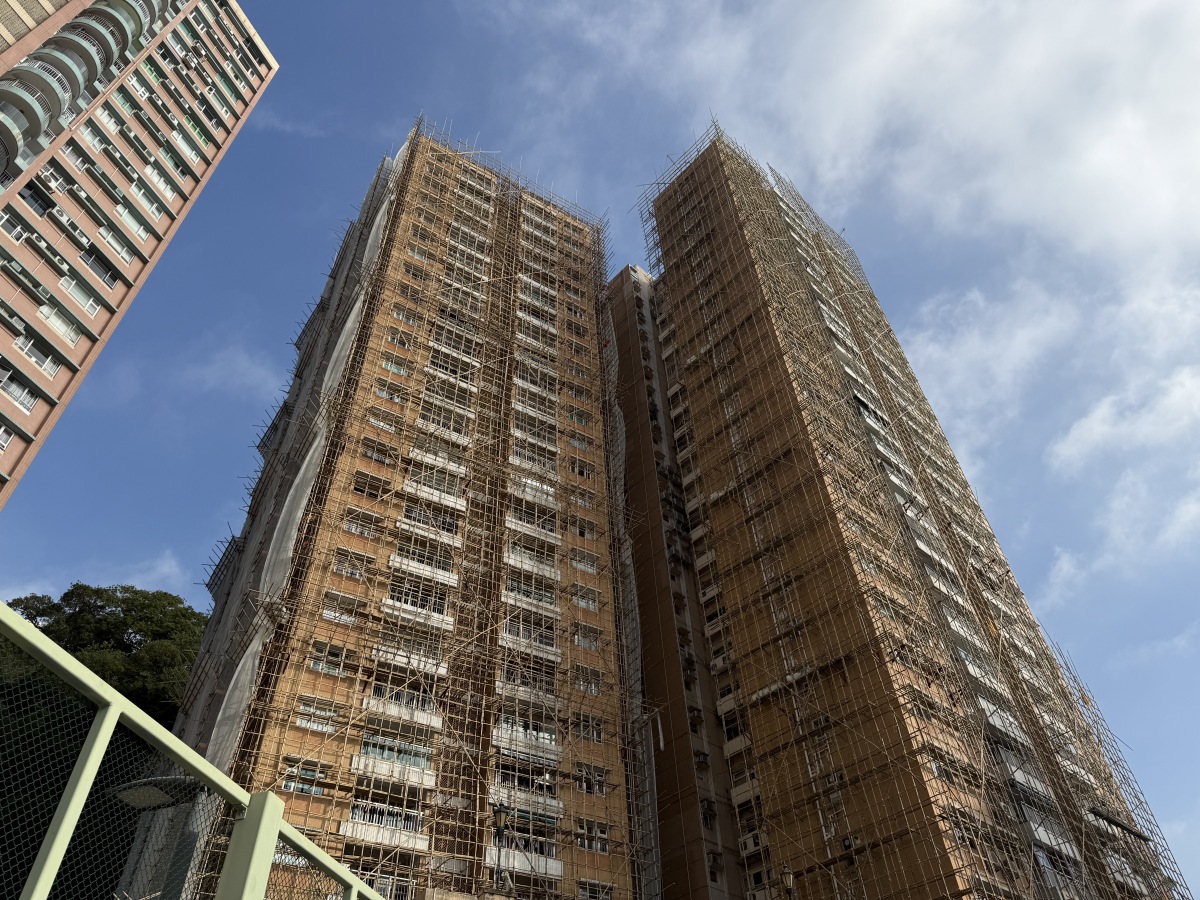
Mr. Wong, a Baguio Villa resident, informed DotDotNews yesterday that, following mandatory orders from the BD, removal of the scaffolding nets began yesterday morning. As of the afternoon, DotDotNews reporters observed that the previously fully-wrapped buildings had been "unveiled."
The BD recently announced that 30 private building renovation projects had been ordered to suspend work, 28 of which were handled by Prestige Construction & Engineering Company. However, in a list provided by the department in response to media inquiries, Baguio Villa was not included.
Industry experts: Flame-retardant standards for scaffolding nets vary, burning speeds differ significantly
A review of building fire safety codes and guidelines reveals that materials such as tarpaulins and scaffolding nets are indeed required to meet flame-retardant standards. However, some industry insiders pointed out that there is no legal requirement for scaffolding nets to be flame-retardant; the relevant work safety guidelines only make recommendations.
Regarding the existence of fire safety standards for scaffolding nets, Mr. Wong, an industry expert, explained, "There are no specific regulations, but when purchasing scaffolding nets, they are categorized as either flame-retardant or regular. Flame-retardant materials should be used for scaffolding. The two types of materials differ significantly in price and production process, and their burning speeds are noticeably different." Regarding construction guidelines, Mr. Wong noted, "There are no clear stipulations for the standards of scaffolding nets. The focus is on ensuring safety for high-altitude work, so the choice of materials falls into a gray area."
When asked why some contractors would take the risk of using non-flame-retardant materials, Mr. Wong suggested that it is due to "a lack of safety awareness." With a wide variety of materials available, most contractors opt for cheaper options to reduce costs. However, their disregard for fire safety could lead to catastrophic accidents.
Related News:






































Comment