






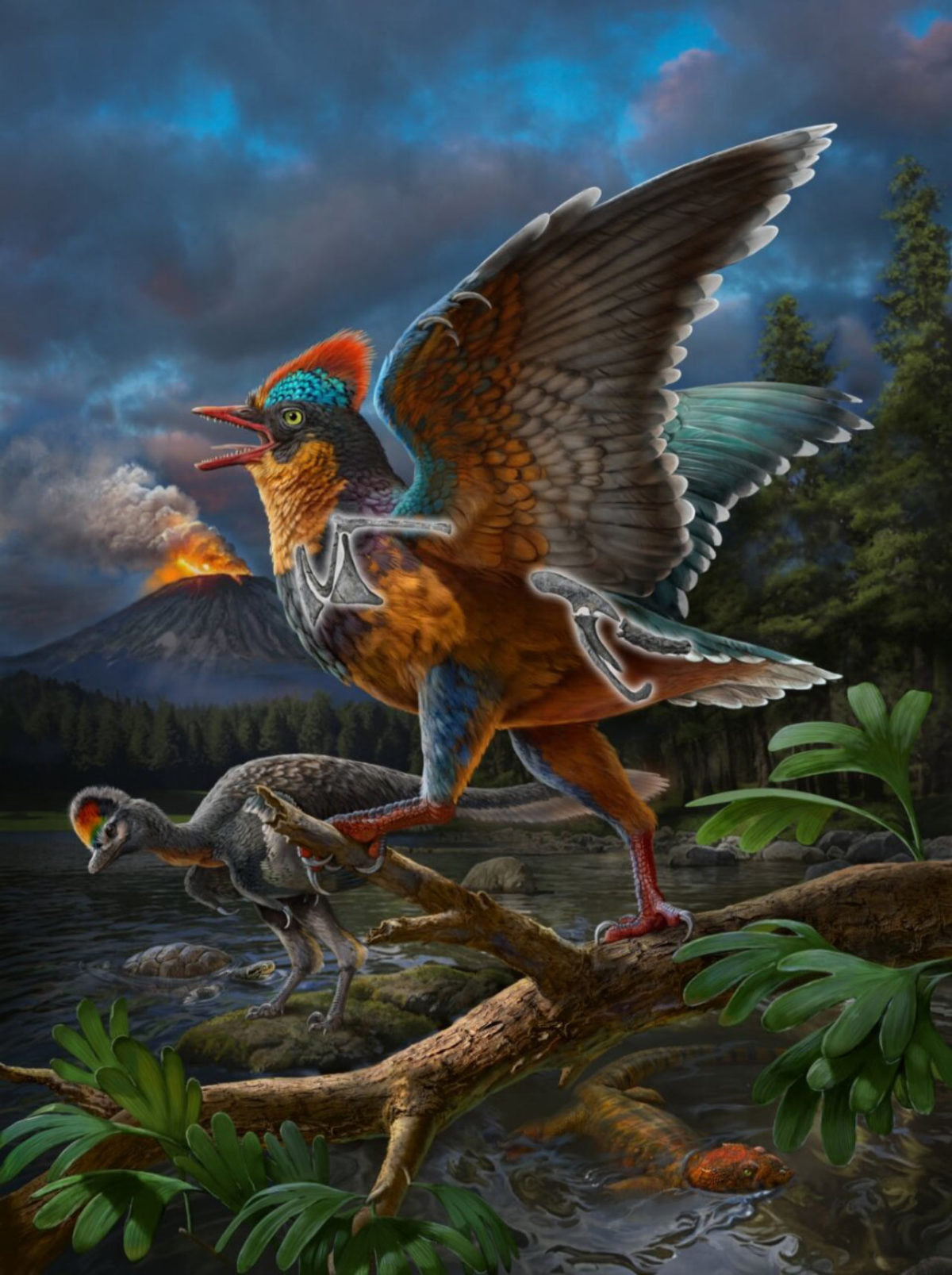
Chinese paleontologists have uncovered fossilized remains of two bird species from the Jurassic period in Zhenghe County, Fujian Province, southeast China. These 149-million-year-old fossils reveal advanced bird features, suggesting an earlier origin and diversification of birds during the Jurassic era.
Professor Min Wang from the Institute of Vertebrate Paleontology and Paleoanthropology at the Chinese Academy of Sciences remarked, "Birds are the most diverse group of terrestrial vertebrates. Certain macroevolutionary studies suggest that their earliest diversification dates back to the Jurassic period."
Traditionally, the early evolutionary history of birds has been obscured due to a fragmented fossil record, with Archaeopteryx being the only widely accepted Jurassic bird. While Archaeopteryx had feathered wings, it resembled non-avialan dinosaurs, particularly due to its long, reptilian tail, differing significantly from the short-tailed morphology of modern birds.
Recent studies have raised doubts about the avialan status of Archaeopteryx, proposing it as a deinonychosaurian dinosaur related to birds. This has led to questions about the existence of unambiguous Jurassic bird records.
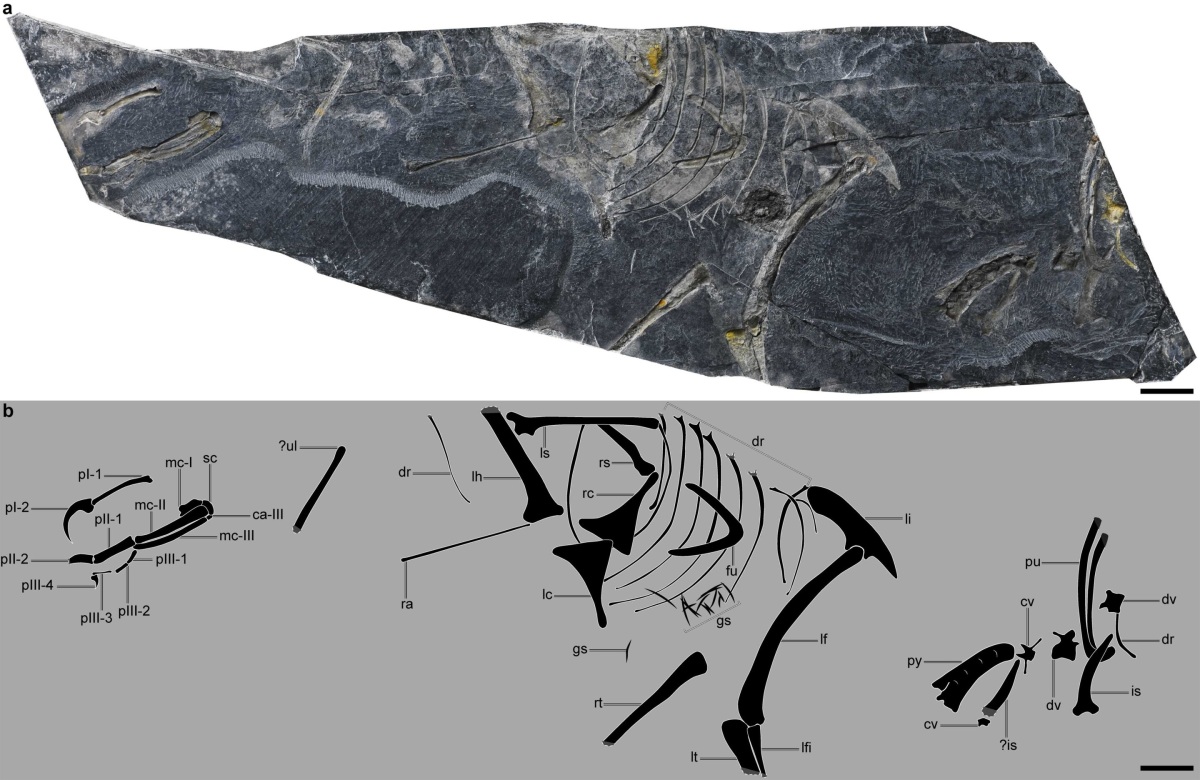
In their latest study, Professor Wang and colleagues examined the fossils of two early birds from the Zhenghe biota. One species, named Baminornis zhenghensis, is identified as the earliest known short-tailed bird.
"Baminornis zhenghensis has a short tail ending in a compound bone called the pygostyle, a characteristic also found in modern birds," the researchers explained. Previously, the oldest record of short-tailed birds dated back to the Early Cretaceous period. The discovery of Baminornis zhenghensis pushes back the appearance of this derived feature by nearly 20 million years.
The team emphasizes that Baminornis zhenghensis is among the oldest known birds. Dr. Zhonghe Zhou commented, "If we reconsider the phylogenetic uncertainty of Archaeopteryx, we do not doubt that Baminornis zhenghensis is the true Jurassic bird."
The second unnamed bird is represented by a single fossilized furcula (wishbone), which the researchers believe belongs to the group Ornithuromorpha, a diverse group of Cretaceous birds.
The findings have been published in the journal Nature, marking a significant contribution to our understanding of early avian evolution.
Related News:
New plant species found in south China
OMG | The Lantern Festival: A night of blossoms and full moon




Comment