






Editor's note: Last week, the Hong Kong Census and Statistics Department released preliminary estimates showing that in the first quarter of this year, Hong Kong's GDP grew 5.9% year-on-year—the strongest quarterly growth in nearly five years. At the same time, the Chinese mainland's Q1 GDP grew 5.0% year-on-year, with the growth rate staying at the upper end of the full-year growth target range. Both the mainland and Hong Kong got off to a strong start in the first quarter, drawing market attention.
【Anchor】Last week, the Hong Kong Census and Statistics Department released preliminary estimates showing that in the first quarter of this year, Hong Kong's GDP grew 5.9% year-on-year—the strongest quarterly growth in nearly five years.
At the same time, the Chinese mainland's Q1 GDP grew 5.0% year-on-year, with the growth rate staying at the upper end of the full-year growth target range. Both the Chinese Mainland and Hong Kong got off to a strong start in the first quarter, drawing market attention.
Welcome to DDN Business Insider. Today, we are joined by Ms. Cai Tongjuan, Vice President and Research Fellow at the Chongyang Institute for Financial Studies, Renmin University of China; Mr. Liao Jiahao, Head of Investment Strategy and Asset Allocation at Citibank; and Mr. Li Daxiao, former chief economist of a securities firm. Together, they will provide an in-depth analysis of Mainland and Hong Kong's first-quarter economic data. Hello, everyone!
【Anchor】First, I'd like to ask Ms. Cai. We see that the Chinese Mainland's Q1 GDP grew 5.0%, and its external trade—especially imports and exports—has been particularly impressive. How do you interpret this phenomenon? Particularly, given that uncertainty in the external environment remains relatively high, why was external trade able to deliver such a strong performance?
【Cai】A Q1 GDP growth of 5% shows that China's economy has maintained strong resilience even amid weak global demand. External trade performance is especially outstanding, and there are three core reasons behind this.
First, industrial upgrading is beginning to show results. "New" high-end manufacturing, new energy vehicles, lithium batteries, and solar/photovoltaics have all enhanced export competitiveness.
Second, market diversification is accelerating. Dependence on markets such as ASEAN and the Belt and Road regions is increasing, helping to diversify risks from volatility in traditional markets like Europe and the United States.
Third, China's supply-chain advantages remain solid. China's complete industrial system and delivery efficiency still have globally irreplaceable strengths. When external uncertainty rises, global buyers are often more inclined to procure from stable, reliable suppliers—this is the source of China's trade resilience.
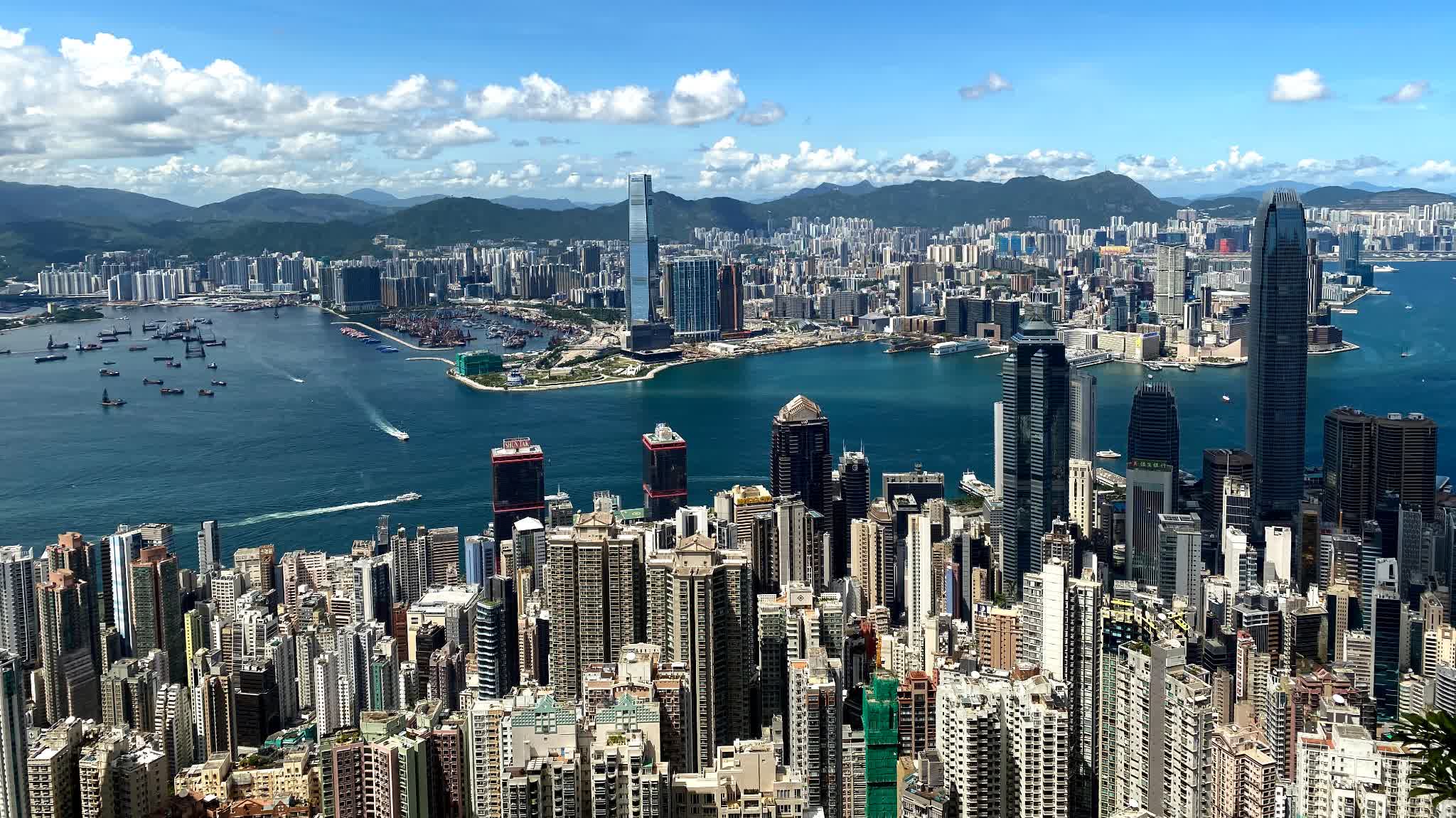
【Anchor】Turning to Hong Kong: according to the government's recent preliminary estimates, Hong Kong's GDP in this year's first quarter rose 5.9% year-on-year. Mr. Liao, how do you view Hong Kong's performance in the first quarter? What factors supported the economic performance in Q1?
【Liao】Here are the reasons. First, some export activities have been performing well, especially those benefiting from the science-and-technology and industrial trade areas. Exports of tech-intensive goods under intra-Asia trade have helped drive both exports and the logistics sector.
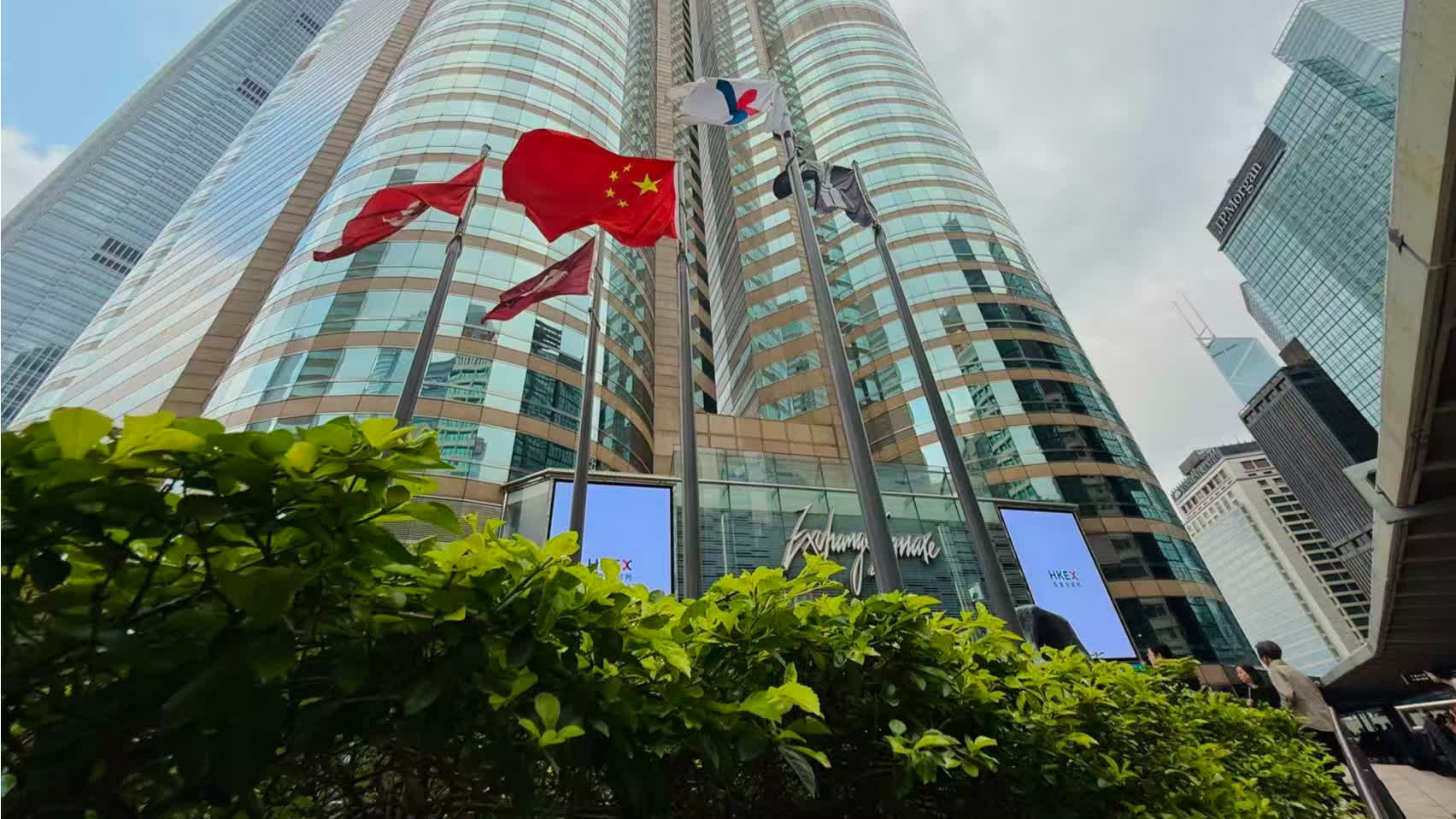
Second, Hong Kong's performance in financial markets has also been strong. In the first quarter, Hong Kong's average daily stock turnover of the stock market was around HK$127 billion, up about 14% year-on-year and up by 20% quarter-on-quarter. That can also support equity and debt financing activities. New listings have also been doing well: from the beginning of the year to date, about HK$150 billion has been raised—more than half of the HK$275 billion raised for the whole of 2025. This would further boost economic activity related to financial services.
Third, cross-border trade and visitor arrivals have also done well. In Q1, Hong Kong saw about 14 million visitors, up 17% year-on-year, and this especially supported retail sales of luxury goods.
In addition, the renminbi has been steadily appreciating, which helps mainland visitors increase their consumption value and spending power in Hong Kong.
Putting these together: exports, financial activities, a rebound in the property market, and mainland visitors' consumption (especially luxury spending)—all contributed to Hong Kong's 5.9% GDP growth in Q1.
【Anchor】Okay. Mr. Li, global external uncertainty remains relatively high, but it seems that, in the Mainland and Hong Kong, the economies in Q1 have not been directly and clearly pressured by external factors. In your view, what are the main reasons?
【Li】the Chinese Mainland's GDP growth of 5% is very good. Given such volatility in external conditions, it still achieved strong export growth.
Second, on the investment side, Q1 fixed-asset investment grew 1.7% year-on-year, reversing the 3.8% decline recorded in 2025.
Third, visa-free entry arrangements have also been beneficial. Several countries have implemented visa-free policies, which supports inbound consumption by foreign visitors to China.
As for Hong Kong, the Q1 growth rate of 5.9% is extremely strong data, well above expectations of 3.5%. This is driven by strong demand during the global AI-related cycle, the stabilization and recovery of the mainland economy, and, of course, some trade diversion and forced replenishment of inventories triggered by well-known factors.
More importantly, external capital flows in, such as Middle East hedging funds and family offices. In fact, for a long time, the stock market and the property market in Hong Kong have been key engines of Hong Kong's economy. Capital inflows that used to go to Singapore are now returning to Hong Kong.
【Anchor】Currently, it appears that neither the mainland nor Hong Kong's economies has been clearly dragged down by geopolitical tensions. Mr. Liao, what do you think are the reasons?
【Liao】Regarding the Middle East, the pressure has been relatively small, largely because of the benefits of some of its own strengths.
China has fairly sufficient energy reserves. For example, crude oil inventories are about 3 to 4 months, and there are no supply shortages for other key materials.
More importantly, China's leading role as "the world's factory" is very evident—especially as foreign countries accelerate their energy transition. This has boosted China's exports of new energy products such as electric vehicles, lithium batteries, and solar panels, helping exports remain strong.
In addition, on the inflation front, the impact of rising energy prices on China's CPI is relatively limited. The National Development and Reform Commission (NDRC) has also rolled out subsidy measures, which help curb the negative effect of higher oil prices on residents' consumption.
As for Hong Kong, besides the rebound in financing activities we just discussed, a recovery in the property market can also strengthen overall economic confidence. Hong Kong's property market began to recover around mid-2025. From the low point in March 2025, overall home prices have risen by about 3%. This recovery is supported by increased inflows of talent, as well as the fact that in 2025 the government withdrew stamp duties, which helped revive property-related activity.
Overall, the financial environment is relatively stable. That also creates opportunities to attract capital inflows, because Hong Kong remains a comparatively safe financial hub. The renminbi has also maintained a steady appreciation trend, which is beneficial for China-related assets.
【Anchor】Okay. In the Mainland, the word "recovery" has also been mentioned frequently recently. For example, during the May Day holiday, more than 1.5 billion person-trips across regions were recorded, and tourism and cultural activities consumption was very active. In addition, in Q1, several cities in the mainland have shown signs of a rebound in the real estate market. Ms. Cai, do you think these are important factors supporting the mainland economy's resilience?
【Cai】During the May Day holiday, consumption surged, and the property market warmed up. This is not only a source of economic resilience, but also a direct reflection of "endogenous resilience." The extremely large-scale movement of people over the holiday shows that residents' willingness to consume is recovering, especially for service consumption, which tends to rebound faster. Activities such as catering, tourism, and transportation create a multiplier effect.
On the real estate side, some core cities seeing transaction recovery indicate that asset expectations are improving at the margin. These two signals, consumption stabilizing and the property market stabilizing, also imply that employment and wealth expectations are stabilizing too.
China's economy used to rely more on investment and exports; now it is gradually shifting toward a model that integrates consumption, technology, and services. So, the recovery in tourism and housing demand, at its core, is a recovery in residents' confidence, an important support for absorbing shocks.
【Anchor】Mr. Liao, what do you think are the sources of Hong Kong's economic resilience?
【Liao】Hong Kong's resilience against external shocks can come from several aspects. First is the continued recovery of the financial market and the property market. We believe that in 2026, average daily turnover in the Hang Seng market has a chance to return toward the HK$257 billion level again. In addition, IPO activity is also likely to remain active, which supports investment sentiment.
The property market is also recovering. Interest rates still have room to decline. The 3-month HIBOR (interbank offered rate) stands at around 2.71%, and we think it could fall to about 2.4 by year-end. This would help affordability and, in turn, support the property market.
Also, the renminbi's appreciation is a tailwind for the capital markets. The People's Bank of China sets the midpoint at 6.8487, which is the strongest level since March 2023. This reflects an official stance supportive of renminbi appreciation, which strengthens confidence among external investors in China-related assets and renminbi assets, and could also help lift Hong Kong's stock market.
Inflation has also been relatively mild and is only slightly affected by high oil prices. As for internal infrastructure, there is also potential for acceleration in the second half of the year, mainly around the development of the Northern Metropolis and related transportation networks, so it can help sustain Hong Kong's economic growth.
So, in short, the financial market, the renminbi, interest rates, and internal infrastructure are all reasons why Hong Kong can better withstand external risks.
【Anchor】Okay, so the idea of "planning for danger in times of peace." Even though external pressure didn't clearly show up in the first quarter's data, over the next few quarters, will the impact from overseas gradually appear in economic figures? And how big do you expect the impact to be, Ms. Cai?
【Cai】By "external pressure," we mean pressures from overseas markets and how they affect data. It is a gradual process rather than a sudden drop. The main pressures come from slowing global growth, geopolitical risks, and rising trade protectionism. These mainly affect export orders, business investment confidence, and foreign capital inflows.
So, export growth in the second half is likely to slow down. Manufacturing business conditions may also weaken. But China's economic structure is now more balanced than before. Consumption and new industries can partially offset the downside.
I judge that second-half GDP growth may ease slightly compared with the first quarter, but the full-year figure will still remain within the policy target range, around 4.5% to 5%.
So, while pressure is objectively there, it is controllable.
【Anchor】Okay. Worth noting is that the Political Bureau of the CPC Central Committee held a meeting earlier. The meeting emphasized making good use of macro policies and implementing a more proactive fiscal policy with greater precision and efficacy. Ms. Cai, what policy message do you think this conveys?
【Cai】This signal is very clear. It is not simply about chasing speed. It's about improving the quality of growth.
Going forward, to implement a "precise and effective" policy, there are three key directions.
First, precise support for private enterprises and small and medium-sized businesses, to stabilize jobs and confidence.
Second, a precise stimulus for consumption, for example, improving residents' income expectations and strengthening social security.
Third, precise risk prevention and resolution in real estate and local government debt, to avoid systemic risks.
The key to policy is not just how strong it is, but whether it can genuinely unblock the bottlenecks in the economy.
【Anchor】Okay. Mr. Li, what's your view?
【Li】I think "precise and effective" improves the targeting and makes the policy more operable, which is very good. It is more precise, more powerful, and more effective. That can improve efficiency and allow us to use policy resources to better effect.
So "precise and effective" means the policy will be implemented more thoroughly and more finely, without resorting to a one-size-fits-all approach. That is a good way to improve policy efficiency.
The same logic applies to Hong Kong as well. Going forward, we will likely see policies become more detailed, more targeted, and more actionable.
【Anchor】OK, thank you to all the guests. That's all for this episode. Remember to follow us on YouTube or download our APP. I'm Yunfei Zhang, thanks for watching, and see you next time.
Anchor: Laura Cheung | Edited: Kelly Yang, Laura Cheung, Rachel Liu | Translate: Kato Ip | Proofread: Chris Liu
Related News:





















Comment