






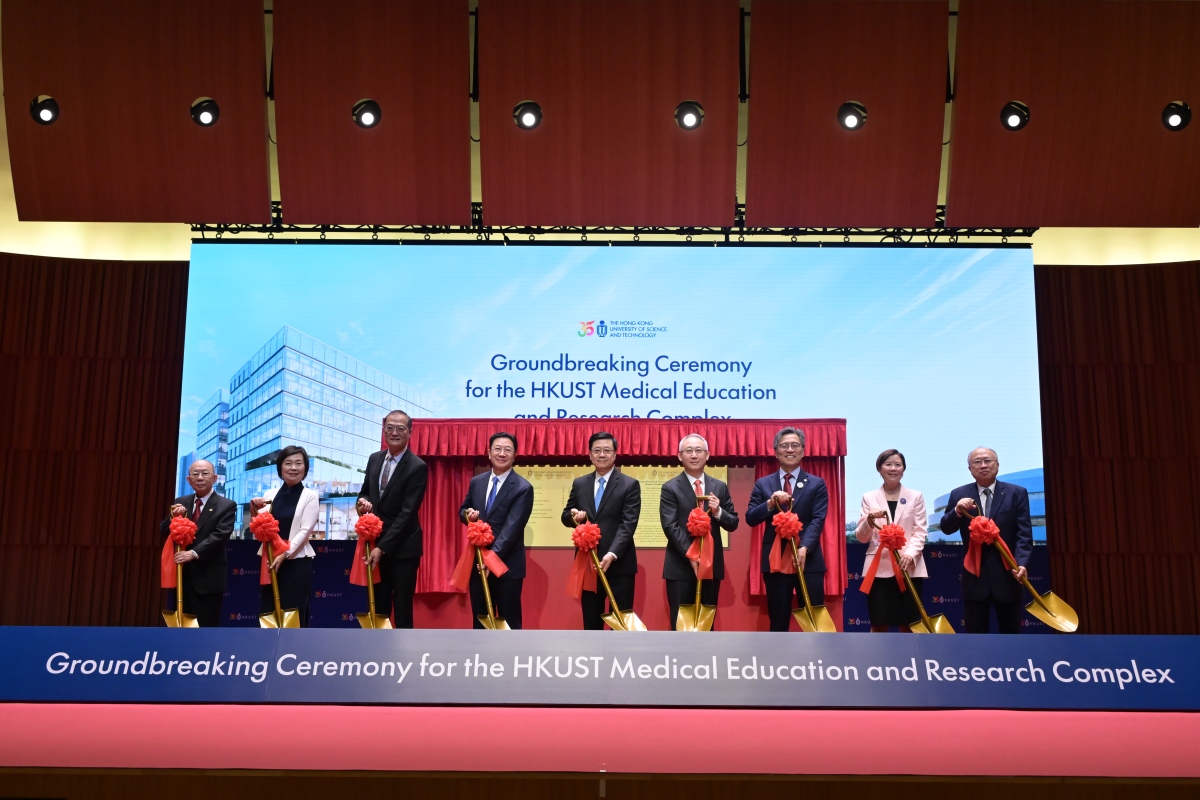
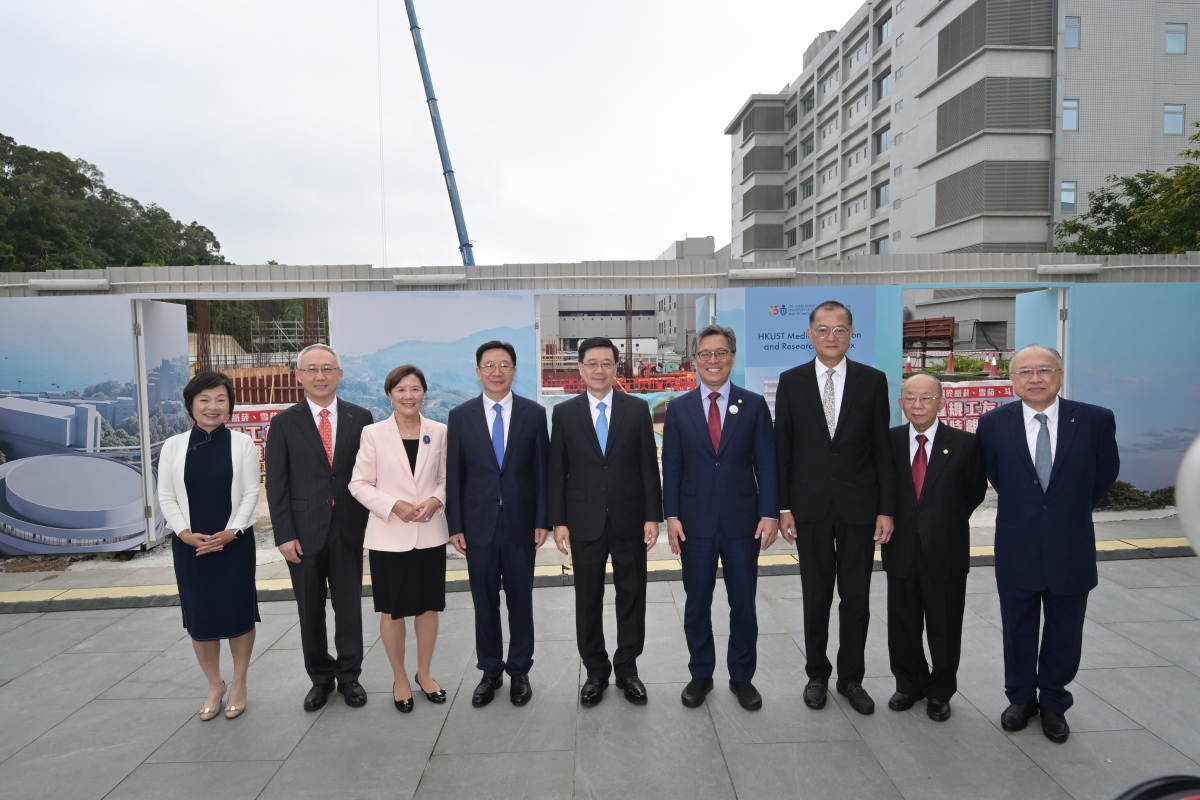
To keep pace with the rapidly evolving technological landscape and nurture a new generation of clinician-scientists, the Hong Kong SAR Government announced last year that the Hong Kong University of Science and Technology (HKUST) would establish Hong Kong's third medical school, with the aim of cultivating more medical talent and enhancing the quality of local healthcare services. HKUST held the groundbreaking ceremony for its Medical Education and Research Complex today (April 28). The complex will serve as the primary teaching and research base during the initial establishment phase of Hong Kong's third medical school. Chief Executive and HKUST Chancellor Mr John Lee said the Government had already reserved land in the Northern Metropolis for the future campus and teaching hospital.
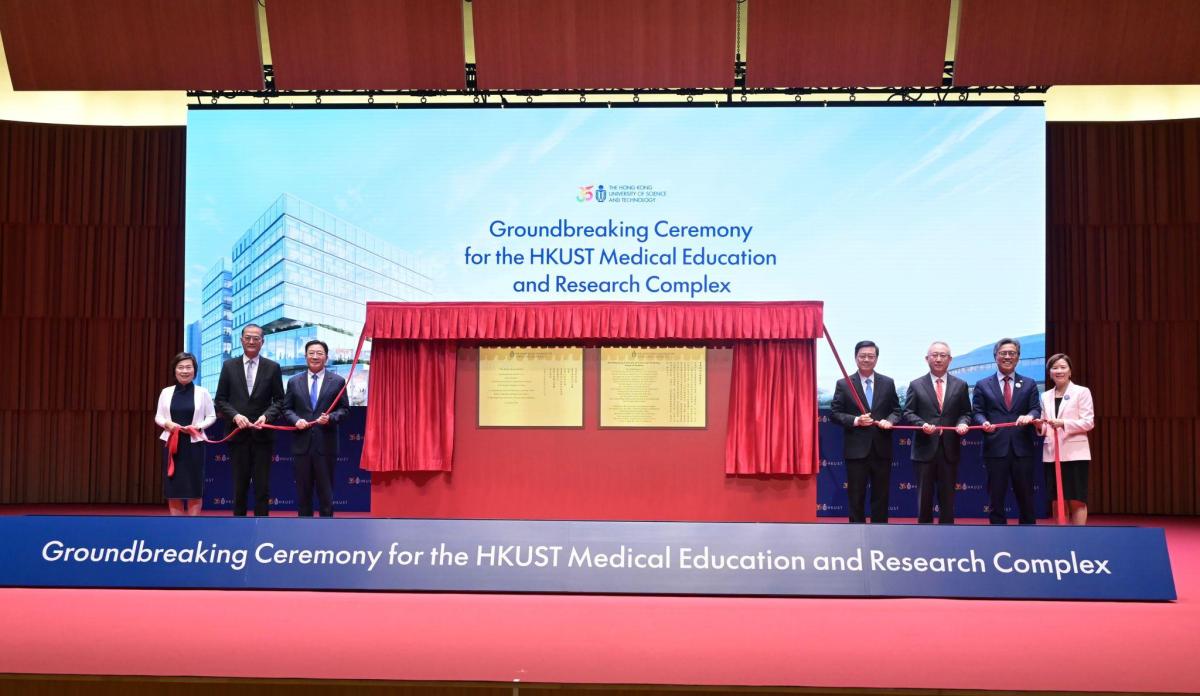
Guests attending the ceremony included Mr Zhou Ji, Director of the Liaison Office of the Central People's Government in the Hong Kong SAR; Mr Li Yongsheng, Deputy Commissioner of the Office of the Commissioner of the Ministry of Foreign Affairs of the People's Republic of China in the HKSAR; Professor Lo Chung-mau, Secretary for Health; Dr Choi Yuk-lin, Secretary for Education; Professor Harry Shum, Chairman of the HKUST Council; Professor Nancy Ip, President of HKUST; Dr John Chan, Pro-Chancellor of HKUST; and Dr Andrew Liao, Chairman of the HKUST Court.
In his speech, Mr Lee said the establishment of the third medical school was an important initiative to enhance the quality, efficiency and capacity of Hong Kong's healthcare services. It would increase the number of locally trained doctors, address the challenges of an ageing population, and contribute to realising the strategic objective of a "Healthy China."
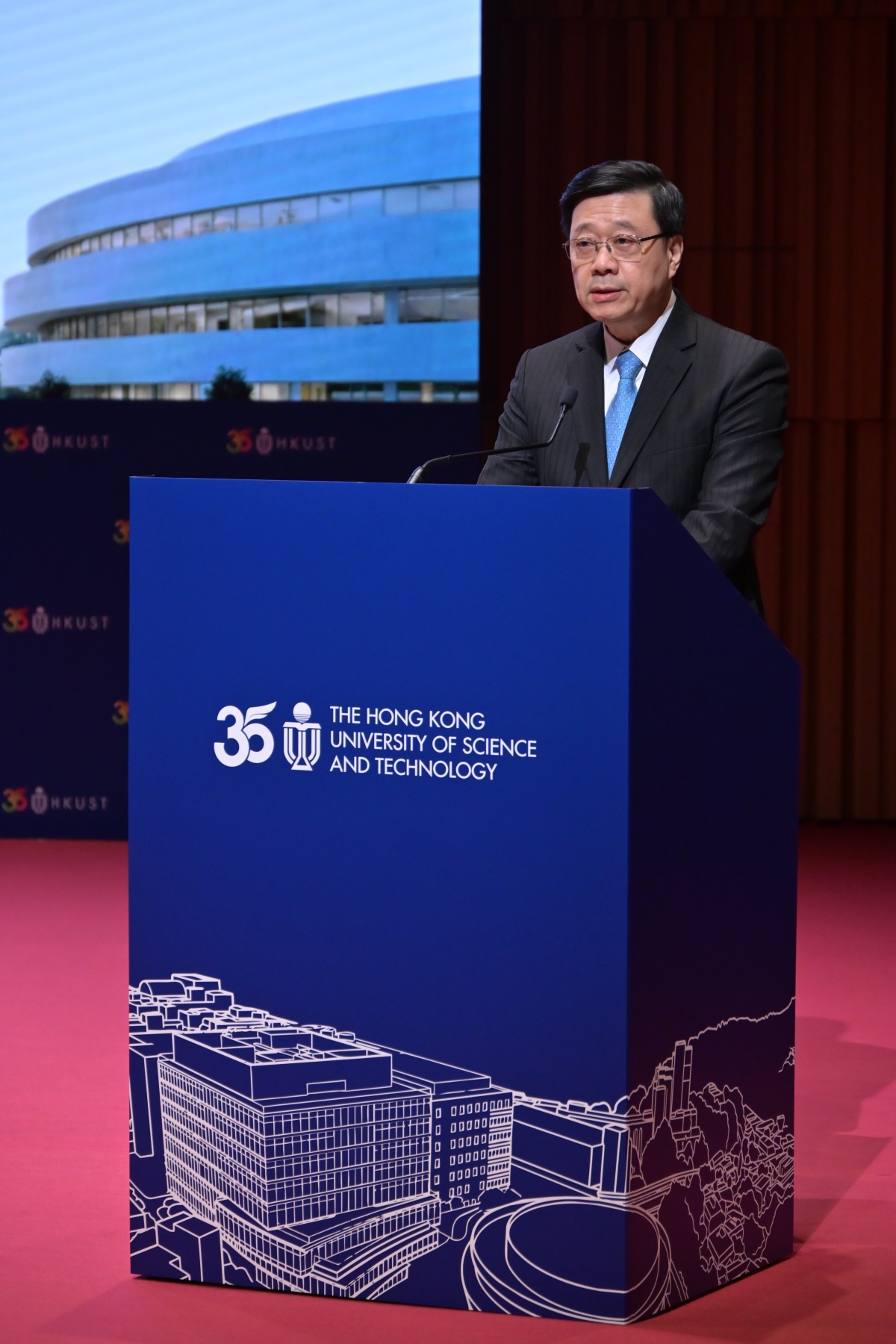
Mr Lee said the new medical school aims to admit its first cohort of 50 students in the 2028/29 academic year. The Government will provide matching funds and reserve land in the Northern Metropolis for the campus and a comprehensive teaching hospital integrating medical education, scientific research and patient care.
In her remarks, Professor Ip expressed gratitude for the Government's trust and support, stating that the new medical school would uphold HKUST's founding spirit, with technology and interdisciplinary collaboration at its core, to nurture a new generation of doctors equipped with clinical competence, technological literacy and humanistic care. The new medical school would bring together HKUST's strengths in science, engineering, business, humanities and social sciences, spanning fields from artificial intelligence and data science to medical management, medical ethics and health policy.
Professor Shum said the building where construction commenced today was a transitional teaching base tailor-made for the new medical school, symbolising HKUST's pioneering spirit in future medical education. He stressed that HKUST would leverage its strengths in technological innovation, align with the National 15th Five-Year Plan and the "Healthy China" strategy, and cultivate medical talent possessing both professional competence and innovative thinking, thereby contributing to raising the nation's overall healthcare standards.
Following the event, Mr Lee wrote on his social media platforms that the Government fully supports HKUST in actively advancing the preparatory work for the new medical school. The Government has set up three sub-groups under the Task Group on New Medical School, inviting representatives from government departments and experts from various fields to work alongside HKUST, providing advice and support on areas such as curriculum development and financial arrangements. HKUST will also collaborate with the Medical Council of Hong Kong to complete preparatory work in all aspects, including curriculum accreditation.
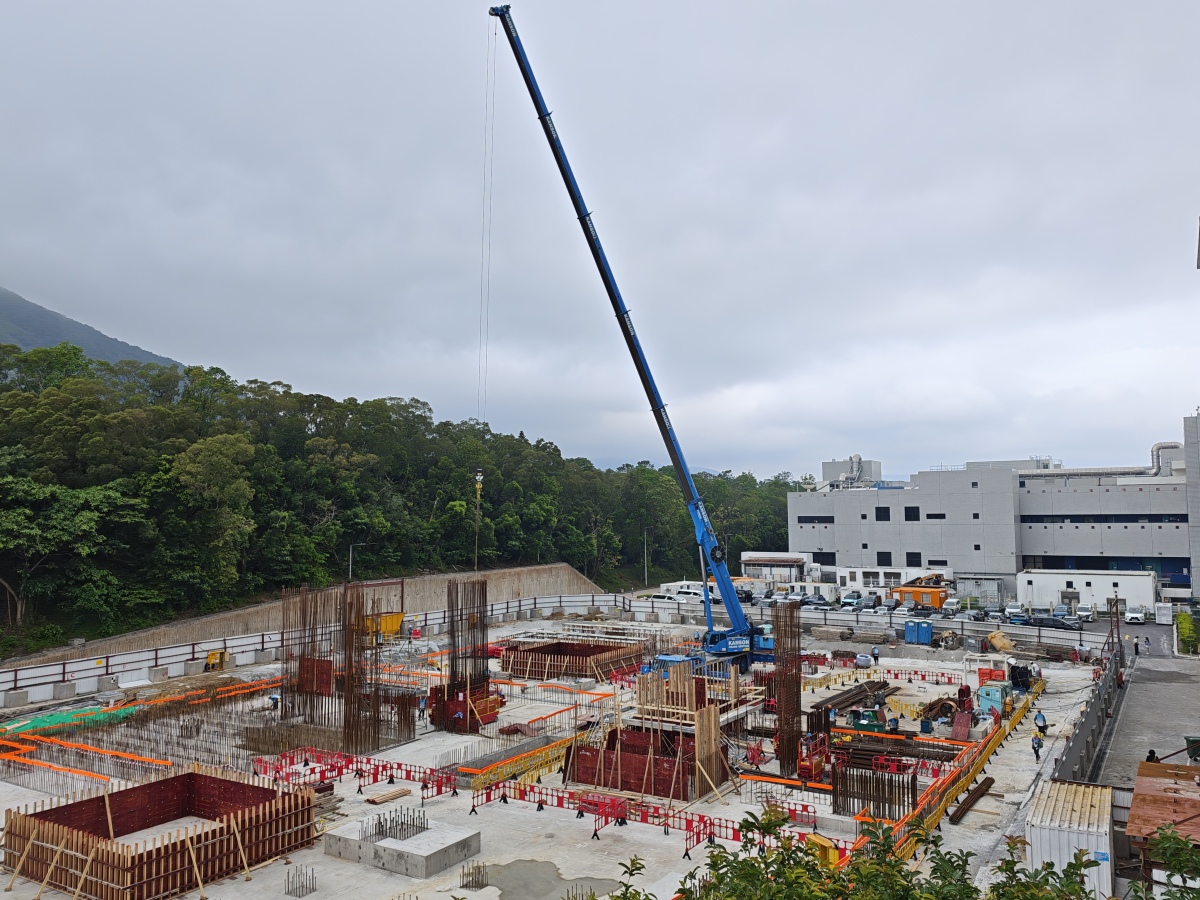
The new complex is located near the HKUST Shaw Auditorium. Dotdotnews reporters observed at the scene that construction work is progressing steadily. Professor Nancy Ip explained that the building occupies a site area of approximately 6,000 square metres and will stand eight storeys tall. It is expected to be completed by mid-2028, in time for the admission of the first cohort of students. In addition to facilities such as a clinical skills and simulation training centre, small-group study rooms, and teaching laboratories, Professor Ip revealed that the University is planning to establish a medical library.
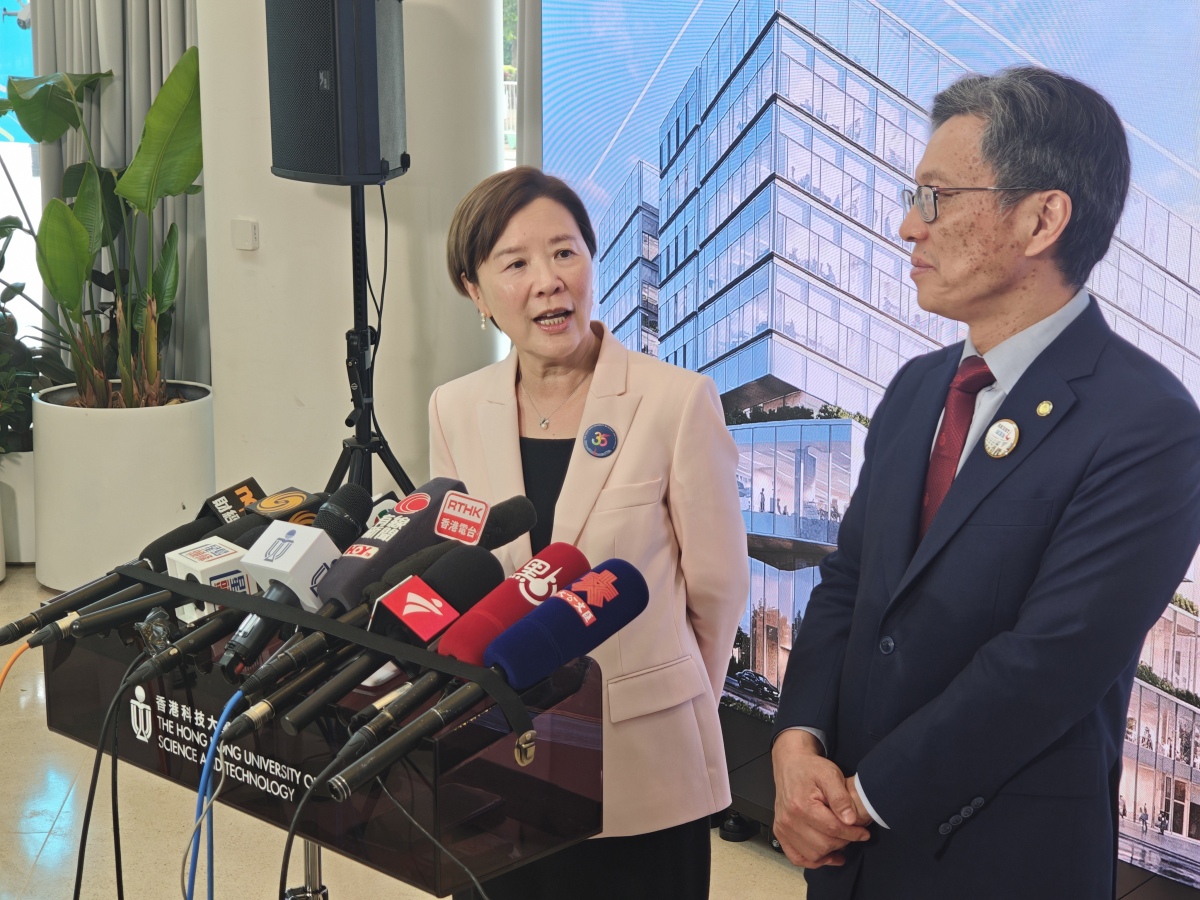
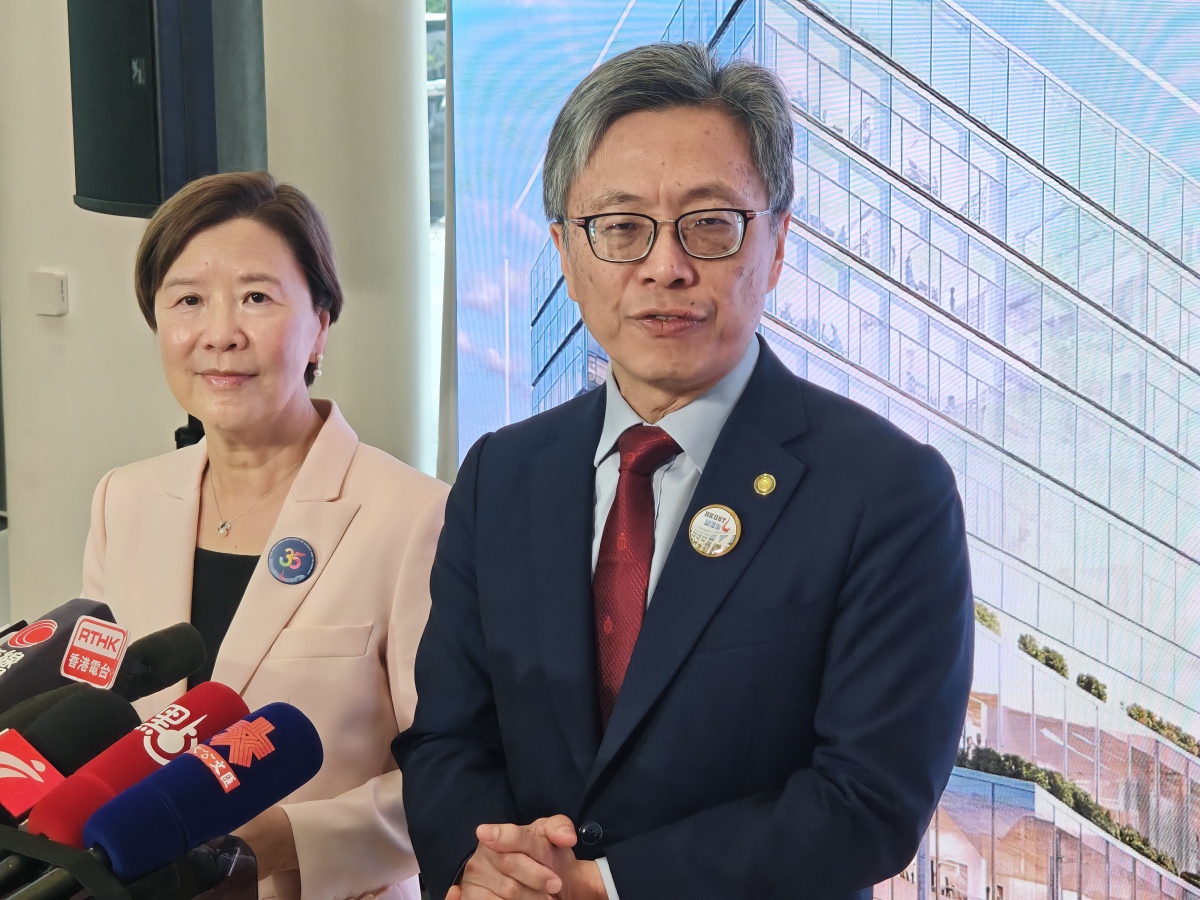
Speaking to the media after the groundbreaking ceremony today (April 28), HKUST President Professor Nancy Ip said the new medical school would leverage the University's strengths, focusing on the applications of biotechnology, artificial intelligence and robotics in healthcare. Regarding faculty recruitment, Professor Ip disclosed that the search for the Dean is progressing smoothly, with an announcement expected in the near future, while seven clinical professors have already taken up their posts. She said the School has received over 30 expressions of interest from the United States, Europe, Australia, Singapore and other regions, all with international experience.
Professor Ip also stressed that HKUST would not poach faculty from Hong Kong's two existing medical schools. HKUST Council Chairman Professor Harry Shum added that establishing the third medical school is about "hoping Hong Kong can do even better in medicine," and that the new school would collaborate with the two existing outstanding medical schools to develop Hong Kong into an international hub for medical innovation.
Professor Ip said the medical school's tuition fees and curriculum design would make reference to industry standards, while its research would combine HKUST's strengths with a focus on the application of biotechnology, artificial intelligence and robotics in healthcare. She noted that HKUST is actively communicating with the two other medical schools in Hong Kong, with the hope that students will be able to take cross-institutional elective courses in the future. Discussions on the teaching hospital are also ongoing with the Hospital Authority and the Health Bureau.
(Reporter: Liu Honglin | English Editor: Liu Yu)
Related News:




Comment