






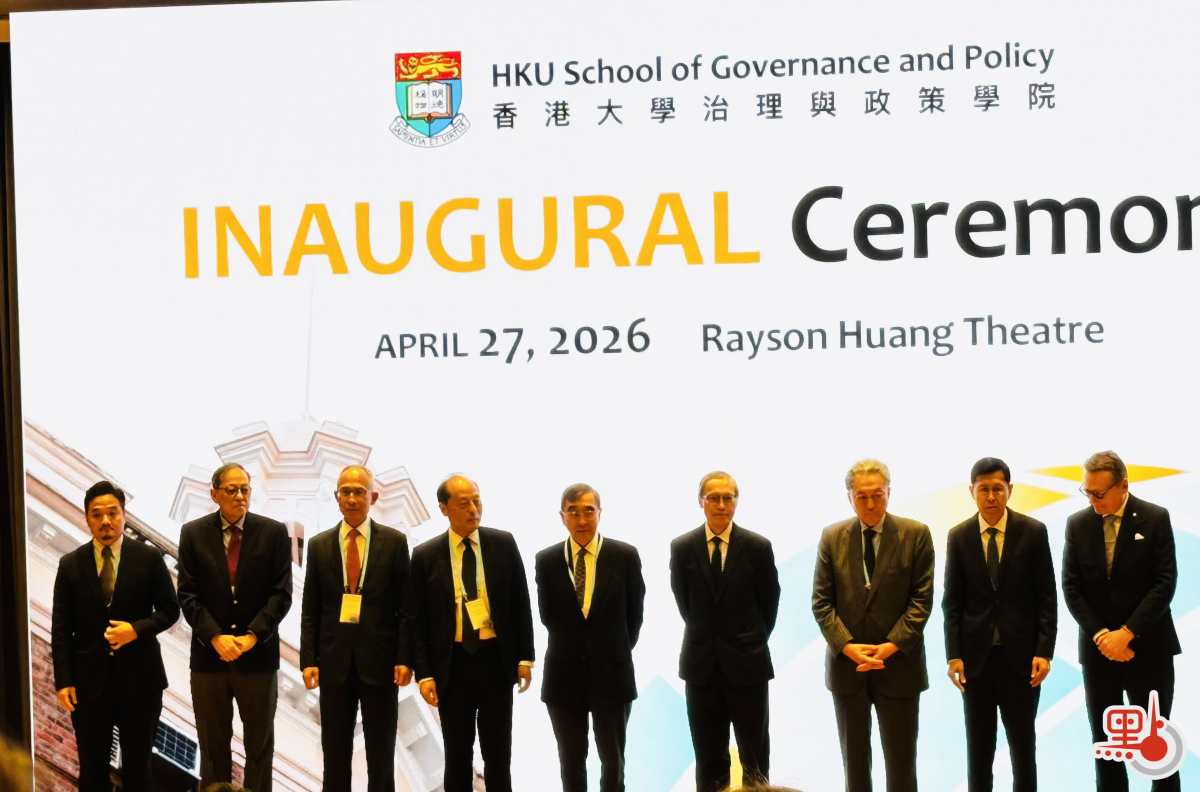
The University of Hong Kong (HKU) officially established the School of Governance and Policy on April 27, committing to create an interdisciplinary hub that shapes the future of governance and public policy. The School is holding its "Inaugural Week" from April 27 to 29, bringing together world-leading scholars and seasoned policy experts. Attendees at the opening ceremony included former Japanese Prime Minister Yukio Hatoyama, former Thai Deputy Prime Minister Phongthep Thepkanjana, and 2024 Nobel Laureate in Economics and University of Chicago Professor James A. Robinson.
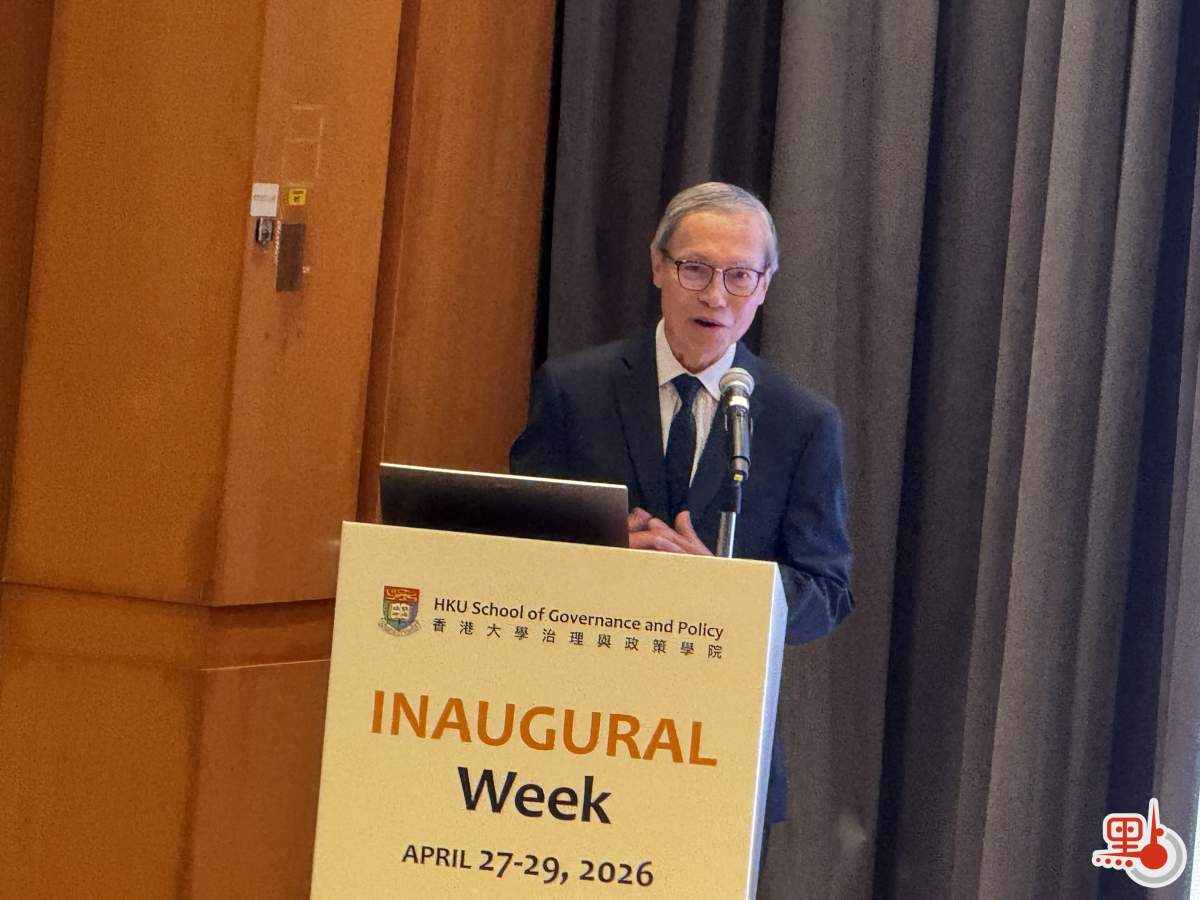
In his opening address, Professor Wong King-ho, Founding Dean of HKU's School of Governance and Policy, stated that the School's goal is to cultivate a global mindset and create cross-border, cross-institutional, interdisciplinary, and cross-sectoral learning and research opportunities. Professor Wong specifically noted that the School is jointly supported by the Faculty of Social Sciences, the Faculty of Business and Economics, and the Faculty of Law, and integrates the academic resources of the Asia Global Institute (AGI) and the Centre for Contemporary China and the World (CCCW). He revealed that the School received approval for a new Master's programme in Governance and Policy in just six to seven months, expecting to welcome 80 to 100 new students this autumn. Additionally, the School plans to launch a series of executive leadership training programmes focusing on global hotspot issues such as AI governance, ethics, and accountability.
James Robinson: Deconstructing "Three I" behind policy choices
Delivering a keynote speech, 2024 Nobel Laureate in Economics Professor James A. Robinson shared his personal vision for the School of Governance and Policy. Using a chart of the "Great Divergence," he illustrated the vast disparities in global living standards over the past 200 years, attributing them to different societies making different policy choices, "some wise, others not."
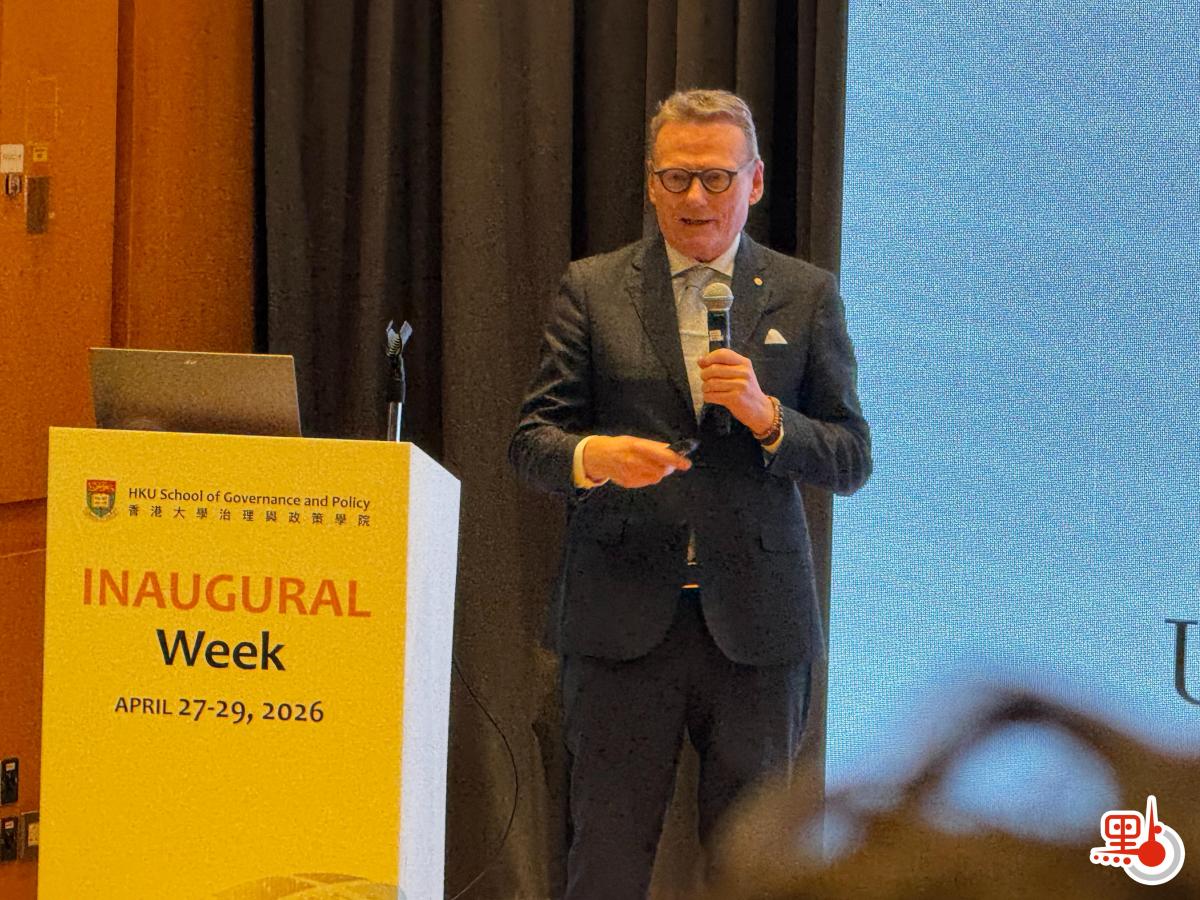
Robinson proposed a framework of the "Three I" for understanding policy choices: Ideas, Interests, and Institutions. He contrasted the closed economic models of Latin America with the successful open economies of South Korea and Hong Kong to demonstrate how ideas can shape development paths.
Robinson concluded with three strategic policy recommendations: first, try to avoid creating losers; second, establish clear priorities; and third, allow others to take credit. As he put it, "It's amazing what you can accomplish if you don't care who gets the credit."
Hong Kong will uphold its "Openness"
Responding to a question from a DotDotNews reporter, Robinson specifically addressed Hong Kong's economic development model. He noted that Hong Kong, as an entrepôt, has a long history as a global commercial hub. He stressed that Hong Kong must maintain this open tradition and expressed confidence that it will continue to flourish in the future.
What can other countries learn from the development experiences of China and the Hong Kong region? Robinson stated that to understand these experiences, one must first understand the cultural framework behind what has happened in China and the Hong Kong region. Policies must be adapted to the cultural context to function more effectively. He remarked that Hong Kong brings together talents from around the world and boasts eight ambitious, internationalised universities, consistently maintaining its status as a global economic hub. He predicted that the Hong Kong region, and indeed all of China, will continue to develop and flourish in the future, remaining dynamic and competitive on the world stage.
The "Inaugural Week" will feature three consecutive days of keynote speeches and panel discussions, running through April 29.
(Reporter: Lynn Zhou)
Related News:
Education Vanguard | Starting from BNBU: Two-way talent flow ignites GBA's innovation ecosystem




Comment