






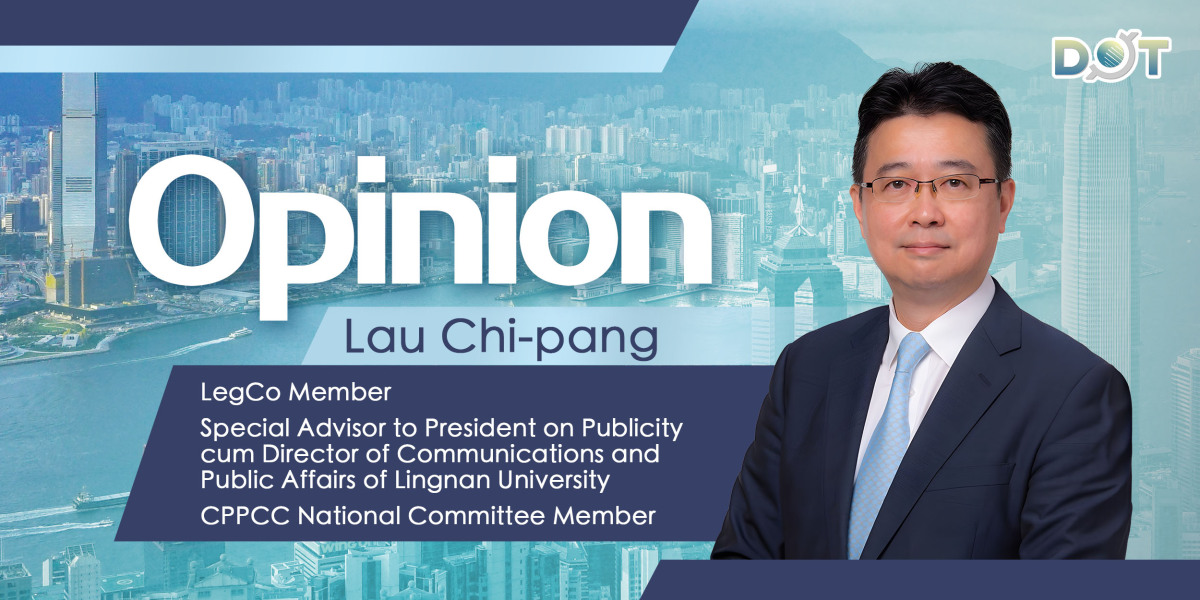
By Lau Chi-pang
The 2026 Times Higher Education (THE) Asia University Rankings have been released, with a total of 929 universities from 36 countries and territories included this year—an increase from 853 last year. This notable rise reflects intensifying competition among universities across Asia. As Chairman of the Legislative Council Panel on Education and a long-standing member of the academic community, I am concerned not only with the results themselves, but more importantly with the broader trends in higher education that they reveal.
Overall, universities in the Chinese mainland continue to demonstrate strong performance in this year's rankings. Tsinghua University has retained the top position for the eighth consecutive year, while Peking University remains in second place. Fudan University, Zhejiang University and Shanghai Jiao Tong University have also secured places within the top ten, reflecting sustained national investment in higher education and research over many years. In the Hong Kong SAR, all six previously ranked universities remain within the top 50 in Asia, with the University of Hong Kong ranked sixth and the Chinese University of Hong Kong placed tenth.
Building on this, two additional institutions have entered the rankings this year, including Lingnan University, where I serve. In its first participation, Lingnan was ranked 84th. By proportion, this places the University among the top 10% of all ranked institutions in Asia. For a university of relatively modest scale, grounded in the tradition of liberal arts education, such progress, achieved through sustained effort in an increasingly competitive higher education landscape, and its growing presence on the Asian academic stage, are indeed encouraging.
Any discussion of rankings must also consider their underlying methodologies. Over the past two decades, global university ranking systems have attracted considerable attention. The THE Asia University Rankings assess institutions across 18 indicators within five broad areas: teaching, research environment, research quality, international outlook, and industry. Other organisations will likewise release their global rankings in due course. However, it is important to recognise that any ranking represents only one perspective through which to understand the value of a university. Some ranking systems place significant emphasis on academic reputation and employer perception, with scores derived largely from global surveys of scholars and employers. While such indicators are important, their design tends to favour larger institutions with extensive alumni networks. By contrast, smaller universities that excel in teaching may find it more difficult to have their full value reflected in these metrics, including their actual research impact, quality of teaching, and contributions to society.
For institutions that are "small but excellent", demonstrating their distinctive strengths and substantive contributions within such frameworks often requires even greater effort. If society relies solely on rankings to judge quality, the unique value of these universities may be overlooked, or even misinterpreted as underperformance within certain indicator systems. The essence of liberal arts education—characterised by close student–teacher engagement and a strong emphasis on the humanities—is often obscured by headline figures. This is particularly pertinent in the digital age, where artificial intelligence can generate written content with ease, and information is abundant yet not always reliable. In such a context, the cultivation of students with critical judgement, a strong sense of social responsibility, and deep humanistic awareness is arguably among the most valuable contributions higher education can make.
As Prof S. Joe Qin, President and Wai Kee Kau Chair Professor of Data Science at Lingnan University, has observed, Lingnan's debut and entry into the top 100 of the THE Asia University Rankings marks an important milestone in the University's development. It reflects the gradual realisation of its recent teaching and research strategies, including advancing "Liberal Arts plus Technology" and "AI+" initiatives on the foundation of liberal arts education, attracting leading international scholars, and strengthening student innovation and entrepreneurship. These efforts reinforce Lingnan's positioning as a research-oriented liberal arts university, comprehensive in arts and sciences in the digital era. As the UGC-funded university in the Hong Kong SAR closest to Shenzhen Bay Port and the Northern Metropolis, Lingnan is well placed to leverage its geographical advantage to enhance its academic influence in Asia, promote interdisciplinary collaboration across industry, academia and research, and facilitate knowledge transfer, thereby supporting its continued progress in international rankings.
From a pluralistic perspective, rankings are but one lens through which to assess the value of universities. Hong Kong SAR's higher education ecosystem requires not only large, comprehensive universities to lead on a broad front, but also smaller, high-quality liberal arts institutions to nurture talent. The synergy arising from such diversity will further strengthen Hong Kong SAR's academic influence in Asia and beyond, and advance its development as an international hub for post-secondary education.
The author is the Special Advisor to President on Publicity cum Director of Communications and Public Affairs of Lingnan University, and Chairman of the Legislative Council Panel on Education.
The views do not necessarily reflect those of DotDotNews.
Related News:
Opinion | Seizing the 15th Five-Year Plan: Elevating Hong Kong as a global higher education hub




Comment