






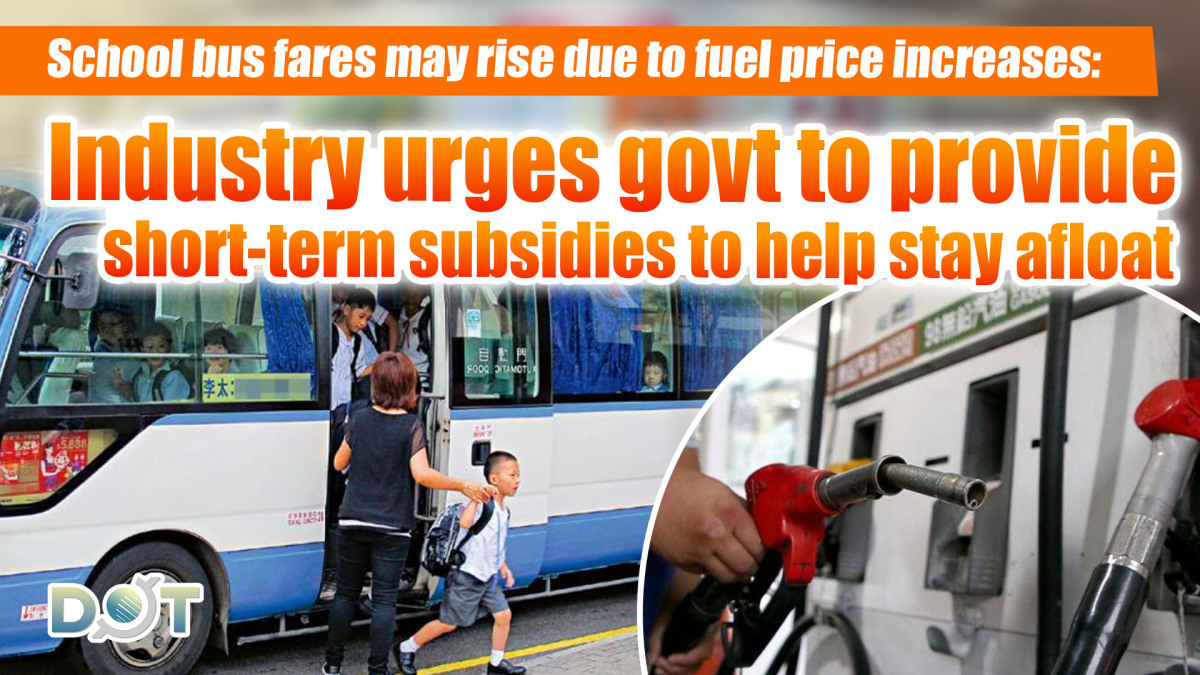
With international oil prices continuing to soar due to the US-Israeli military strikes on Iran, Hong Kong's school bus industry is feeling the pinch. The head of Affluent Coach Services, which operates 13 school buses serving about 400 students across six primary and secondary schools and kindergartens in Sha Tin, said fuel costs have risen sharply.
"In the past, fuel accounted for just over 10% of operating costs. But after deducting all discounts, it has now climbed to nearly 20%," the head of Affluent Coach Services urged the government to introduce a temporary surcharge subsidy mechanism that would be in effect until oil prices return to normal levels. She believes such a measure would directly benefit parents while helping the industry weather the crisis.
Au noted that school bus fees cannot be adjusted immediately and are subject to contracts signed with schools. Fee revisions for the new school year must be applied for between March and April. Even when schools approve increases, the acceptable range is typically 5% to 8%, with 8% being the limit. The industry also worries that higher fees could prompt parents to stop using school bus services altogether. Already, due to declining birth rates, annual student dropout rates normally range from 10% to 15%.
Legislative Council member Tang Fei, who represents the education sector, acknowledged the long-standing difficulties faced by the school bus industry. He noted that some operators went out of business during the pandemic due to class suspensions, and the declining student population has only worsened the situation.
Tang suggested that direct subsidies to parents would be a more effective form of government assistance during this extraordinary period. He pointed out that for many students—especially younger ones—school bus services are an essential need, as not every family can afford a helper or have a family member available for pickups and drop-offs. Even if fares rise, families in need would have no choice but to accept.
Tang recommended that the Transport Department and the Education Bureau work together to establish an emergency response mechanism to address the pressures of fuel price volatility on people's livelihoods. The subsidies should be short-term and cancelled once oil prices stabilise, which would generate less resentment from parents compared to bus companies.
(Source: Wen Wei Po)
Kwu Tung North plans to set up fencing and swimming venues, paving way for international events




Comment