






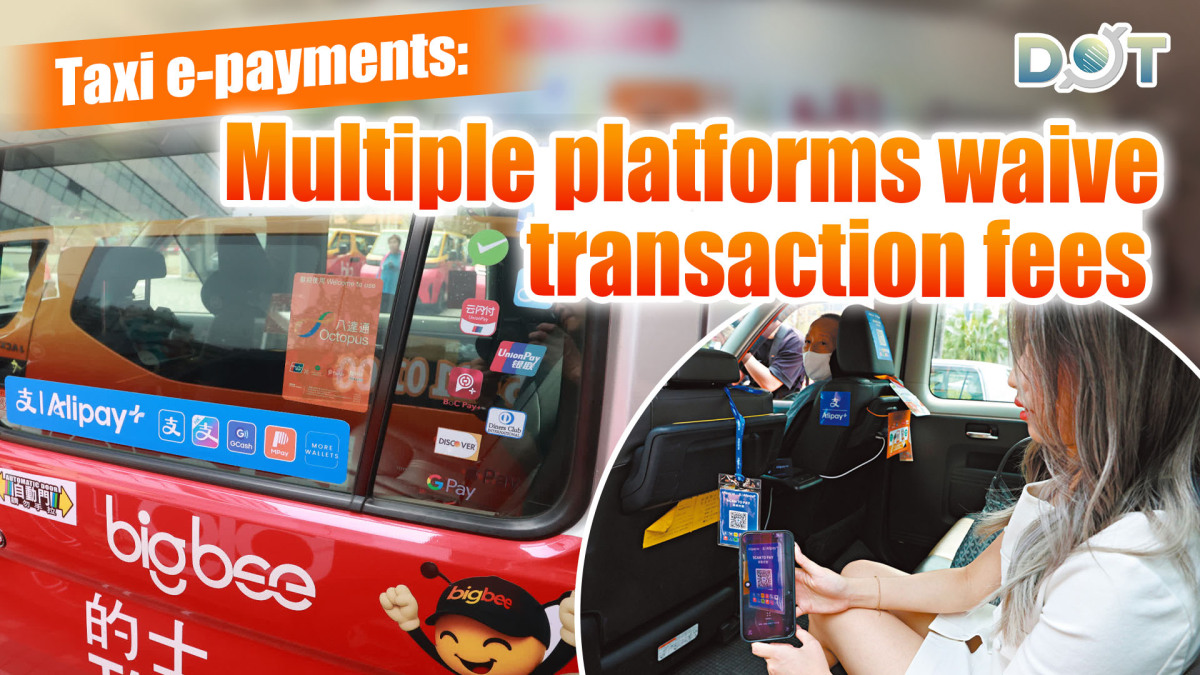
A new regulation requiring all taxis in Hong Kong to offer at least two forms of electronic payment took effect on April 1, but the rollout has been overshadowed by controversy over a 3% platform fee that some passengers are being asked to pay, prompting clarification from the Transport Department.
Under the mandate, every taxi must provide at least two electronic payment methods, including one QR-code option such as AlipayHK or WeChat Pay HK, and one non-QR-code option such as Octopus, credit cards or the Faster Payment System (FPS).
Platforms waiving fees
Multiple payment platforms have committed to waiving transaction fees for both drivers and passengers. According to the Transport Department, AlipayHK, WeChat Pay HK, the Octopus Mobile POS device, and the Commercial Octopus App all continue to exempt users from handling fees.
Currently, more than 47,000 taxi drivers have registered for Octopus commercial accounts, exceeding the estimated 46,000 active drivers in Hong Kong.
Drivers report payment failures
Some drivers have reported that passengers failed to complete electronic payments after scanning QR codes. A senior taxi driver surnamed Chan told Ta Kung Pao that he had several instances where he let passengers alight after watching them enter the amount, only to discover later the payment had not gone through. He now waits for confirmation before allowing passengers to exit the vehicle.
Network coverage concerns
Drivers have also expressed concerns about weak network signals at border control points that could affect payment processing. Transport Commissioner Winnie Tse said the department is working with the Digital Policy Office to strengthen Wi-Fi coverage in border areas, and noted that government-provided free Wi-Fi services are available for drivers.
The Transport Department has set up service counters at three government car parks in Sheung Wan, Kwai Fong, and Tsuen Wan to assist drivers with registration, with the counters operating until April 4.
Industry response
Some drivers welcomed the change, saying electronic payments eliminate the need to carry large amounts of change and speed up transactions. One driver told the Transport Commissioner that e-payments allowed him to complete more trips and boost business. However, other drivers said they saw little difference, with some noting that passengers still prefer to pay with cash.
The Smart Mobility Association said the fee-charging model is likely to become a trend in the development of electronic payments, with different platforms competing through service models and pricing strategies.
(Sources: Ta Kung Pao, Wen Wei Po, RTHK)
Related News:
Taxi e-payment mandate takes effect: TD clarifies 3% platform fee not considered overcharging




Comment