






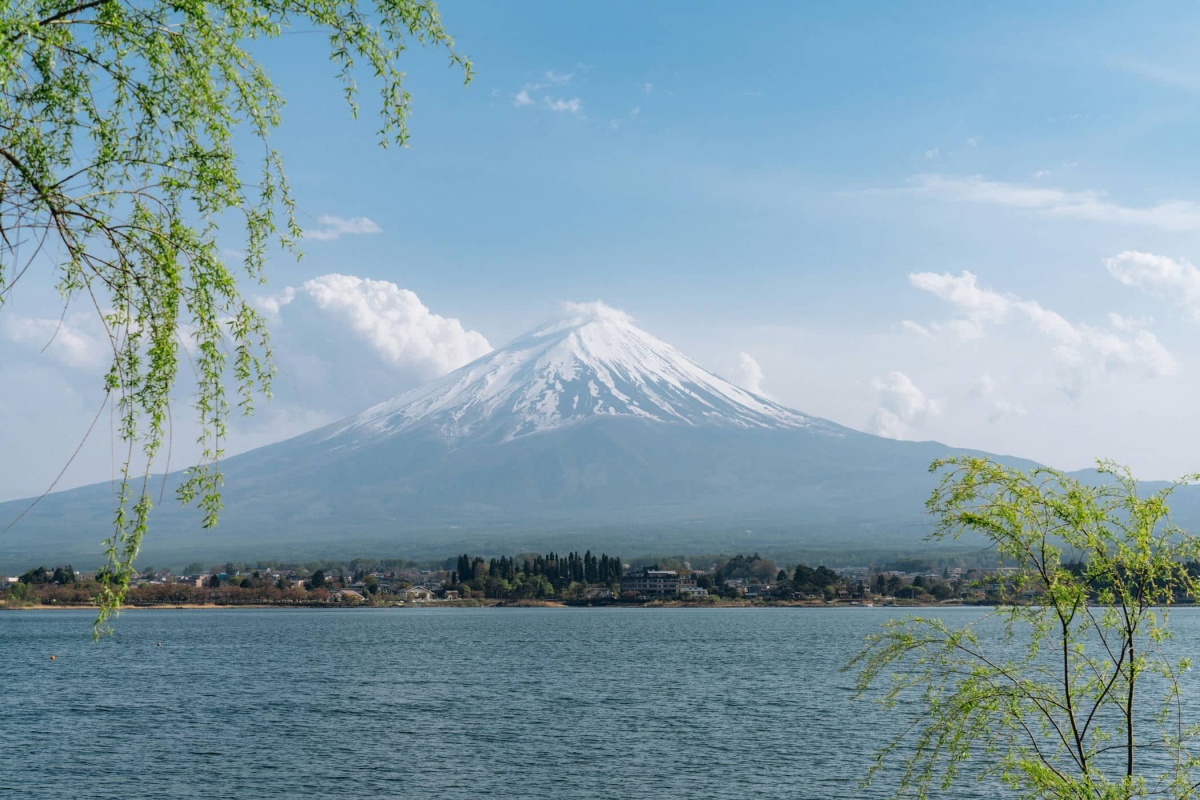
Lake Kawaguchi, a famous tourist destination at the foot of Mount Fuji in Japan, has experienced an unprecedented drop in water levels, plunging by four meters to hit a 29-year low.
The iconic "hexagonal main hall (Rokkaku-do)," which traditionally stood in the middle of the lake, is now connected to newly exposed land, allowing visitors to walk to it.
According to Japanese media outlet "Friday," a chief researcher at the Mount Fuji Research Institute explained that the sharp drop in Lake Kawaguchi's water levels can be attributed to last year's unusually short rainy season and a lack of typhoons.
These factors resulted in significantly reduced rainfall, with only 1,080 millimeters recorded for the entire year—well below the critical threshold of 1,300 millimeters required to maintain normal lake levels.
However, experts also pointed out that the public does not need to worry about the lake's long-term survival. It is normal for Lake Kawaguchi's water levels to decline during the winter. With the arrival of spring and the rainy season, the anticipated increase in rainfall is expected to restore the lake's water levels.
Related News:
Mount Fuji sees its first snow, 15 days earlier than last year
Japan unveils first-ever contingency plan for large-scale ashfall from Mount Fuji eruption




Comment