






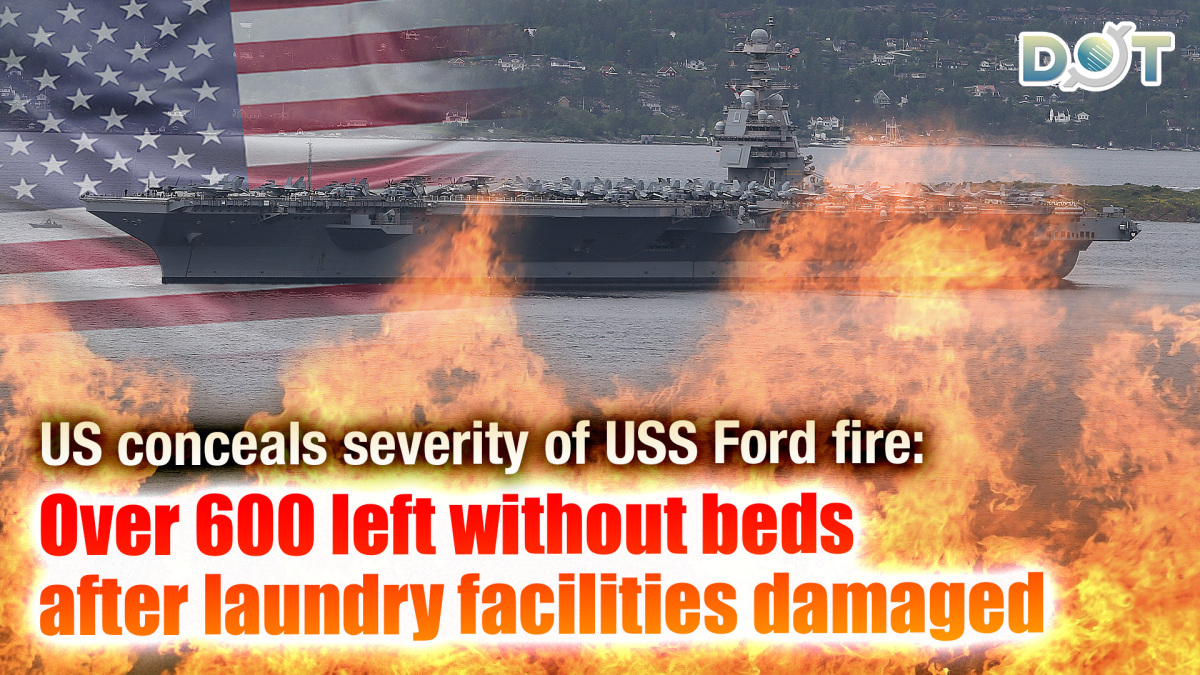
The USS Gerald R. Ford, a US aircraft carrier currently participating in military operations against Iran, suffered a non-combat-related fire last week that took over 30 hours to extinguish, according to sailors and military officials cited by The New York Times on March 16.
The blaze, which originated in a dryer vent within the ship's main laundry facility on March 12, left more than 600 crew members without berths, forcing them to sleep on floors or makeshift beds made from tables.
The carrier, home to approximately 4,500 sailors and pilots, has been deployed overseas since June 2025 and has faced multiple mission extensions. US Central Command confirmed that two sailors sustained non-life-threatening injuries during the incident, while dozens of additional personnel reportedly suffered from smoke inhalation. The laundry facility remains largely inoperable following the fire.
According to ship personnel, they have been informed that their deployment may be extended into May, potentially marking a full year at sea—double the typical carrier deployment duration. This would surpass the longest post-Vietnam War deployment record currently held by the USS Abraham Lincoln at 294 days in 2020.
The incident adds to a growing list of challenges aboard the vessel. The Wall Street Journal previously reported frequent blockages in approximately 650 toilets due to design flaws, requiring daily repairs and causing queues exceeding 45 minutes. US media outlets have noted speculation that some malfunctions may result from deliberate sabotage by sailors frustrated with the prolonged deployment.
"The ship also gets tired and is overworked during long deployments. Under such harsh conditions for so long, it's unreasonable to expect both the ship and its crew to maintain peak condition," warned retired US Navy Rear Admiral John Kirby, former Pentagon spokesman.
(Source: Wen Wei Po)
Related News:
US diesel prices exceed US$5 per gallon again, marking second time in history
US calls for Japanese self-defense forces to 'escort': Japan temporarily takes wait-and-see approach




Comment