






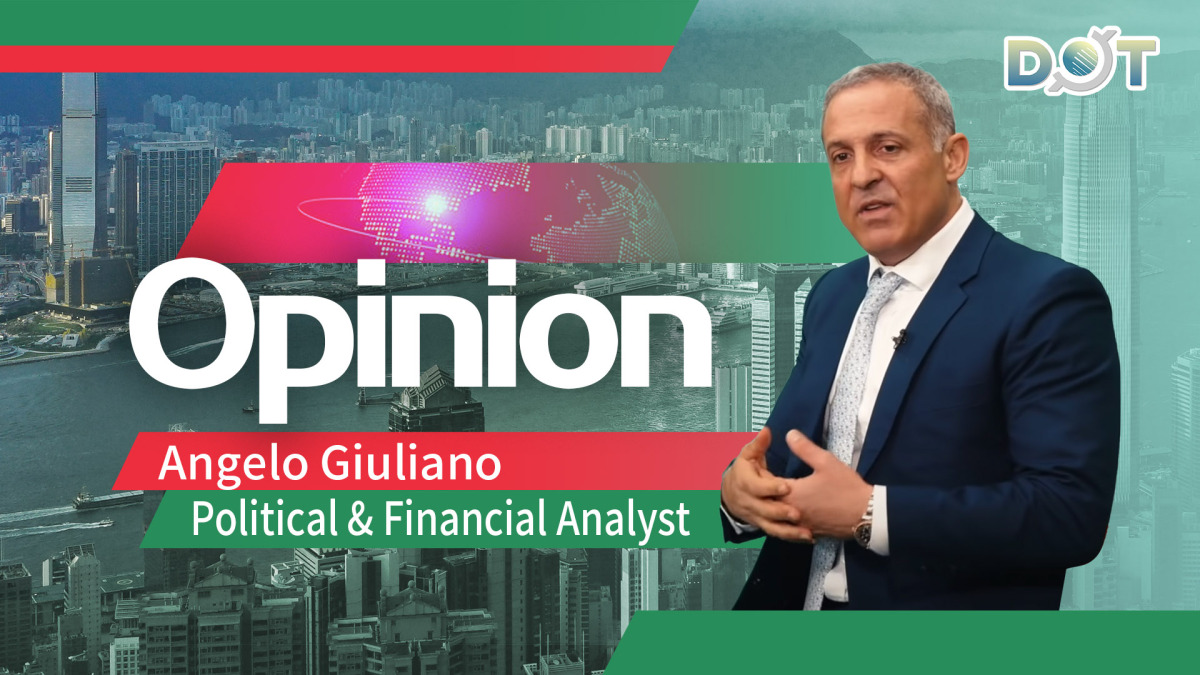
By Angelo Giuliano
The Russian precedent: When punishment backfires spectacularly
Few episodes in recent economic history illustrate the law of unintended consequences more vividly than the West's sanctions campaign against Russian energy exports. When the European Union and the United States unleashed sweeping restrictions on Russian gas and oil following the escalation in Ukraine, policymakers in Brussels and Washington anticipated a swift economic strangulation of Moscow. Instead, they handed the Kremlin an unexpected gift.
Russia swiftly redirected its hydrocarbon flows toward eager buyers in Asia—primarily China and India—bypassing the dollar-dominated payment system that had long underpinned American financial hegemony. The sanctions themselves acted as a powerful accelerant: global energy prices surged to historic levels. Brent crude and European natural-gas benchmarks shattered records. The bitter irony was immediate and devastating. Despite reduced export volumes, Russia's energy revenues soared far beyond pre-sanction levels. Meanwhile, European consumers and industries paid record sums for the very same Russian molecules—now rerouted through shadowy intermediaries at premium markups.
In effect, the architects of the sanctions unwittingly became the largest financiers of the campaign they sought to cripple. Year after year, hundreds of billions of euros flowed eastward, strengthening rather than weakening the Russian state. The boomerang had returned—with interest.
Iran's parallel trajectory: Volume down, prices up
Today, Iran stands at a strikingly similar crossroads. Renewed and intensified Western pressure—fresh rounds of oil and banking restrictions—aims once again to choke Tehran's economy and limit its geopolitical maneuverability. Yet history whispers a warning: the arithmetic of sanctioned commodities rarely behaves as intended.
Iranian crude, like Russian volumes before it, will not simply vanish from global markets. Shadow fleets, re-flagging, ship-to-ship transfers, and willing purchasers in East Asia ensure that barrels continue to move—albeit at a discount to official benchmarks and through less transparent channels. The critical point is this: reduced accessible supply in the compliant, dollar-based market drives spot and futures prices higher. Every barrel that exits the formal system reappears elsewhere at elevated valuations.
Who ultimately absorbs these inflated costs? The same capitals that drafted the restrictions. European refiners, Asian importers under pressure to diversify away from sanctioned sources, and ultimately Western consumers will pay more per unit of energy. The aggressors become the paymasters once again. Sanctions intended to impoverish the target end up enriching it per barrel while punishing the sanctioning bloc per unit of consumption.
Strategic leverage: The Strait of Hormuz card
Unlike Russia, Iran possesses a geographic trump card of unmatched potency: the Strait of Hormuz. Roughly one-fifth of global seaborne oil trade—and a substantial share of liquefied natural gas—passes through this narrow chokepoint under Iranian observation. Tehran has long signaled its willingness to respond asymmetrically to economic warfare.
One plausible countermove would be the imposition of transit tariffs or "protection fees" on vessels carrying oil through the strait. Even a modest levy—perfectly deniable as mere navigational or security charges—would instantly raise marginal costs across the global oil complex. Another option, already partially tested, involves mandatory settlement in non-dollar currencies for passage or for Iranian crude itself. Both measures would accelerate the very de-dollarization trend that Western sanctions ostensibly aim to prevent.
Each tanker forced to pay in yuan, rupees, or rials—or to reroute at higher expense—chips away at the petrodollar architecture. The dollar's status as the unchallenged unit of energy trade has long granted the United States extraordinary privilege: the ability to run persistent deficits while exporting inflation. Any serious erosion of that privilege inflicts structural damage on Washington's financial position and on the network of institutions that sustain it.
Striking at the heart: De-dollarization as existential threat
Beneath the surface of these economic maneuvers lies a deeper struggle. The current international financial order—centered on dollar clearing, SWIFT dominance, and the extraterritorial reach of U.S. sanctions—has enabled an interlocking system of power that extends far beyond conventional geopolitics. Critics have long pointed to the opacity and impunity enjoyed by certain transnational elites who operate within that system.
Accelerated de-dollarization threatens the foundations of that impunity. When oil trades increasingly settle outside dollar jurisdiction, the leverage once exercised through financial exclusion evaporates. The ability to freeze assets, cut access to correspondent banking, or weaponize payment rails diminishes. For those who have relied on such tools to maintain influence—and to shield associated networks from scrutiny—the loss would be profound.
Conclusion: The boomerang's inevitable return
Sanctions are not neutral instruments. When applied to commodities that the world fundamentally requires, they function less as precision scalpels and more as crude hammers—likely to rebound upon the hand that wields them. Russia demonstrated the pattern. Iran now appears poised to repeat it, perhaps with even greater force thanks to its control over the world's most critical energy artery.
The ultimate paradox remains unchanged: the louder the cries for economic punishment, the more generously the targeted states are rewarded per unit exported—and the more painfully the sanctioning societies pay per unit consumed. In this inverted logic, aggression becomes subsidy, pressure becomes profit, and the boomerang completes its arc—striking not the intended victim, but those who threw it.
The views do not necessarily reflect those of DotDotNews.
Read more articles by Angelo Giuliano:
Opinion | Iran's smart game: Turning pennies into power against a trillion-dollar giant
Opinion | The Zionist elites: Betrayers of the Jewish masses – time to face the truth
Opinion | The untouchable Rothschilds: Real power behind history's darkest turns




Comment