






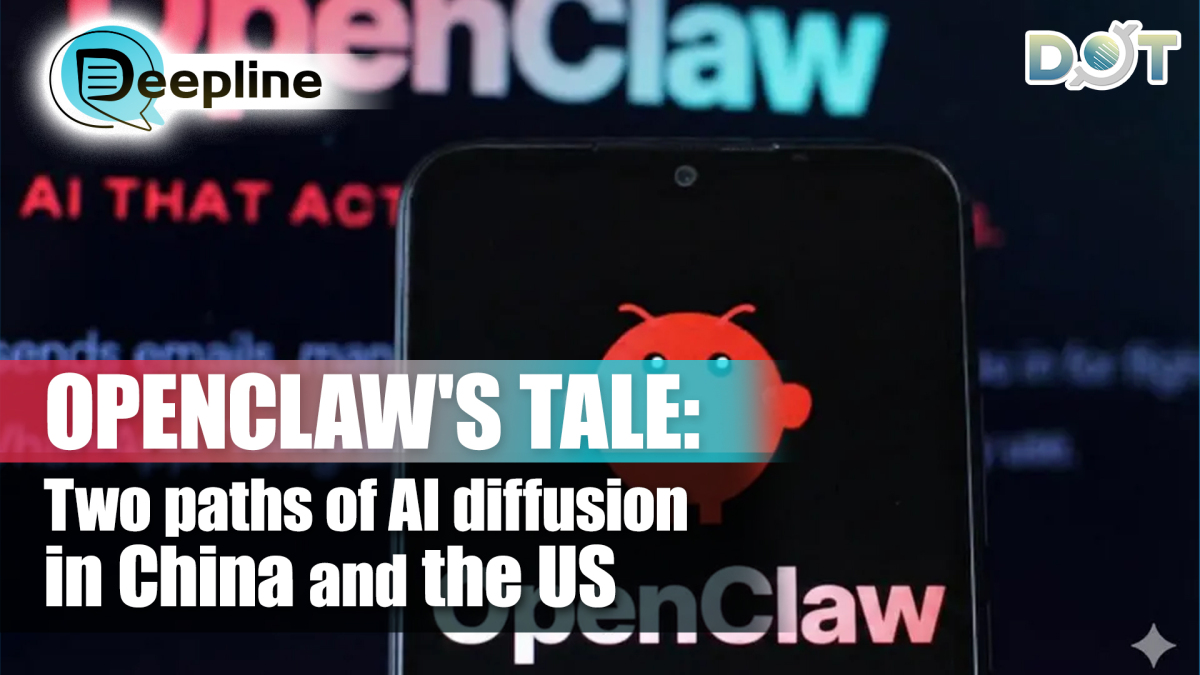
As one of the hottest topics in AI currently, OpenClaw began as an experimental project by Austrian developer Peter Steinberger, aiming to let AI complete entire task chains automatically. It became a huge hit in Silicon Valley and went global.
Interestingly, the way OpenClaw spreads in the US and China is opposite, reflecting each country's political and cultural DNA. The US follows a bottom-up path driven by individual innovation, while China follows a top-down path driven by platform integration.
In the US, the story usually starts with an individual programmer or a small team. They find an open-source tool fun, modify it, add features, and share it for free on GitHub. Initially unnoticed, it quickly catches on among peers who find it amazing. It goes viral on Reddit, Hacker News, and X, with stars soaring. Grassroots enthusiasm then spreads like wildfire.
Only after it gains significant traction do big companies like Google, Microsoft, and Meta notice and invest, acquire, or integrate the tech. GitHub Copilot and Stable Diffusion followed this exact pattern. In Feb 2026, Steinberger joined OpenAI and moved to Silicon Valley.
Now we can see the US model is grassroots-driven: From individuals to community, and big companies eventually follow.
In China, however, the sequence is reversed. Major companies like Alibaba, Tencent, and Baidu first spot the trend, master and optimize the tech, slash costs, and package it into easy-to-use tools for developers. Developers call APIs within WeChat, DingTalk, or Alibaba Cloud and get running in minutes.
Large enterprises adopt first (e.g., for e-commerce or customer service), followed by SMEs, and finally, individual users integrate it seamlessly. It's like water flowing downstream: infrastructure spreads first, then trickles down to every corner.
Thus, China's model is platform-driven: big platforms invest and integrate → infrastructure spreads → developers adopt passively or seamlessly.
The US bottom-up model is rooted in its classical individualism, which prioritizes personal achievement. American culture, influenced by the Enlightenment, values freedom, risk-taking, and individual rights. Silicon Valley's hacker culture, like Western cowboys, embraces risk and failure. GitHub empowers anyone to contribute. The US thus excels at "from 0 to 1" innovation, with over half of Silicon Valley founders being immigrants.
Politically, the US decentralized structure reinforces this. Power is dispersed among states and private entities, with the government playing a supporting role—funding basic research but not directing it. This allows technologies like OpenClaw to grow freely before market forces pick winners.
However, this model has downsides: uneven diffusion. While some areas thrive, others lag. For instance, parking in Detroit required a complicated process involving scanning, registration, and credit card linking—clunky compared to China's seamless mini-programs. Yet, the US leads in AI breakthroughs, with 57% of top global AI researchers in 2025.
China's top-down model is rooted in collectivism, emphasizing stability, efficiency, and collective goals. Influenced by Confucian "great unity," innovation aims to serve the majority quickly. Platforms integrate OpenClaw for seamless user adoption, prioritizing scale effects.
Culturally, China focuses on rapid "from 1 to 100" scaling rather than "from 0 to 1" breakthroughs. Success comes from efficient iteration within ecosystems, as seen with ByteDance and Pinduoduo. Algorithms are refined centrally and pushed to massive user bases.
Politically, central direction drives this. Five-year plans and national funds channel resources into priorities. Private enterprises align with national goals via subsidies and policies. This "pooling resources" logic enables rapid nationwide scaling of proven technologies, like high-speed rail and mobile payments.
This model may limit originality but excels in scale, with the world's largest AI deployment scenarios, user data, and iteration speed. The US leads in innovation but risks fragmentation; China leads in scaling but has room to improve originality.
Understanding these differences isn't about picking winners but finding suitable paths. Technology always carries cultural genes—AI is no exception.
(With input from Finding Gold, 36kr)
Related News:
Opinion | Two Sessions 2026: Resilience for today, vibrancy for tomorrow
OpenAI releases GPT-5.4 with enhanced reasoning, coding, AI agent capabilities




Comment