






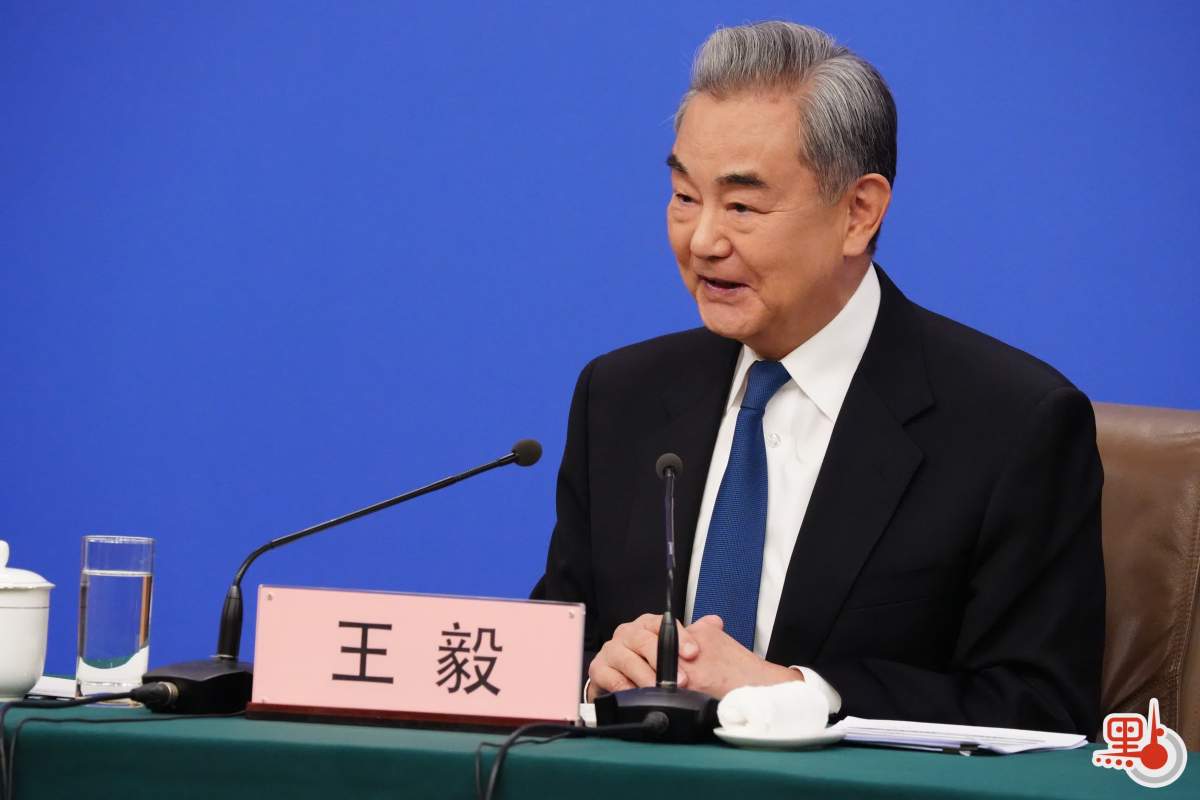
In roughly 90 minutes, Chinese Foreign Minister Wang Yi on Sunday (March 8) addressed 21 questions ranging from China's relations with major countries, Russia and the US, to the situation in Iran and China-Japan ties… Faced with a barrage of challenging and complex questions, Wang Yi, drawing on traditional Chinese classics and metaphors, boldly presented China's diplomatic vision.
This marks the 12th time that Wang Yi has addressed a press conference during China's "two sessions" as foreign minister, and his remarks have sent a calm and confident message that in a world marked by turbulence and chaos, China's approach and wisdom, embodied in its four global initiatives, constitute one of the important public goods it has offered to the international community.
"Under the guidance and stewardship of President Xi Jinping, China's diplomacy provides the most-needed stability and certainty to a world in turmoil and serves as an irreplaceable mainstay amid global turbulence," Wang Yi said.
China's answers in focus
About four hours before the press conference began, reporters noticed a long line outside the press conference hall at the Media Center Hotel. Some foreign journalists arrived as early as 6 am to set up their camera equipment.
Some foreign journalists said they were eager to hear China's voice and China's proposals amid the increasingly turbulent and complex international situation.
Among the 21 questions raised during the press conference, 11 were raised by foreign journalists, including how China and Russia—two major powers—can counter attempts to reshape international law and global trade rules, the role that China plays in global governance, and how the US-Israeli joint military strikes against Iran could impact the US.
Foreign journalists from Pakistan, India, Brazil, Japan, Nigeria, and Indonesia also raised questions about neighborhood diplomacy, China-EU relations, the "US-China co-governance" framework, China-Latin America relations under the influence of the US, and the erroneous remarks of Japanese Prime Minister Sanae Takaichi on Taiwan, as well as the future development of China-Japan relations.
Seven questions directly involved the US, and the replies shed light on China's view of major-country diplomacy and the role it could play in today's world, which is facing growing geopolitical tensions and challenges.
China and the US are both big countries. Neither side can remodel the other, but we can choose how we want to engage, Wang said in response to a question about how the joint US-Israeli military strikes against Iran could impact Trump's possible China visit and China's expectations for the visit and the development of bilateral relations.
This year is a "big year" for China-U.S. relations. The agenda of high-level exchanges is already on the table. What the two sides need to do now is to make thorough preparations accordingly, create a suitable environment, manage the risks that do exist, and remove unnecessary disruptions, Wang noted.
"If the message last year was of warning amid uncertainties, the one this year was marked by confidence," CNN said in an article covering the press conference.
The Associated Press reported that China is striking a "largely positive tone" ahead of an expected summit between the two countries later this month.
Bloomberg said, "China's top diplomat signaled that Beijing is prioritizing a stabilization of ties with Washington, even as he issued a pointed critique of US military actions in the Middle East."
When addressing an NBC reporter's question on whether China accepts the idea of a "US-China co-governance" framework, Wang said that there is no doubt that China and the US have a significant impact on the world, but we should not forget there are more than 190 countries on our planet. World history has always been written by many countries together, and the future of humanity will be forged through the collective efforts of all nations.
Diversity is the inherent nature of human society, and multipolarity is the international landscape that should emerge, Wang said.
China-US relations are repeatedly touched upon. This reflects the international community's keen attention to China-US interactions and underscores the significance of China-US relations in resolving specific international issues and in reforming the global landscape, Li Haidong, a professor at the China Foreign Affairs University, said on Sunday.
When responding to a question from Japan's Kyodo News Agency about the future of China-Japan relations, Wang said that a strong China and its 1.4 billion people will never allow anyone to justify colonialism or reverse the verdict on aggression ever again. "The future of China-Japan relations hinges on Japan's choice," he said.
Analysts said many of the foreign minister's words made at this press conference were both novel and profound.
"For example, when discussing China-Japan relations, this year they specifically mentioned the 80th anniversary of the opening of the Tokyo Trials, which had already defined Japanese militarism and nailed it to the pillar of historical shame. There is no way for it to escape the constraints established after World War II," Wang Yiwei, an international affairs expert at the Renmin University of China, said on Sunday.
Precious public goods
"Weapons are ominous tools and should not be used without discretion." The Chinese foreign minister quoted an ancient Chinese saying when briefing his take on how China views the current situation in Iran and the propositions for resolving the Iran issue.
In the face of the Middle East engulfed in conflict, he emphasized, "This is a war that should not have happened—it is a war that does no one any good."
The Middle East's history repeatedly teaches the world that armed conflict doesn't provide a solution, only escalating hatred and creating new crises, according to Wang.
Wang Yi clearly articulated some of China's fundamental positions in current international affairs and global governance, including supporting enhanced cooperation among countries of the Global South, safeguarding and strengthening the UN's role, and opposing the notion of so-called "China-US co-governance." These positions also reflect China's diplomatic emphasis on independence, peace, and development, Li said.
Reporters observed that during the press conference, Wang Yi particularly welcomed questions from African and Latin American journalists.
Whether emphasizing the voices of Global South countries or responding to a reporter's question about building a community with a shared future for humanity, Wang Yi conveyed China's ideas and practices on global governance and how to build a better world in today's turbulent, intertwined international environment.
Li also noted that Wang's remarks explained China's concepts for international relations and blueprint for building a better world, as demonstrated in the China-proposed initiatives and mechanisms.
China, as one of the main voices of the Global South, is a country that has achieved major goals over the last decades without invading or interfering in the internal affairs of other countries. "China's wisdom in governance is something to be valued in today's world," he said when referring to the four global initiatives proposed by China. Wang on Sunday specifically elaborated on the Global Governance Initiative proposed in 2025, which was quickly echoed by over 150 countries and international organizations. Why is the GGI able to draw such a widespread response? Wang explained that the key lies in the five major principles advocated by the GGI: sovereign equality, international rule of law, multilateralism, a people-centered approach, and real actions. "They meet the common expectations of the international community and reflect the shared aspirations of people from all countries." (Source: GT) Related News:




Comment