






By Zoey SUN
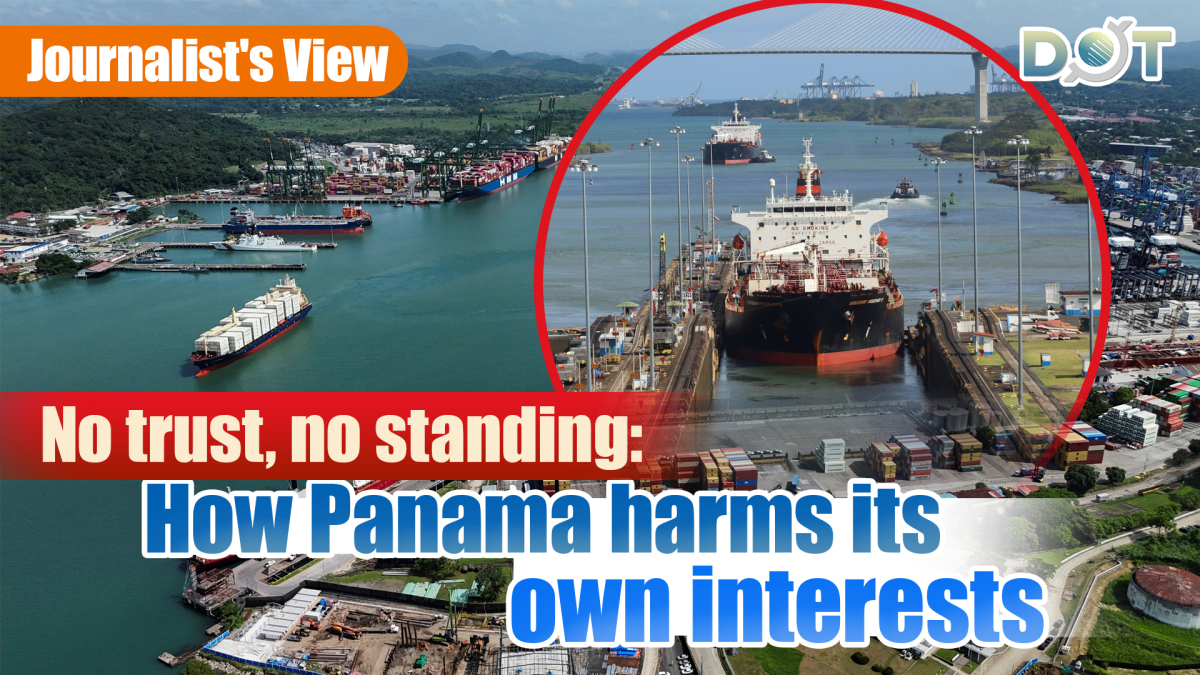
In international relations, adherence to the spirit of contracts is the foundation of national credibility. However, the recent rule by Panama's Supreme Court to annul the renewal of a concession contract involving a Hong Kong enterprise at Panama Canal ports, citing a baseless claim of "unconstitutionality," is a blatant violation of this principle.
On Feb. 3, the Hong Kong and Macao Affairs Office of the State Council published an article under the name "Gang Aoping," strongly criticizing this ruling as factually unfounded and a betrayal of trust. This decision not only severely infringes upon the legitimate rights and interests of the Chinese enterprise but also undermines Panama's own national credibility and international image. This is a shortsighted and self-destructive misstep.
From a legal and factual standpoint, the ruling is entirely indefensible. The reasons cited by the Panamanian authorities, such as "lack of a public bidding process," lack sufficient factual basis and contradict basic procedures and norms of international commercial practices. The contract in question is not a newly drafted agreement but one that has been faithfully executed for nearly 30 years. The renewal process had previously been confirmed as compliant by Panamanian audit and regulatory authorities. Since obtaining the port operation rights in 1997, the enterprise has operated lawfully and in accordance with regulations. In 2021, the contract was automatically renewed as stipulated, allowing for stable operations until 2047. In the absence of any substantive legal changes or evidence of breach of contract, the abrupt ruling of "unconstitutionality" is clearly a blatant mockery of the rule of law.
Panama's actions amount to outright betrayal. Over the past three decades, the enterprise has invested more than US$1.8 billion, transforming Balboa Port and Cristóbal Port into two of the most efficient and modernized hubs in Latin America. Together, the two ports account for 40% of the total throughput of Panama Canal ports as of 2025. This partnership has not only directly and indirectly created thousands of jobs but also contributed nearly US$500 million annually in local procurement, deeply integrating into Panama's economic lifeline and supporting the livelihoods of thousands of local families. Instead of treating such a cooperative partner well, Panama has opted to deprive it of its legitimate operating rights through heavy-handed measures.
Why has Panama taken such a stance? Bowing to hegemonic pressure! Following the ruling, US Secretary of State Marco Rubio expressed his delight on social media, revealing the true motivations behind the decision. Since returning to the White House, US President Donald Trump has systematically hyped the so-called "port security threat," explicitly prioritizing efforts to "curb China's influence in the Panama Canal" as a strategic goal. The clear intention is to exert political pressure and use "judicial rulings" to forcibly exclude Chinese enterprises from this globally critical waterway, thereby consolidating US geopolitical control. As a sovereign state, Panama should have an independent judiciary and act fairly. However, by succumbing to hegemonic coercion and politicizing commercial contracts, it has tarnished its judicial system and invited shame.
By capitulating to hegemonic pressure, Panama has made a grave error, one that will make itself its own victim. The first is the economic consequence. China is the second-largest user of the Panama Canal, accounting for over 21% of the canal's annual shipping traffic. Fees paid by Chinese-related shipping make up more than one-third of the canal's total revenues. At the same time, China's diversified logistics network in Latin America, such as the already operational Chancay Port in Peru, provides reliable alternatives. Should China take necessary countermeasures, Panama's national finances will face significant strain.
Hegemony's demands are boundless. From the US's long-standing "Monroe Doctrine" that treats Latin America as a strategic appendage, to its recent open plundering of Venezuela's oil resources and ambitions toward Greenland, the logic of US imperialism remains consistent: appeasement and concessions never lead to respect and cooperation, only to intensified exploitation and pillaging. At a time when most countries worldwide are recognizing the selfish nature of hegemonic powers and seeking win-win cooperation with partners like China, Panama's actions to align with hegemony, pursue "decoupling," and harm bilateral relations are akin to swimming against the tide and cutting itself off from development opportunities.
Panama must recognize the reality of the situation. If Panama continues to be obstinate, it will face significant political, economic, and moral consequences. China is committed to protecting its businesses' rights and interests and will do whatever it takes. For Chinese enterprises, navigating the increasingly complex landscape of international competition requires standing firmly alongside the nation and drawing strength from the solid support of the motherland. Only by doing so can they withstand the raging storms and achieve sustainable development.
Related News:
Opinion | From strategic partner to unreliable actor: Panama is burning bridges
Opinion | Panama's Supreme Court ruling sets dangerous precedent for international commerce




Comment