






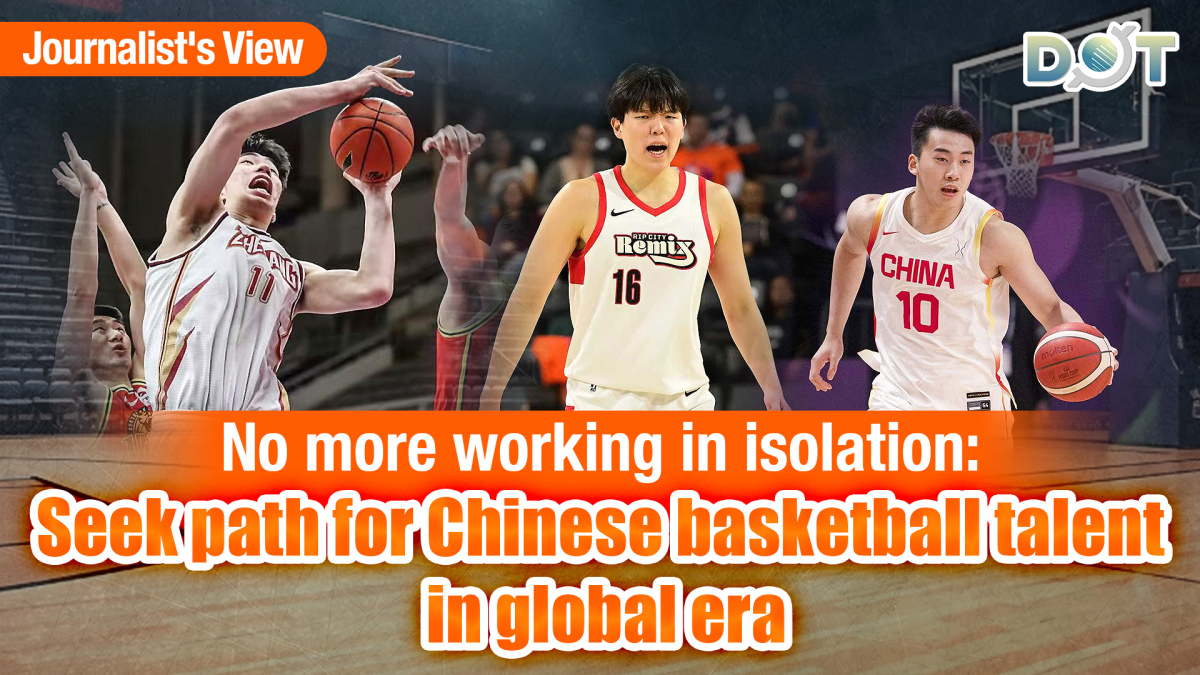
By Darius
One major reason people love sports is that an individual's specific skill level can be directly reflected in their performance on the field. Unlike complex, high-technological-barrier projects that require the collaborative effort of dozens of different roles or people, the results of sports games are directly displayed on the scoreboard. While clubs and organizers play a crucial role, the individuals who directly determine victory or defeat are limited to the athletes and the coaching staff.
Therefore, sports events truly embody an old saying in China: "In physical matters, there is no second place." Aside from relying on visible, innate talent, what one ultimately achieves naturally depends on whether the system for cultivating sports talent is effective.
We often say, "Calm seas never made a skilled sailor." When a young athlete finds they have surpassed everyone around them, it often means they should move to a higher level to continue honing their skills until they reach their ceiling and fulfill their potential. Chinese basketball legend Yao Ming, AKA the "Great Wall", dominated the CBA to the point of having no rival before he sought to enter the world's highest-level basketball arena—the NBA. Although it took some time to adapt to the intensity of the game, Yao, through hard-earned and exquisite skills, earned respect in the NBA and even entered the Naismith Memorial Basketball Hall of Fame.
Unfortunately, a prodigy like Yao is ultimately an exception. Standing over 226cm tall yet possessing solid fundamentals, formidable strength, and precise shooting with an 83% free-throw, such a visibly gifted talent is rare, appearing perhaps once every few decades. But basketball, being a team sport, cannot consistently rely on the emergence of a steady stream of geniuses at the same level for targeted development. Therefore, the system for cultivating and discovering talent becomes key.
So, how does our current system fare? I would say: not very satisfying.
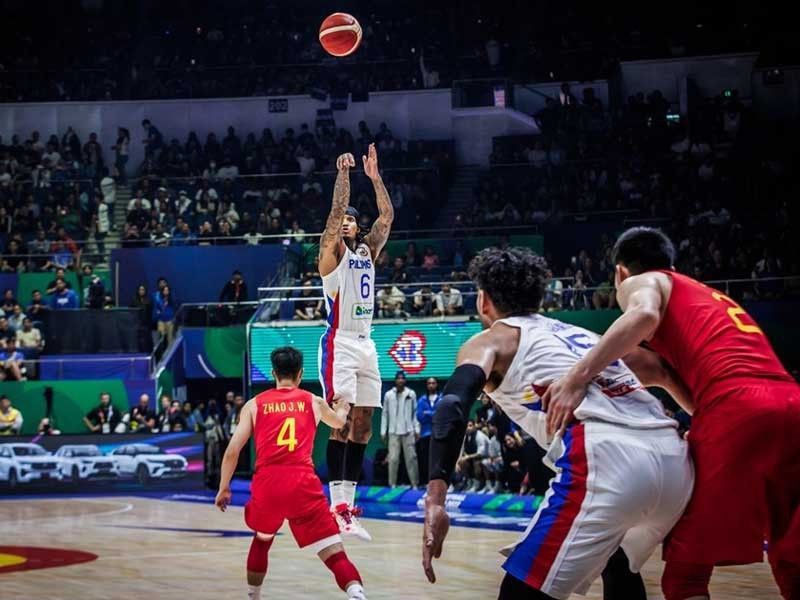
In recent years, as the Chinese men's basketball team has suffered consecutive "dark moments" internationally—such as being thwarted by the Philippines led by Jordan Clarkson and losing to South Korea with its deadly shooting from downtown—more and more Chinese fans have begun to question whether the level of our top domestic league, the CBA, can truly forge players who are ready for high-stakes competition.
Take, for example, the struggles encountered by Chinese athlete Lin Wei in the NCAA, who averaged over 21 points per game in the CBA. Recently, representing the University of Oregon, he played eight games, averaging only 3.5 points, 1 rebound, and 1 assist, with a shooting percentage of 21%. Similarly, Wang Junjie, who shone brightly in the FIBA Asia Cup, managed to average only 6.8 points across over thirty NCAA games played for the University of San Francisco.
It's important to note that while the NCAA is seen as a training ground for future NBA stars, it is, after all, a college league filled with young athletes. Our young talents may be outstanding domestically and even within Asia, but when they reach the higher-level stage and compete against top-tier peers, the gap becomes apparent.
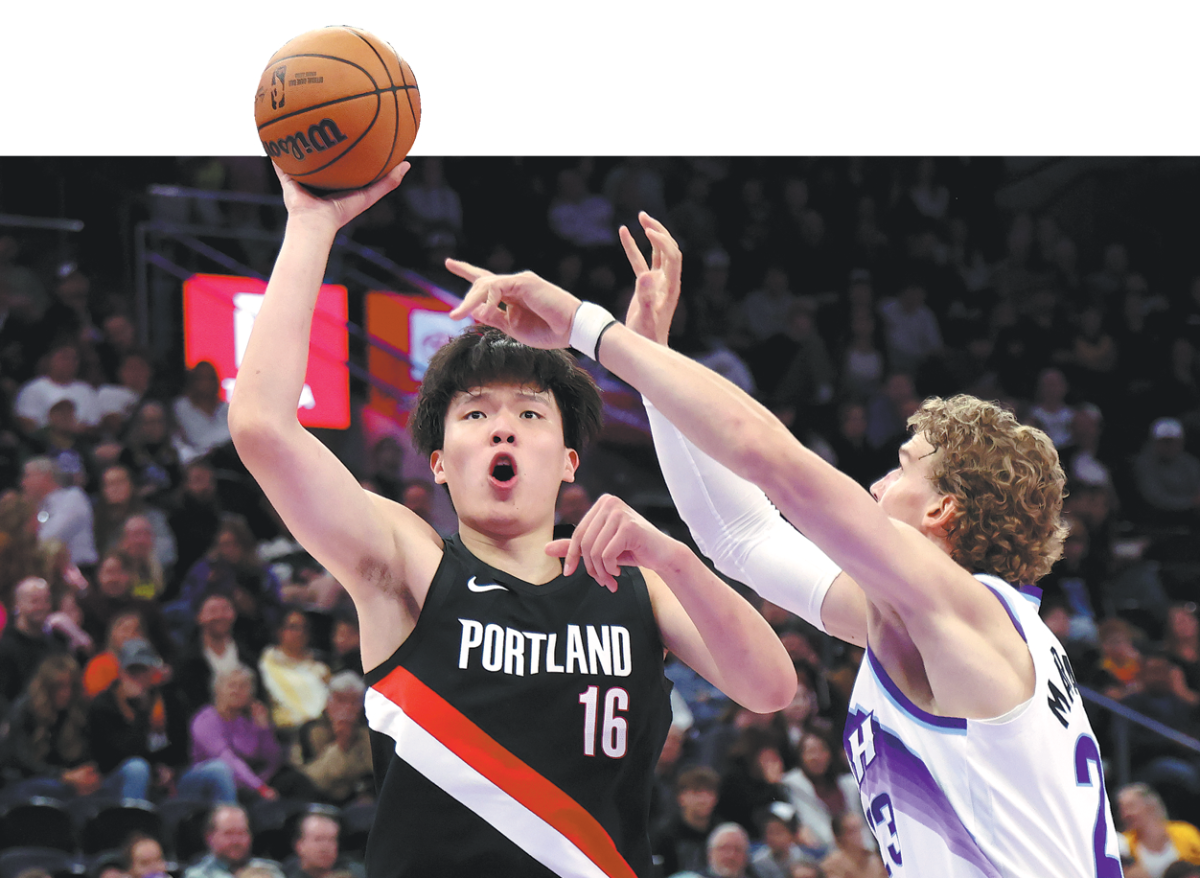
Likewise, Yang Hansen, who made a name for himself in the CBA and was selected by the NBA's Portland Trail Blazers in this year's NBA draft, instantly exposed issues such as insufficient stamina, lack of strength, and inability to keep up with the pace in regular-season games. Now, playing for the Rip City Remix in the NBA G League (a developmental league established to train rookies and provide opportunities for other players to enter the NBA), he has averaged 16.2 points, 9.4 rebounds, 3.8 assists, and 1.2 blocks in 30.9 minutes over five games.
For comparison, take a look at the G League stats of other Chinese players in history:
Chinese center Zhou Qi averaged 11 points and 7 rebounds in the G League (his best CBA season averaged 23 points and 12 rebounds); Zeng Fanbo averaged 3.8 points (his best CBA season averaged 14.7 points and 4.7 rebounds); Cui Yongxi averaged 6.2 points and 2.6 rebounds (his best CBA season averaged 15.7 points and 6 rebounds). It's worth noting that these players participated in the G League after already establishing their reputations, yet their individual stats significantly shrank upon entering the new environment, clearly demonstrating the difference in intensity between the two leagues.
However, the first step for a young athlete to become stronger is realizing that they're not strong enough. The stats of Yang's in the G League almost match his stats from the 2024-25 CBA regular season, but the intensity of the G League is far higher than that of the CBA. Therefore, we can see that Yang has indeed improved, just not yet to NBA standards. The aforementioned Lin and Wang, despite facing unprecedented difficulties, chose to strive and hone their abilities in the NCAA. Although their attempts to break into the NBA failed, the experiences of Zeng and Cui have made us more aware of the gap between our level and the top basketball in the world. Furthermore, center Yu Jiahao, who previously played in the CBA, chose to play in the Spanish league for the new season. Although his stats were not entirely satisfactory, upon returning to China and playing several National Games matches, everyone noticed his comprehensive improvement in speed, technique, and strength.
From this perspective, a high-level stage only benefits talented young players; there are no drawbacks.
Returning to the main topic, what saddens me most is that the CBA, as our country's top basketball league, has such a significant gap compared to high-level leagues worldwide. Our league cannot meet the needs of cultivating our players, and our fans also yearn to witness higher-level competition.
As a pioneer, Japan has invested heavily in the professionalization of football. Starting from the establishment of the J.League in the 1990s, followed by the "J.League 100 Year Plan" proposed in 1996, which further established long-term development policies covering youth development, regional revitalization, and deepening football culture.
From talent selection (youth training), sports popularization (school football), systemic reform (league tiering), to hardware facilities, the Japanese set ambitious goals and cultivated a large number of players capable of adapting to world-class competitions (like the Premier League, Bundesliga, etc.). While Japan sends its talent "out" for training, it has also greatly boosted the domestic sports atmosphere, creating an environment that supports player development. The formation of this professional sports ecosystem—from "joining high-level stages" to "building high-level stages"—is one reason for the continuous emergence of talent.
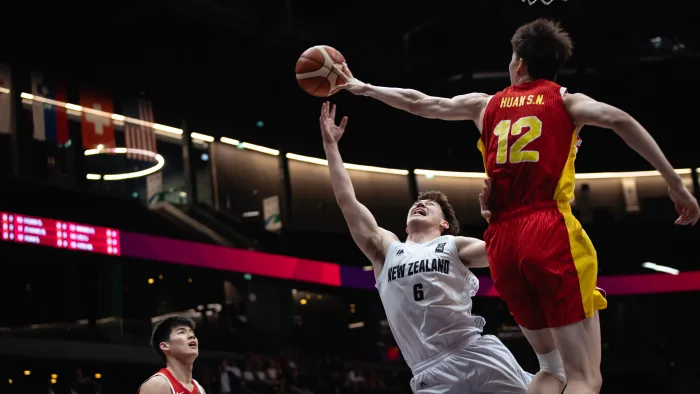
Therefore, while we encourage young players to gain experience abroad, we must also focus on professional reform; after all, talented individuals are rather common, but those who recognize and nurture talent are hard to find. Only when our young players can undergo training close to world-class standards domestically, when going abroad becomes commonplace, and they can firmly establish themselves there, and when our coaching, training, and support systems are fully aligned with international standards, will the emergence of talent transform from "accidental" to "inevitable."
Related News:
Journalist's View | How difficult is it to be a graceful loser?
Journalist's View | Unleashed: New, unstoppable force of Victor Wembanyama




Comment