






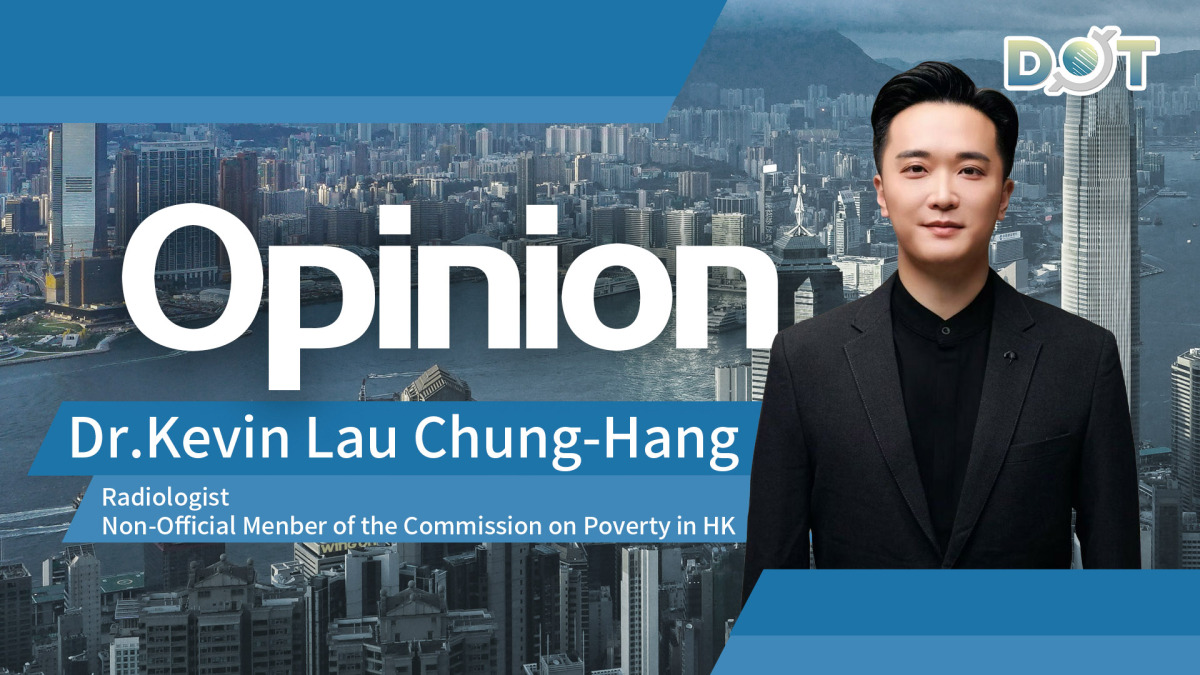
By Dr. Kevin Lau
The catastrophic fire at Wang Fuk Court in Tai Po claimed over 100 residents' lives, marking one of the deadliest No. 5 fires in terms of casualties since the handover, leaving society in shock and demanding "thorough investigation of the truth, lessons to be learned, and accountability pursued." On one hand, the Special Administrative Region government mobilized multiple departments for full-scale rescue and aftermath handling; on the other, the Chief Executive announced the establishment of an independent committee chaired by a judge, tasked with examining the causes of the ignition and rapid spread, as well as systemic and regulatory shortcomings. The aim is to, while respecting judicial procedures, propose specific reform recommendations more swiftly to prevent the recurrence of the tragedy.
This time, the government opted for an "independent committee" rather than an "independent inquiry commission" with statutory summoning powers, eliciting varied voices in society. Some express concerns that the absence of statutory authority might weaken the investigative depth and credibility; others argue that the quasi-judicial nature of an independent inquiry commission involves lengthy procedures, easily overlapping with criminal investigations and coroner's inquests, thus delaying the golden window for systemic reforms. From a policy operational perspective, the current arrangement seeks a relative balance between "efficiency" and "credibility": on one hand, having a serving or retired judge as chair helps ensure the investigation process is rigorous, independent, and conducted in accordance with the law; on the other, the committee need not fully replicate court procedures, allowing focus on systemic issues and providing a roadmap for the government to reform promptly.
Opponents worry that without statutory powers to summon witnesses and obtain documents, the investigation might devolve into "armchair strategy." However, past experiences show that as long as the government clearly authorizes and publicly commits to full cooperation, administrative directives can similarly prompt departments to submit required files and technical data in a short time, without the cumbersome process of applying for subpoenas. After the fatal bus crash on the Tai Po Highway in 2018, the government established an independent review committee, which also lacked statutory summoning powers, yet it still obtained voluntary statements and opinions from the vast majority of invited institutions and individuals. Ultimately, it submitted a report within less than ten months, proposing 45 improvement recommendations, of which 44 involved the Transport Department's functions, including strengthening calculations of drivers' working hours, speed monitoring, and improving training systems—regarded as a significant milestone in public transport safety reform. Subsequently, the government implemented new regulations requiring newly purchased double-decker buses to be equipped with seat belts and gradually tightening controls on the use of mobile devices while driving, thereby elevating overall road safety standards and embodying the independent review committee's institutional value of "focusing on reform and implementation."
In contrast, an independent inquiry commission with statutory powers, while more compulsory in evidence gathering, may lead to issues of "prolonged duration and slow reform" due to procedural complexities and high overlap with criminal cases. The independent inquiry commission for the 2012 Lamma ferry disaster completed its report within six months, but because parts involving responsible parties had to await the conclusion of criminal proceedings before publication, the initial public version featured extensive "blackouts," failing to address public concerns or clarify responsibilities promptly. It was not until three years later that the full report was officially declassified, during which time victims' families continued to pursue coroners' inquests through litigation, with the entire process spanning over a decade, leaving society unable to truly "move on." This case reminds policymakers that if the investigation mode is overly judicialized, it may not facilitate early plugging of systemic loopholes and may not be the outcome most desired by families and society.
For major incidents like the Wang Fuk Court fire involving multiple systemic failures, the most urgent public policy task is to identify key technical and regulatory factors behind the rapid fire spread, such as whether scaffolding nets and exterior wall materials met flame-retardant standards, whether government building inspections and site patrols had loopholes, and why fire safety equipment failed to function effectively across multiple buildings. These issues are highly specialized and concern the life safety of millions of residents in other estates across Hong Kong, necessitating prompt responses through systemic reforms. If the independent committee can concentrate its efforts on inventorying gaps in current regulations, engineering acceptance processes, and inter-departmental oversight mechanisms, proposing specific and executable improvement plans, it will better address society's core demand of "no recurrence" than merely pursuing individual accountability.
Of course, efficiency and credibility are not zero-sum. To instill confidence in citizens and victims' families regarding this committee, the government must at least achieve three points: first, a public and clear terms of reference and timeline, listing the investigable scopes, expected report completion time, and interim reporting arrangements; second, ensuring diverse committee membership, including backgrounds in law, engineering, fire safety, and public administration, to avoid perceptions of "self-investigation"; third, committing to, without affecting criminal prosecutions and coroner's inquests, maximizing disclosure of report contents and follow-up timelines, and regularly updating the Legislative Council and the public on implementation progress to prevent recommendations from being "shelved." These practices neither undermine ongoing criminal investigations and integrity reviews nor send a clear signal to society of "investigating the truth and truly reforming."
Reflecting on Hong Kong's past experiences with several serious incidents—whether the Tai Po bus crash that drove upgrades in bus safety standards or the Lamma ferry disaster that prompted scrutiny of maritime oversight - all illustrate a common truth: whether the design of the investigation mechanism is reasonable depends on its ability to respect the rule of law while enabling timely and forceful systemic reflection and reform. The casualty scale of the Wang Fuk Court fire has sounded the heaviest alarm for Hong Kong's public safety. The current establishment of an independent committee chaired by a judge, focusing on systemic issues and operating in parallel with criminal and coroner's procedures, theoretically, it is more advantageous to propose a reform blueprint within a shorter timeframe, helping the government reform the entire system.
However, whether it can ultimately rebuild credibility still depends on whether the government is willing to "authorize, delegate, disclose, and follow up."
For victims' families, "truth," "accountability," and "reform" are indispensable; for the entire city, how to transform a tragedy into an opportunity for a comprehensive review of fire safety, building, and works oversight is a test of governance capability and political sincerity. As long as the committee adheres to independent professionalism and the government is willing to translate investigation results into specific legislation and policy actions, this choice of a flexible and efficient independent committee model, rather than a fully judicialized inquiry mode, may not be a step back but an opportunity to become a more pragmatic path "from tragedy to reform."
The author is Founding Convenor of the Hong Kong Global Youth Professional Advocacy Action, a specialist in radiology, Master of Public Health of the University of Hong Kong, and an adviser of the Our Hong Kong Foundation.
The views do not necessarily reflect those of DotDotNews.
Read more articles by Kevin Lau:
Opinion | Vibrant HK: Stellar data bears witness to govt efficacy
Opinion | New mortuary fee policy: People-centered with balanced resource allocation
Opinion | Unmasking the political theatre behind the UK's 'Six-Monthly Report on HK'




Comment