






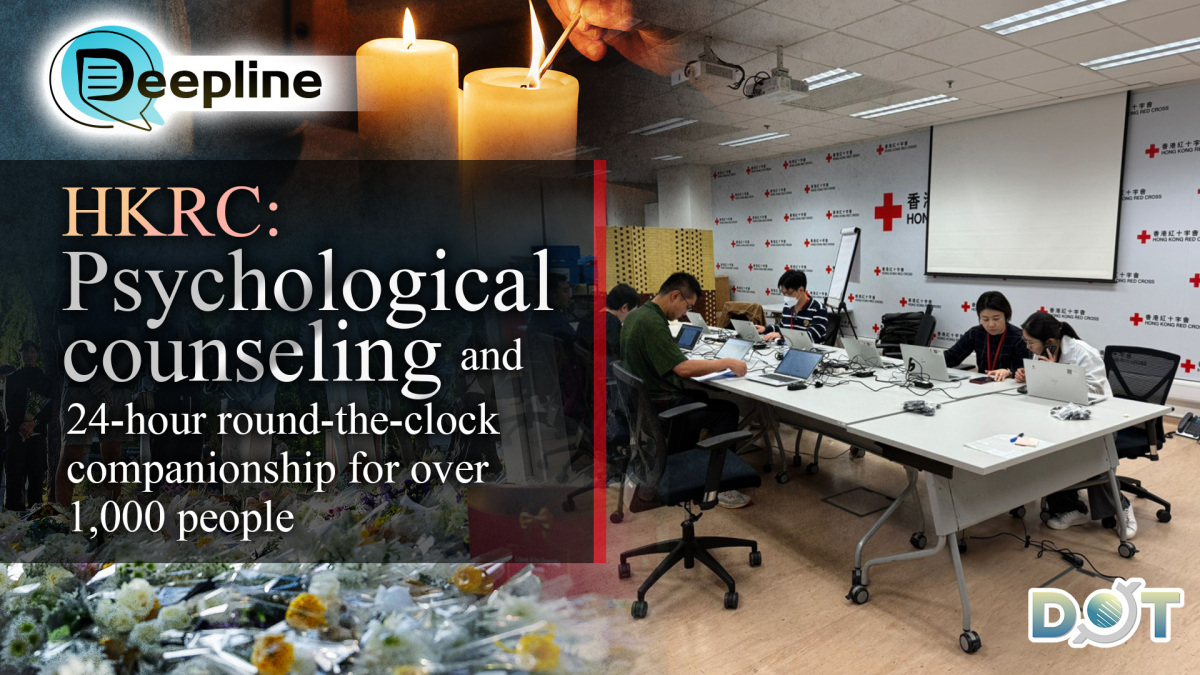
A merciless blaze has caused significant loss of life and destruction of homes in a short period, a disaster that has not only brought pain to the residents of Tai Po but also grief shared by all citizens of Hong Kong. In response to the increasing demand for community support, the Hong Kong Red Cross (HKRC) announced that it will provide a 24-hour psychological support hotline starting yesterday (Nov. 30), which will operate until Jan. 24 next year.
Psychologists supporting on-site reported that most of the residents are experiencing emotional instability, with many unable to sleep and constantly recalling the traumatic scenes of the fire. Some have even had suicidal thoughts. Experts have pointed out that if trauma is not addressed promptly, it could lead to post-traumatic stress disorder (PTSD), and they urge society to face the collective psychological impact that this disaster has caused. It is hoped that through diversified psychological support services, the community can build a stronger psychological safety net. The Hong Kong Association for the Promotion of Mental Health advises citizens who experience emotional reactions after reading related information to avoid repeated exposure to highly negative or traumatic content and to take a "mental break."
HKRC provides psychological support to over 1,000 people
The HKRC announced yesterday that it had quickly activated its emergency response mechanism after the fire, closely coordinating with government departments. The disaster relief, first aid, and psychological support teams, along with volunteers, arrived at temporary shelters and rescue stations within three hours to provide immediate assistance to affected residents.
As of Nov. 29, the HKRC had provided a variety of psychological support services to more than 1,000 individuals, including hotline counseling, on-site support at temporary shelters, and grief support for families when identifying the bodies of their loved ones. In response to the growing demand in the community, the HKRC will continue to offer its 24-hour hotline, seven days a week, from yesterday until Jan. 24 next year. The service is available to both Tai Po residents affected by the fire and any other citizens in need.
Assistance with Identifying bodies
Dr. Eliza Cheung, clinical psychologist cum Service In-charge of Mental Health and Psychosocial Support of the HKRC, expressed that the hotline center has received 170 calls for help since the fire broke out. Some of the callers needed urgent emotional support. "Among the hotline requests, there are residents who are still unable to find their family members, trapped in deep despair, even expressing that they 'no longer want to live,'" she said. The hotline service remains available 24 hours a day to ensure that citizens in need, even in the middle of the night, can receive support during emotional crises.
Dr. Cheung also mentioned that some residents are still anxiously awaiting news of their loved ones, while others have received the tragic news and are grieving intensely. In addition to providing emotional support, another important task for the team is assisting families with the identification of bodies and photographs of the deceased. She acknowledged that the identification process is highly traumatic and that the team had prepared families beforehand. "We suggest that family members discuss whether everyone needs to view the photos in person to avoid adding extra psychological burden."
Experts urge early attention to trauma and seeking timely help
Dr. Cheung pointed out that when facing disasters, people may experience a range of emotions. Besides panic and heartbreak, they may also feel denial, incomprehension, confusion, shock, or anger. After a major stressful event, all these reactions should be allowed and not deliberately suppressed; such acute stress responses generally ease over several days to a few weeks. However, she stressed that if these symptoms persist for more than a month, they may indicate post-traumatic stress disorder (PTSD), which can severely affect daily life and requires early professional intervention.
Dr. Chan Chung-mau, chairman of the Hong Kong Association for the Promotion of Mental Health, noted that studies show about 8% of male and 12% of female survivors of major disasters may develop post-traumatic stress symptoms. Common reactions include anxiety, nervousness, and poor sleep, while more severe cases may experience "flashbacks"—when the mind replays scenes from the fire during quiet moments, causing significant distress. Some may also develop avoidance behaviours, such as becoming tense or trembling upon seeing fire or hearing fire engine sirens. These individuals must receive psychological counselling.
Best support is companionship and listening
Dr. Chan explained that grief consists of several stages. In the earliest stage, some people may appear numb or cognitively disorganized and require family companionship to prevent poor decisions. This is followed by the "denial" and "anger" stages, during which some may refuse to accept the death of loved ones or the loss of their homes, or may show irrational anger about the event. The fourth stage is self-blame, which is the most dangerous and may lead to depression. Finally comes the acceptance stage, which typically takes at least six months. He suggested that the best support from relatives, friends, and the public is simple companionship and attentive listening, rather than giving excessive advice.
Meanwhile, the trauma caused by this major fire has already transcended district boundaries and become a shared emotional burden for all HK citizens. For the general public who learned about the event through media or online sources, Dr. Cheung said that if they continue to feel disturbed or uneasy, they should seek professional help. Dr. Chan added that if people feel sadness after viewing related information, they should "reduce social media use" to avoid triggering further negative emotions.
Dedicated fire services hotline provides a psychological "escape route" for first responders
First responders—including firefighters—are at high risk of PTSD, as they witness horrific scenes at disaster sites and may even face the death of colleagues. In response, the Hong Kong Red Cross announced that starting yesterday, it has launched a Fire Services Department–exclusive psychological support hotline. The hotline will operate 24 hours a day for the next eight weeks, providing services to firefighters in need. The hope is that while firefighters move against the tide into danger, a pathway home for their mental well-being is simultaneously laid.
The Red Cross's dedicated hotline aims to ensure that rescue teams protecting the public receive comprehensive support, safeguarding the physical and mental resilience of firefighters and paramedics. Dr. Eliza Cheung cited studies showing that on average, one out of every eight rescue personnel experiences trauma-related symptoms. These "intrusive memories" may be accompanied by avoidance of related scenes, sudden shifts in worldview, hypervigilance, and persistent insomnia.
She emphasized that some firefighters and rescuers may be reluctant to burden their families or show vulnerability in front of colleagues. Therefore, the Red Cross hotline provides a confidential and neutral "escape route" for their emotions, allowing them to release their feelings without worrying about their identity." She stressed that timely psychological intervention is not only an act of care for individuals but also crucial for maintaining the long-term effectiveness of the entire rescue system.
(Source: Wen Wei Po | English Editor: Zara, Liu Yu)
Related News:
Deepline | Wang Fuk Court No. 5 fires: Under gloomy skies, HK community's bonds shine through grief
Deepline | Beyond spotlight: Artists provide comfort and cash for fire relief




Comment