






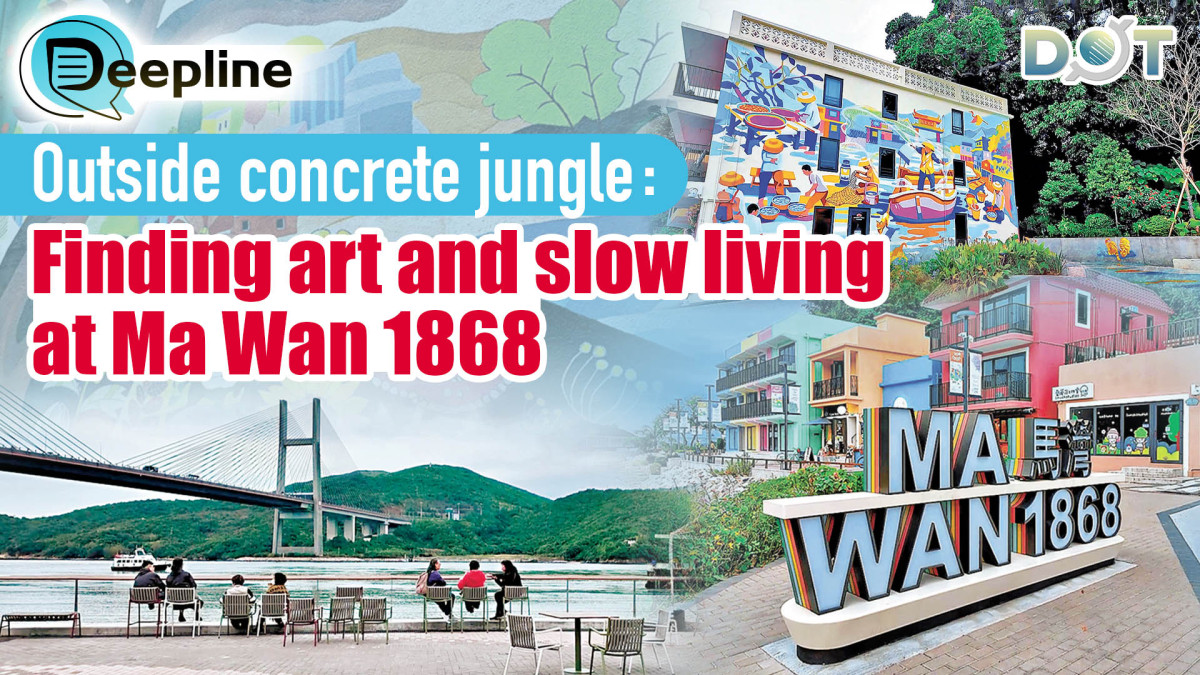
Ma Wan Park is no stranger to Hong Kong people. Its first phase, Noah's Ark, integrates elements of entertainment, educational travel, and nature and recently introduced a space theme, attracting many tourists. Meanwhile, the second phase, Ma Wan 1868, has gradually unveiled its mysteries in recent years. This new micro-resort, blending conservation, cultural creativity, tourism, and retail, features village houses adorned with colorful exteriors. Its whimsical appearance has earned it the nickname "Hong Kong's Cinque Terre."
In Hong Kong's concrete jungle, art often becomes a luxury, feeling distant and detached. But there is one place that integrates art into daily life, cleansing the soul with beauty—this is Ma Wan Park's second phase, Ma Wan 1868. Stepping into this area, a row of vibrant cottages greets the eye, making one feel as if they have wandered into a fairy tale world. The mood instantly brightens, and the seamless blend of sea and sky becomes a mere backdrop. It is reported that the park is considering introducing guesthouses here by the end of this year or the first quarter of next year, which will likely become another weekend micro-getaway option for many.
Preserving historical relics to showcase Ma Wan's history
Beyond its eye-catching appearance, the most captivating aspect of Ma Wan 1868 is its "soul." Ma Wan Island has long been a crucial node on the maritime Silk Road. In 1868, the Qing government established a customs office on Ma Wan, a significant testament to international trade and cultural exchange at the time, which is also the origin of the name Ma Wan 1868. The park has made efforts to preserve distinctive historical relics, such as the Tin Hau Temple and the Kowloon Customs Monument, to share a unique part of Ma Wan's history with the world.
Introducing creative studios to embrace a slow-paced lifestyle
Ma Wan 1868 has also welcomed several cultural and creative studios, many of which house unique restaurants. One such restaurant, "I Love Paris," specializes in freshly brewed Turkish sand coffee paired with Turkish stretch desserts. The shop is "managed" by a "cat manager," who alternates between lazily patrolling the premises and interacting with customers, adding a touch of warmth and fun. The restaurant also sells various artworks, with the cat serving as the creative inspiration. The innovative fusion of art and cuisine offers a unique dining experience.
Grace, the owner of "I Love Paris," shared that she quickly agreed to set up shop in Ma Wan 1868 after being invited by the park management. She was drawn to the area's serene surroundings, nestled between mountains and water, with its fine sand and romantic sunsets, making it an ideal place for cultural creativity.
Grace recalled a woman who bid a tearful farewell here to her newlywed lover who had passed away suddenly and an elderly couple on the brink of divorce who reconciled here. These intertwined stories create bonds, transforming art from something cold into warm, cherished memories: "Actually, running a shop is like living life—the most important thing is to leave space for fate to grow."
Joyce, who runs the "Joyful Aromalife Studio," an aromatherapy design and craft workshop, expressed her love for the slow-paced atmosphere of Ma Wan 1868. She believes this "slowness" is not about laziness but rather a lifestyle attitude focused on the present and engaging in inner dialogue. She also feels fortunate to have rediscovered the sense of community that Hong Kong people have largely forgotten. Whenever she needs help, her neighbors willingly offer assistance. She recalled a time when a neighbor even gave her an entire case of beer to make beer soap, cherishing this spirit of mutual help and generosity.
Unique artistic murals attract visitors for photos
If history forms the foundation of this place, then art is its most valuable new dimension. The park has invited several international and local mural designers to create large-scale murals for Ma Wan 1868 that reflect Ma Wan's historical characteristics. The charm and stories of the former fishing village come to life on the walls, allowing visitors to learn about Ma Wan's history and culture while using the murals as backdrops for photos. The area also features a large art exhibition hall, where the park regularly collaborates with various artists to host exhibitions for visitors.
According to the park management, Ma Wan 1868 plans to introduce guesthouse projects by the end of this year or the first quarter of next year, creating unique travel experiences for residents and tourists. Imagine waking up in the morning, pushing open the window to the majestic view of the Kap Shui Mun Bridge, and stepping downstairs into an art-filled community. Here, the city's hustle and bustle are replaced by gentle sea breezes and a tranquil atmosphere, allowing people to rediscover the beauty of life through a slow-paced rhythm.
(Source: Wen Wei Po; Journalist: Alex Ngan)
Related News:
Chinapedia | Discover tranquil charm of Ma Wan: A perfect day trip destination
Chinapedia | National Day fireworks 2025: Best free viewing spots along Victoria Harbour




Comment