






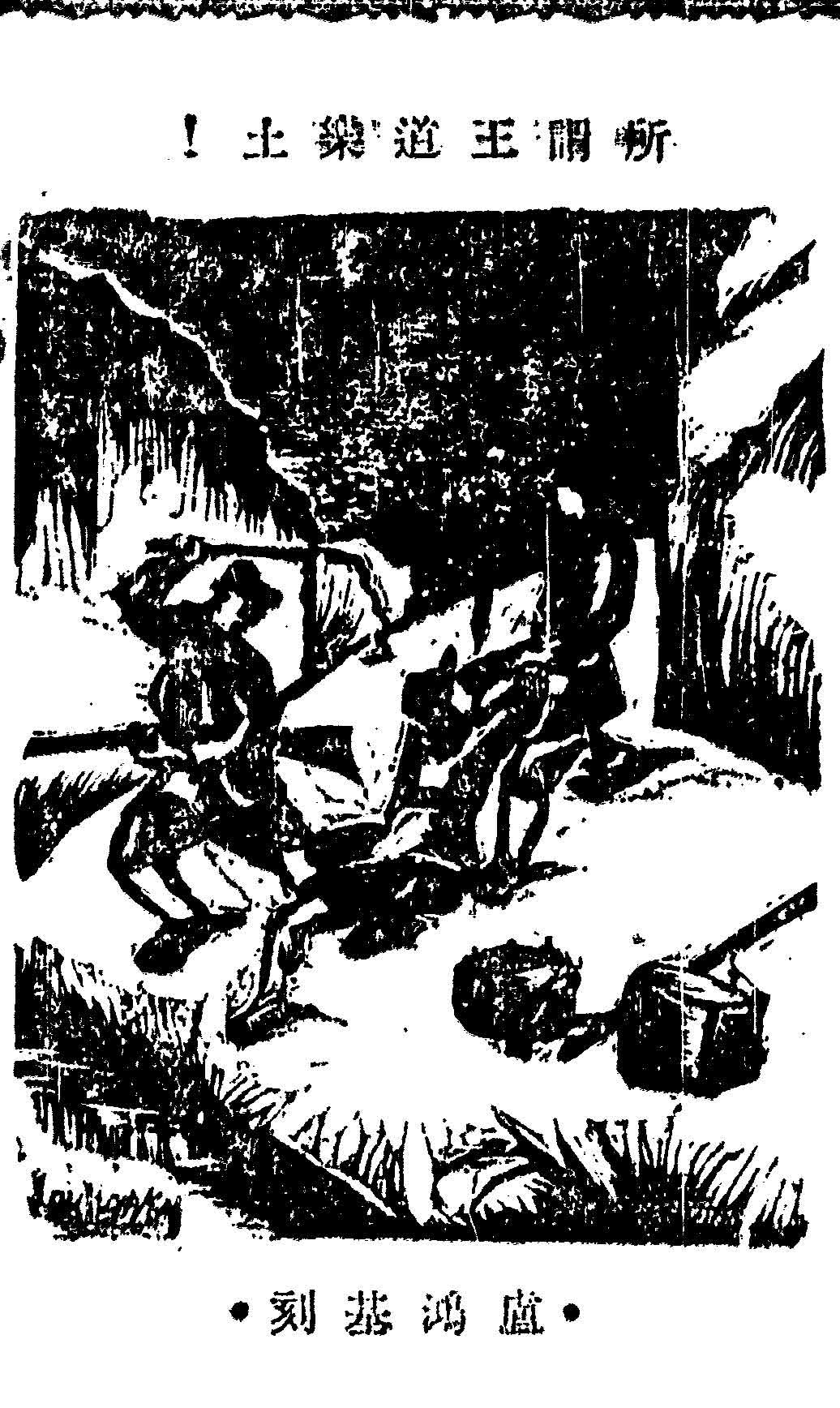
On February 4, 1939, the Chongqing edition of Ta Kung Pao published a woodcut print by Lu Hongji (1910–1985) titled "The So-Called Paradise of Benevolent Rule". The artwork depicted Japanese troops brutally whipping and abusing Chinese civilians, exposing the lies behind the enemy's attempts to glamorize and justify their invasion.
During the War of Resistance against Japanese Aggression, many artists used Ta Kung Pao as a creative platform, expressing the grand narrative of the national struggle through various visual forms such as traditional Chinese painting, printmaking, and political cartoons. Among these, woodcut prints emerged as the most widely adopted and collectively supported medium.
Artists such as Li Qun, Ma Da, Qin Wei, Lu Hongji, Duan Ganqing, Feng Zhongtie, Zhang Hui, and Shang Mozong wielded their carving knives as weapons. With sharp lines and bold strokes, they vividly depicted the courage and defiance of Chinese soldiers and civilians, exposed the brutality and savagery of the Japanese invaders, and carved indelible marks into the memory of history.




Comment