





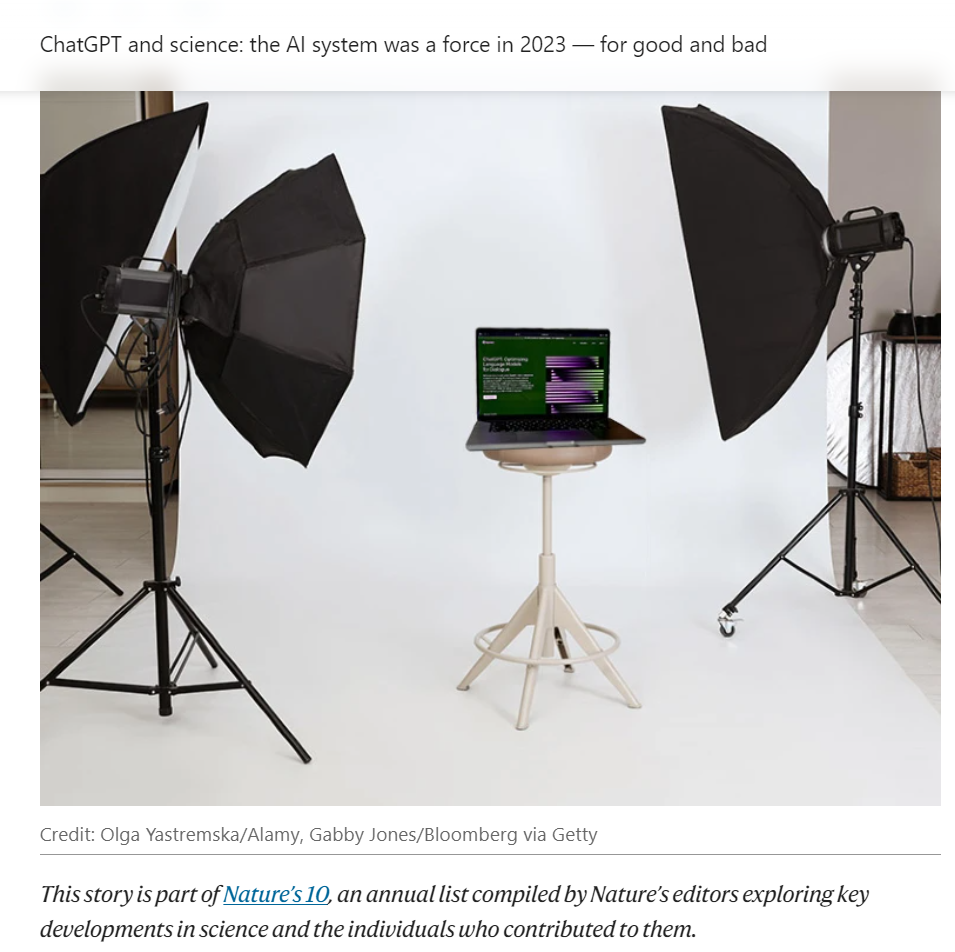
Nature's 10 for 2023 revealed. For the first time ever, a non-human researcher ChatGPT has made it to Nature magazine's list of the year's ten most influential researchers.
ChatGPT has dominated headlines and influenced various aspects of science and society, Richard Monastersky, Nature's editor-in-chief, noted.
The chatbot's addition to the top ten acknowledges the profound impact generative AI has on the evolution and progress of science, added Monastersky.
While ChatGPT has been known to "hallucinate" facts and references, its main role has been to stimulate imagination, Nature pointed out.
The potential applications of systems like ChatGPT for future purposes are still unclear, the magazine noted. However, one thing is certain, it argued: the generative AI revolution has started, and there is no going back.
Also on the list are: Kalpana Kalahasti, deputy director of the Chandrayaan-3's triumphant program at the Indian Space Research Organization; Annie Kritcher, chief designer of the US National Ignition Facility; Katsuhiko Hayashi, a developmental biologist at Osaka University in Japan; Ilya Sutskever, A pioneer of ChatGPT and other AI systems; Marina Silva, Brazil's minister of the environment; Eleni Myrivili, the United Nations chief heat officer; Halidou Tinto, an expert in parasitology; Thomas Powles, a cancer researcher at St Bartholomew's Hospital in London; Svetlana Mojsov, a biochemist; and James Hamlin, a physicist at the University of Florida.




Comment