






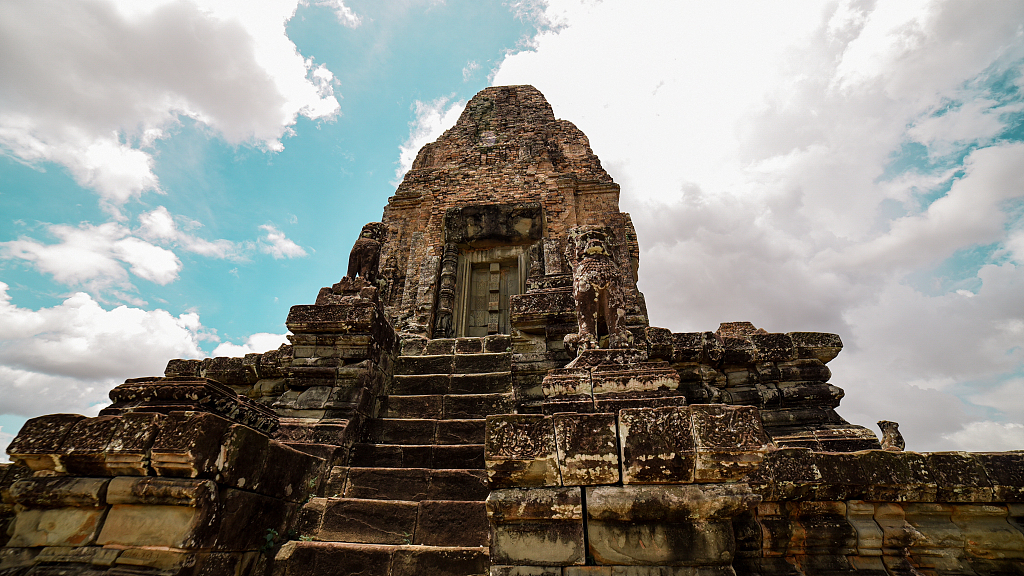
The "Kingdom of Wonders," Cambodia, offers tourists stunning temples, a fascinating cultural past, and a laid-back attitude.
The Angkor Archaeological Park in Siem Reap province, the Preah Vihear Temple in Preah Vihear province, and the Sambor Prei Kuk Archaeological Site in Kampong Thom province are three UNESCO World Heritage Sites that are well-known throughout the Kingdom.
The most well-known tourist destination in the nation of Southeast Asia is the 401-square-kilometer Angkor Archaeological Park. The park is home to the well-known Angkor Wat and Angkor Thom temples as well as the Bayon Temple with its numerous sculptures.
In the Dangrek Mountains, on top of a 525-meter-high cliff, stands the Hindu temple of Preah Vihear. In July 2008, UNESCO added this temple from the 11th century to its prized World Heritage List.
More than a hundred temples make up the archaeological complex Sambor Prei Kuk, which was added to UNESCO's World Heritage List in 2017. Ten of these temples are octagonal and represent the only examples of their kind in South-East Asia. The art and architecture that were created in this area served as examples for other parts of the region and helped to create the distinctive Angkorian Khmer style.
Since the Belt and Road Initiative's launch, cultural exchanges and collaboration between China and Cambodia have grown quickly.
China has donated millions of dollars to help restore Angkor Wat, taking on more responsibility for preserving the World Heritage Site. Angkor Wat was inscribed on the UNESCO World Heritage List in 1992, and China began restoration work on it in 2000.
China has been playing a vital role in safeguarding and developing the Preah Vihear Temple as the co-chair of the International Coordinating Committee for the Safeguarding and the Development of Preah Vihear (ICC-Preah Vihear) with India.
China has pledged to conserve and restore Gopura (the entrance gateway into the temple) I, Gopura II, and Gopura III (there are five Gopuras for Preah Vihear temple) and has sent its technical team to study and assess the risks and structure of the three Gopuras already.




Comment